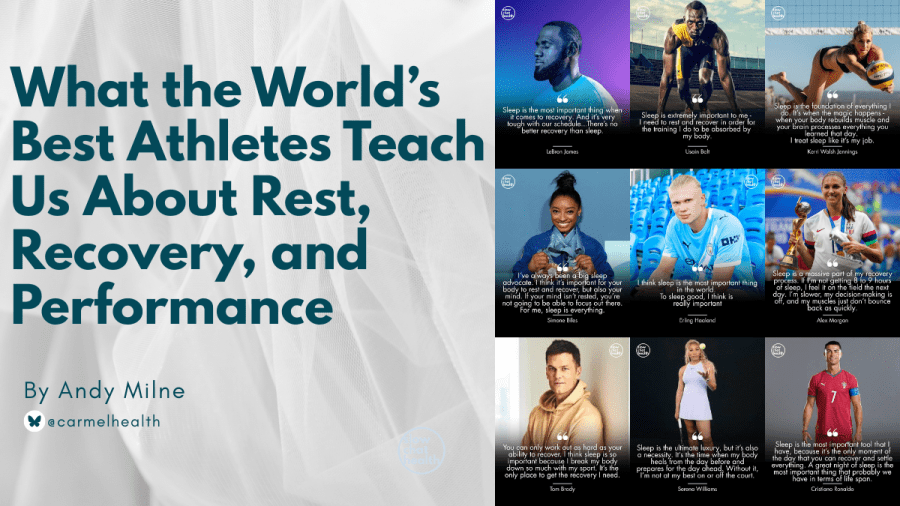
When we talk to teens about health, sleep often gets treated as an afterthought – or worse, a luxury you sacrifice to get ahead. But if you ask the world’s greatest athletes, they’ll tell you the exact opposite: sleep isn’t something you do when your day is over, it’s the foundation of how you perform tomorrow. As I like to tell anyone who will listen – EVERYTHING you do, you do better on a full night of sleep!
Whether you are trying to ace an exam, land a spot on the varsity squad, or simply make it through a long school week with a clear head, rest is your ultimate legal cheat code (I claim that it’s MY superpower). As sleep advocates, changing the narrative around sleep starts with showing students that elite performance, in sports, academics, and life, requires deliberate recovery.

Alex Morgan has long spoken about how traveling the globe for international soccer tournaments requires her to be incredibly deliberate about her rest cycles. It’s easy to think you can “get away” with 5 or 6 hours, but total sleep duration directly dictates physical reaction times and cognitive speed. When you shortchange your hours, your brain slows down before your body even realizes it.
To get the most out of your training or studying, aim for that 8–10 hour window as often as possible. If you’re looking for practical ways to fix your routine, check out these student-tested tips for better sleep.

Not all sleep hours are created equal. Sleep depth—specifically deep slow-wave sleep—is when your brain flushes out toxins, consolidates memory, and releases growth hormones to rebuild damaged physical tissue.
The fastest man in history pointed directly to the pillow when asked about how his body processed the grueling demands of sprinting, and I tell my students that it is deep sleep that locks in all the hard work they’ve done, whether that be in class, or on the sports field.

Without deep sleep, you can lift all the weights or study all the flashcards you want, but your brain and body won’t fully absorb the work.
Sleep quality refers to how easily you fall asleep, stay asleep, and avoid disruptions throughout the night. One of the biggest disruptors of sleep quality today? Screens right before bed. The blue light and high-dopamine stimulation keep your brain wired, robbing you of high-quality mental recovery.

For a gymnast executing highly complex, gravity-defying maneuvers that require split-second spatial awareness, cognitive fatigue is incredibly dangerous. Simone Biles treats sleep as a pillar of both safety and excellence.

Erling Haaland, Manchester City’s goal-scoring machine, is deeply vocal about the exact physiological mechanics of sleep. He is famous for wearing orange-tinted, blue-light-blocking glasses for three hours before bed to protect his melatonin production, shutting off all Wi-Fi/electronic signals in his room, and even taping his mouth shut to force nasal breathing while unconscious.
While Haaland’s sleep hygiene might seem a little excessive, reducing your cell-phone use might be an easy place to start. Read more on smartphones impact on student-athletes and sleep quality specifically and dive into my previous post on cell phones and athlete performance.
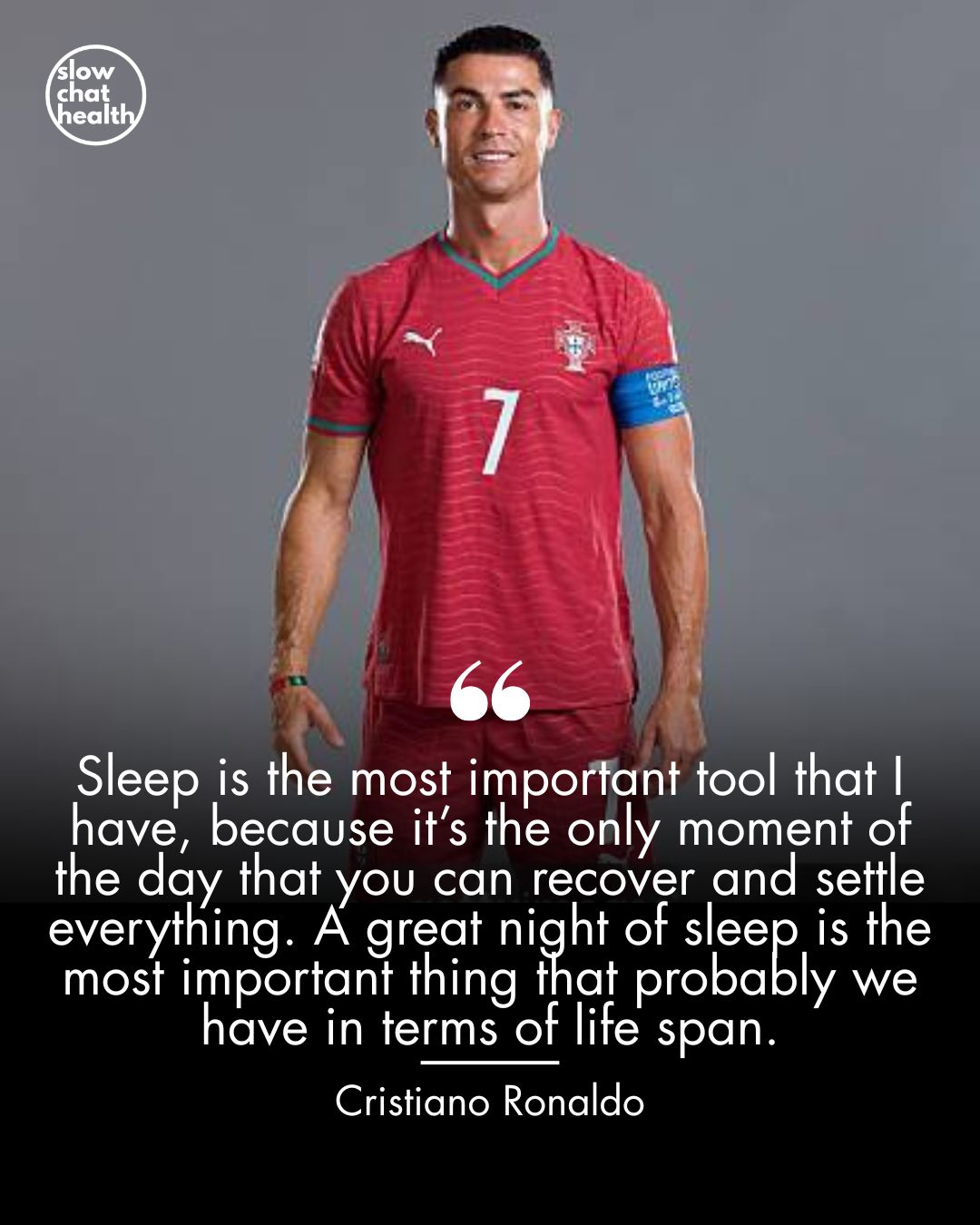
Going to bed at 10 PM on Tuesday but 2 AM on Friday creates “social jetlag,” throwing off your internal circadian rhythm. Elite performers know that consistency is what allows their body to anticipate recovery and build an almost unfair advantage.
Cristiano Ronaldo works closely with legendary elite sleep coach, Nick Littlehales. Instead of the traditional, continuous 8-hour sleep block, Ronaldo often breaks his day into multiple 90-minute sleep cycles (the “R90 Protocol”) to ensure his body constantly regenerates muscle and processes physical strain.
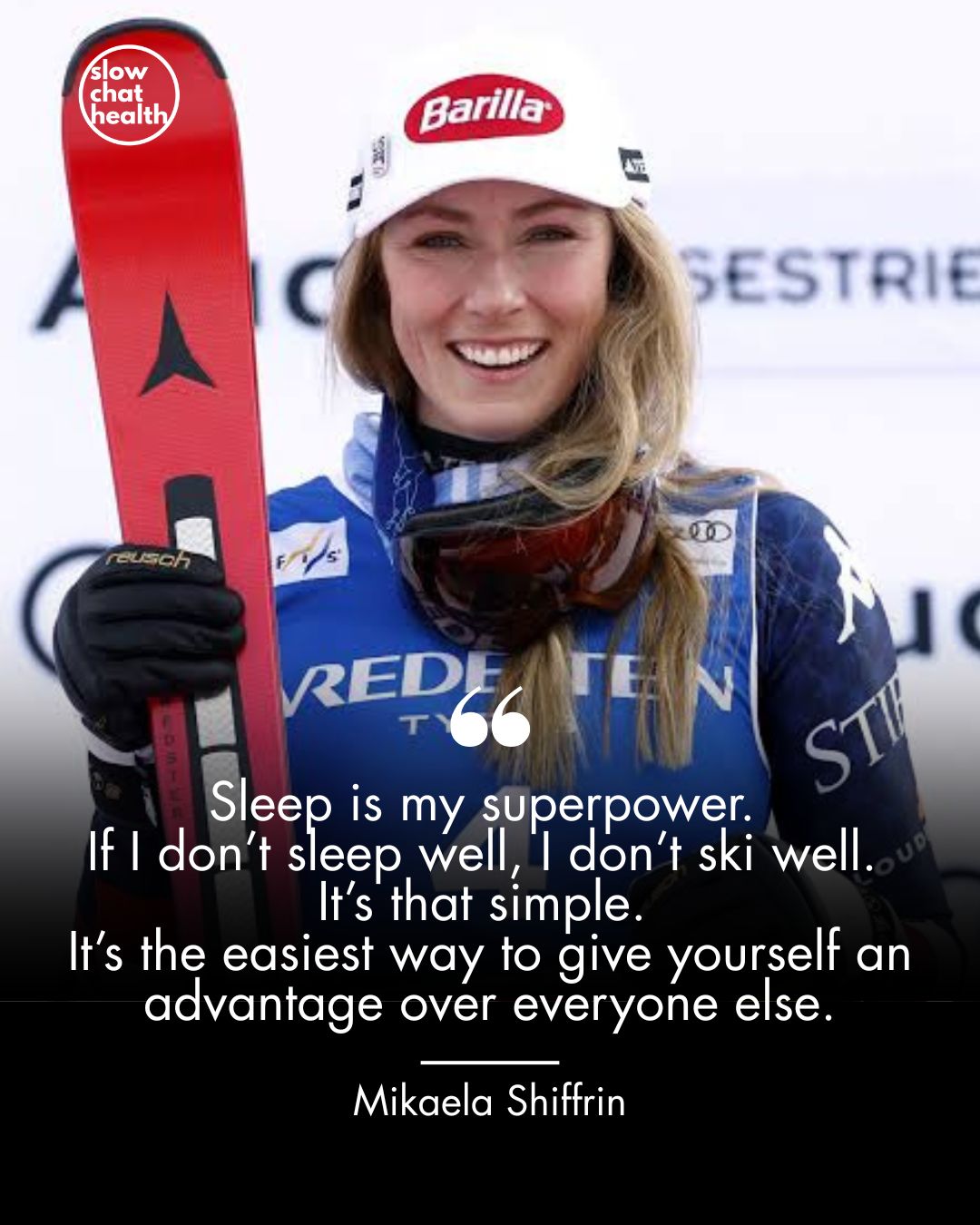
Mikaela Shiffrin is famous for her extreme dedication to napping and getting up to 10 hours of sleep per night.
Sports medicine research notes that tracking sleep is uniquely beneficial for female athletes.
- Hormonal Adaptation: Deep sleep is when the body triggers a surge of growth hormone, which fixes micro-tears in muscle tissue caused by heavy lifting or sprinting.
- Injury Prevention: Studies tracking female collegiate athletes show that those getting less than 8 hours of sleep per night have a 1.7 times greater risk of sustaining an injury compared to those who sleep 8 or more hours.
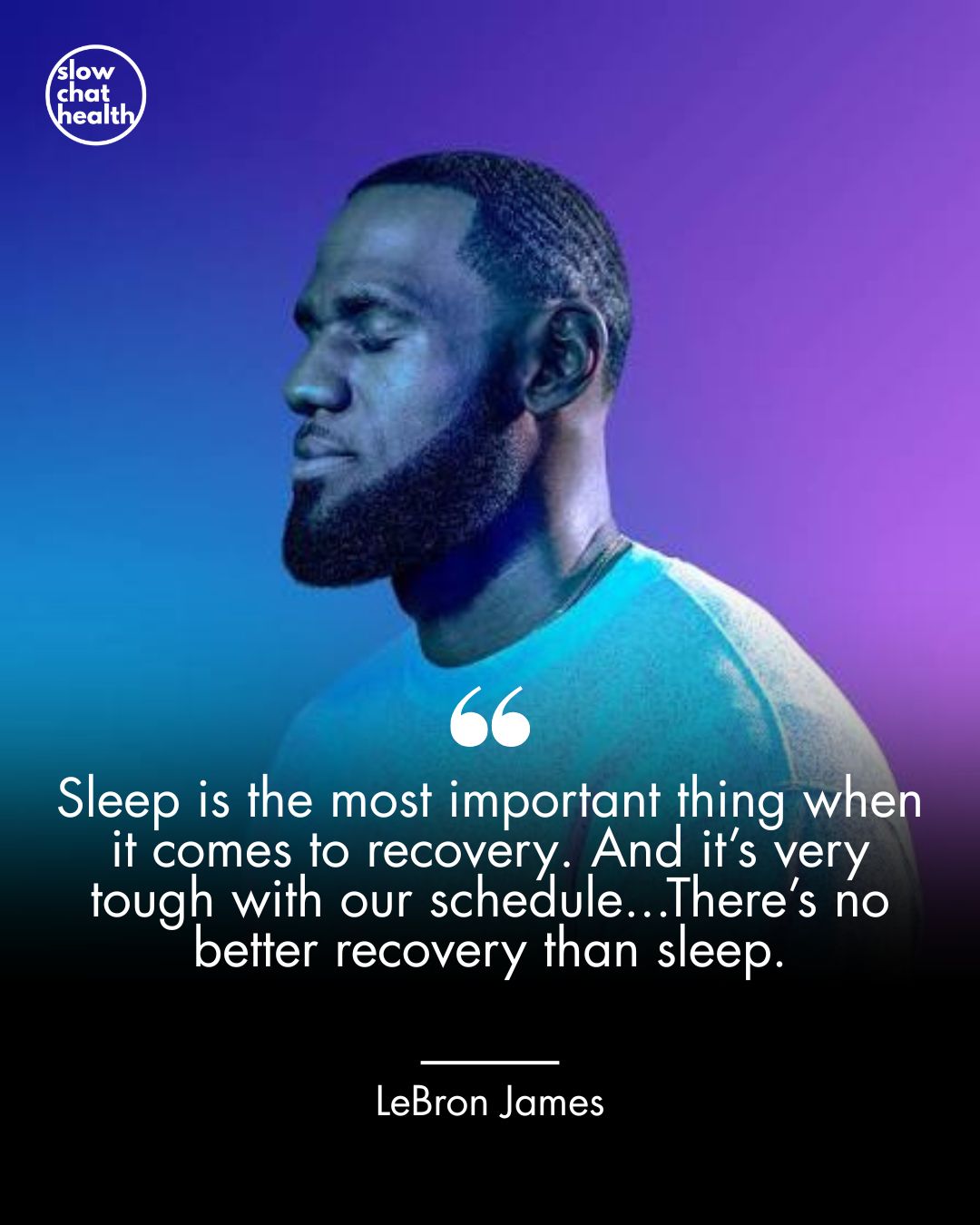
When you stack duration, depth, quality, and regularity together, sleep becomes the ultimate multiplier for overall performance, longevity, and injury prevention. LeBron James is famous for spending an estimated $1.5 million a year on his body, and he routinely credits sleep as the foundational piece of his career longevity.

For another example of longevity, consider Tom Brady who played at an elite level in the NFL until he was 45 years old. He notoriously prioritized a strict 9:00 PM bedtime to match his intense training demands.

Serena Williams managed a historic tennis career spanning decades while balancing intense training and eventually motherhood, leaning on rigid sleep goals to survive the tour.
When sports scientists track these athletes, the data heavily backs up their quotes. For example, clinical tracking of elite sleep habits reveals stunning performance spikes:
| Sport / Metric | Impact of Adequate Sleep |
| Tennis | +42% boost in hitting accuracy |
| Basketball | +29% increase in points per minute |
| Reaction Time | +4.3% improvement in split-second decisions |
| Strength | Restricting sleep for just 4 days drops max bench press by ~20 lbs |
As educators and coaches, we need to ensure that every student has access to the tools and environments necessary for healthy rest. Sleep isn’t just an individual choice; it’s shaped by broader social, environmental, and systemic factors, a topic I explored in my post on rethinking sleep and sleep equity.
If you’re looking for simple, actionable habits to share with your classes starting tomorrow, check out this breakdown of the top 5 sleep tips for students.
Click here if you want to download the images from this blog post.
Highly recommended sleep books:
Hello Sleep: The Science and Art of Overcoming Insomnia Without Medications by Jade Wu
Generation Sleepless: Why Tweens and Teens Aren’t Sleeping Enough and How We Can Help Them by Heather Turgeon & Julie Wright
The Sleep-Deprived Teen: Why Our Teenagers Are So Tired, and How Parents and Schools Can Help Them Thrive by Lisa Lewis
The Sleep Revolution: Transforming Your Life, One Night at a Time by Arianna Huffington
Why We Sleep: Unlocking the Power of Sleep and Dreams by Matthew Walker
Sleep: Redefine Your Rest, for Success in Work, Sport and Life by Nick Littlehales


Pingback: 5 Ways That Cell Phone Use Negatively Impacts Athletes – #slowchathealth