From AI health advice and digital companions to mental health, social media, emerging drugs, masculinity, advocacy and consent, this post identifies eight hot health topics for 2026–27

From AI health advice and digital companions to mental health, social media, emerging drugs, masculinity, advocacy and consent, this post identifies eight hot health topics for 2026–27

The typical physical education experience, the one that I experienced as a student, the one that I delivered in the early years of my teaching career, is often measured by standardized benchmarks: lap times, skill progressions, and fitness scores. While those have their place, focusing solely on metrics risks missing the heart of the discipline. …

It is through our names that we first place ourselves in the world. Our names, being the gift of others, must be made our own. Ralph Ellison I never teach the same lesson twice, and that's because every cohort of students that I meet brings unique backgrounds, hidden stories, and personal histories that shape who …
Continue reading Why Classroom Community Starts with Our Names
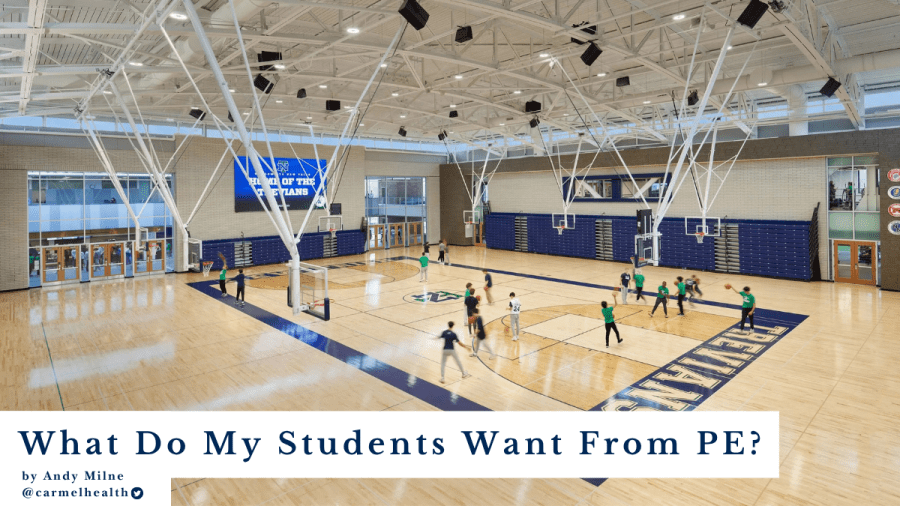
As excited as I am to start the new school year with a new cohort of students, I have to remind myself to slow down before diving into content so that I can get to know who I'm dealing with. While teachers are learning names, asking about interests, and understanding the personalities in front of …
The majority of teens are using AI and they’re using it often. A common sense media survey found that “72% of teens have used AI companions at least once, with more than half using them a few times a month.” Even more, an NPR article goes on to say “nearly one in three teens use …
Continue reading A Brain-Based Case Against AI in Health Class (and beyond)

I came home and cried today. As an educator, I know I am not alone, but as a Physical and Health Educator (PHE), it cuts deeper because somehow I thought it wouldn’t happen in my class and to me. In education, resources are dwindling, red tape is multiplying, and complex student needs are reaching a …
Continue reading Fighting the Current: Reigniting Passion and Purpose

Preface (updated May 27, 2026): I wrote this in early spring. By the time it was about to be posted, the conversation around AI had shifted hard, and I had to add this. Sorry, Andy. So much for keeping it micro. NPR covered the trend: commencement speakers are getting booed off the stage just for …
If you haven’t seen Hyrox yet, it’s a beast. Eight 1km runs, each separated by a high-intensity functional strength station. There’s no sitting down, no "time-outs." You’re either pushing heavy steel or you’re running. Lately, it struck me: This is exactly what a school day looks like. We don’t just "teach." We are constantly shifting from the high-power …
Continue reading The 8-Station Term: Why Teaching is the Ultimate Hyrox Event

Teachers love a good "Turn and Talk" moment. It’s quick, it sparks discussion, and it keeps students engaged. But what if we could level it up by adding movement? Enter Stretch and Share, a simple yet powerful strategy that combines kinesthetic movement with meaningful conversation. The Inspiration A while back, my friend Christopher Pepper shared …
Continue reading Stretch and Share: A Simple Way to Get Students Moving and Talking
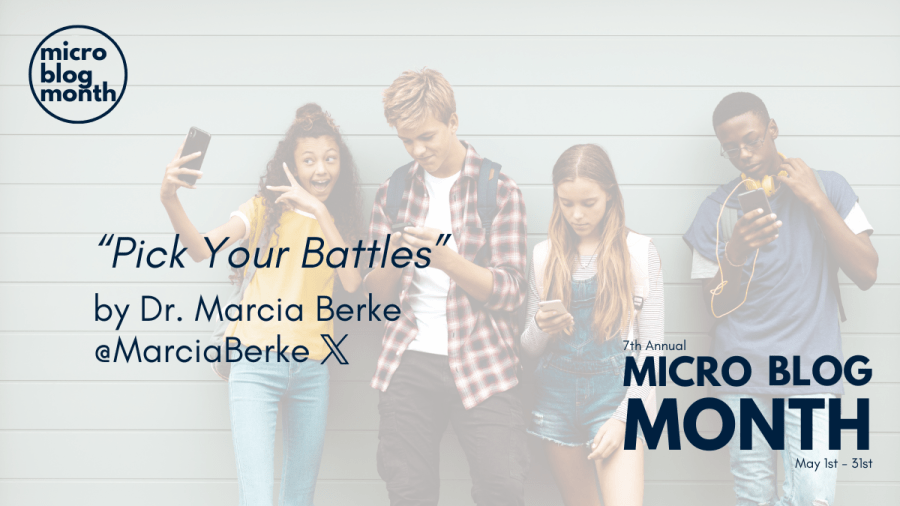
In education, the phrase “picking your battles” means choosing which issues or behaviors are most important to address rather than responding to every minor problem. I have heard this phrase for decades. But how does one go about actually picking these battles? What criteria do we use? What are these battles? Does our administration play …
One of the key components of the The International Baccalaureate (IB) Primary Years Programme (PYP) that has truly shaped my practice is the use of provocations to spark curiosity and engagement. I’ve come to see provocations not simply as activities, but as intentional invitations to wonder. They are carefully designed experiences, scenarios, or materials that …
Continue reading Hooking Curiosity: Bringing Provocations to Life in PE
I often toggle between thinking, “That lesson went well,” and “That was a disaster.” Either way, do we really know how our students feel? We certainly cannot unless we actively seek their feedback. Taking this a step further, we often have little idea what students are thinking when they are physically active outside of class. …

What if the thing holding back your strongest student work isn't rigor — it's the fact that you've assigned one product to thirty different people? We spend a lot of time designing what students will learn. We spend a lot less time thinking about who gets left out when we also dictate exactly how they …
Continue reading Choice Isn’t Lowering the Bar — It’s Raising the Ceiling
When I stepped out of the middle school health classroom and into the front office, I didn’t feel like I was starting over. I knew I was bringing something with me. Years of teaching health didn’t just prepare me to deliver content—it trained me to understand behavior, build relationships, and respond in moments that don’t …
Continue reading From Health Class to the Front Office: Same Mission, Different Role

When you love what you teach, who you teach and where you teach in the good times, you feel like you are in your “flow state” but hold on…Let's be real for a minute. How many times have you had to teach through hard circumstances? Maybe students are difficult this year, you are on a …
Last year, I wrote a microblog post about inviting my students into their learning by asking questions. This year, my focus has been on building connections and offering students opportunities to practice ‘real-life’ social skills. Here are the four best things I did in my classroom this year: “Class Connection” Games and Activities My middle …
Continue reading The Four Best Things I Did In My Classroom This Year

Log onto health teacher central at any moment and you can expect to see the following: “I need a hands on lesson about _______”. Teachers do this with great intentions, hoping to foster a fun lesson or activity that gets students moving and learning in a way that may be atypical for standard health education …
For the past five years, I’ve sat through PD after PD telling teachers to “remember your why,” like somehow thinking back to the beginning would fix the growing disconnect I felt from a job I used to love. Every session made it seem like the solution was inside of me. Like if I just cared …
Continue reading I Didn’t Need to “Remember My Why” I Needed Therapy
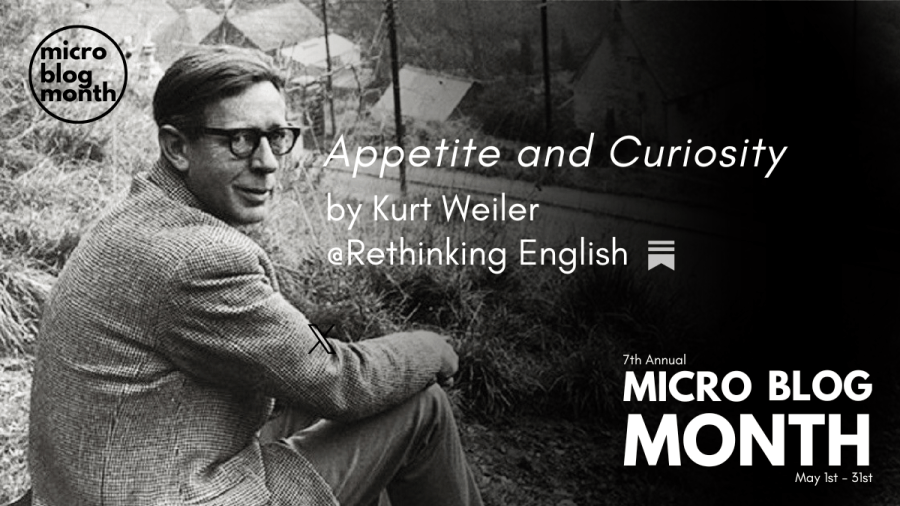
At least 15 years ago, before social media or smartphones touched my high school English classroom, I used to teach an essay by the British novelist Laurie Lee, called "Appetite" as part of a unit on rhetoric. Lee writes about appetite in terms of food, describing the Depression-era pleasure of anticipating a toffee as much better than …
Mindlessly scrolling through social media one night, I paused on a post that said, “Take your kid’s side, always.” Stuck somewhere between a teacher eye roll and a flush of mom guilt wondering if I do this enough, the post has bounced around in my head since. My first parent phone call as a new …

