The typical physical education experience, the one that I experienced as a student, the one that I delivered in the early years of my teaching career, is often measured by standardized benchmarks: lap times, skill progressions, and fitness scores. While those have their place, focusing solely on metrics risks missing the heart of the discipline. Physical education at its best is more than simply moving the body; it is about developing confidence and competence, and a lifelong love of movement through the delivery of deep, meaningful movement experiences.
Four years into my Meaningful PE journey, my students can articulate what social interaction and fun look like, sound like and feel like. They are comfortable identifying their ‘just right’ level of challenge, and trust that I will plan my lessons to allow for motor competence. Involving students in the planning of some of our units, even encouraging them to deliver some favorite activities from their youth ensures that the learning is personally relevant, yet delight is the MPE feature that stumps them. Unlike challenge or skill, delight can’t easily be scheduled or defined. To borrow a phrase: we simply know it when we see it. Philosopher Scott Kretchmar captures this exact paradox, describing delight as:
Delight is a rare and elusive, yet memorable, experience that often takes the movement participant by surprise.
In my very first blog post on Meaningful PE, I shared a story about an 8th hour Ultimate Frisbee lesson where students became so immersed that time simply vanished. Instead of looking at the clock or asking to meet their rides, they kept playing, and I was the one who had to interrupt the moment. Looking back, that was my first real glimpse of flow and delight working hand in hand.
It is my contention that if flow is the state of total immersion, delight is the emotional spark that makes it unforgettable. In SuperBetter, Jane McGonigal describes flow as happening “as long as we have a clear goal, a challenging task to perform, and sufficient skills to meet the challenge—or at least to come close enough that we are energized to try again and do better” (p. 44).
Although we cannot, “summon delight directly, we can lay the groundwork and otherwise prepare ourselves for it,“
(Kretchmar, 2005, p. 204).
Teachers cannot force delight into a curriculum. We can’t carve out a ten-minute block in our lesson plan for “flow time.” Instead, our goal is to design meaningful environments where students can eventually experience delight on their own terms – transforming movement from an external obligation into an intrinsic part of their personal story.
Delight in Action: Catching Falling Leaves
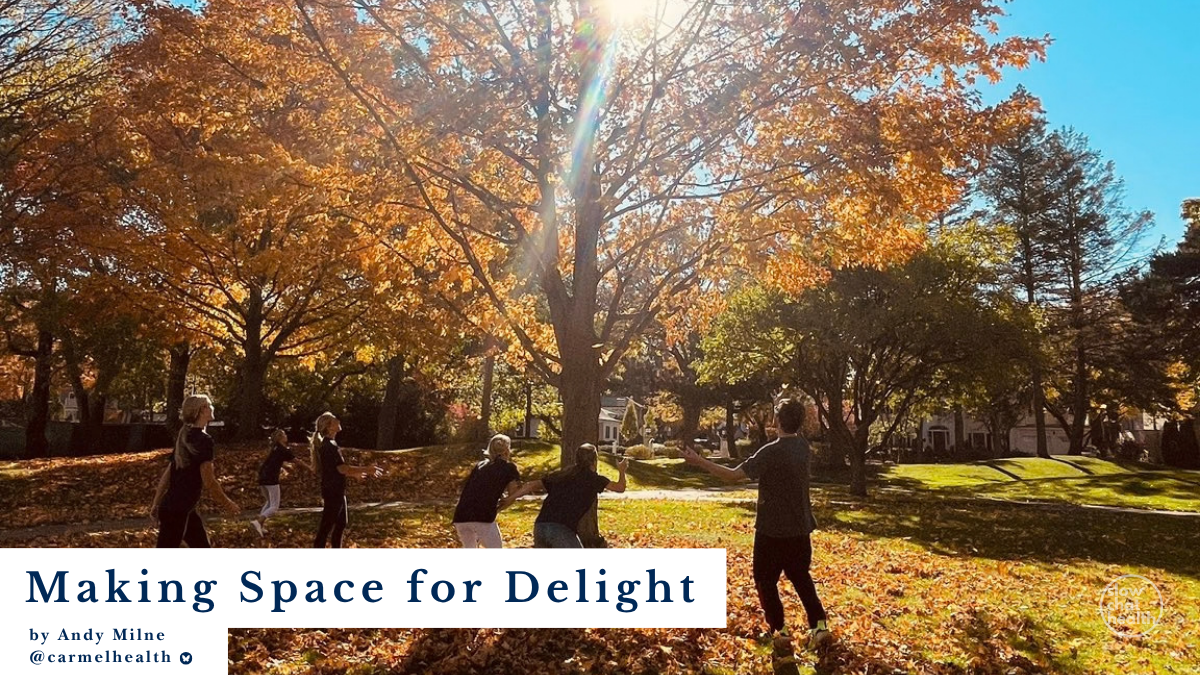
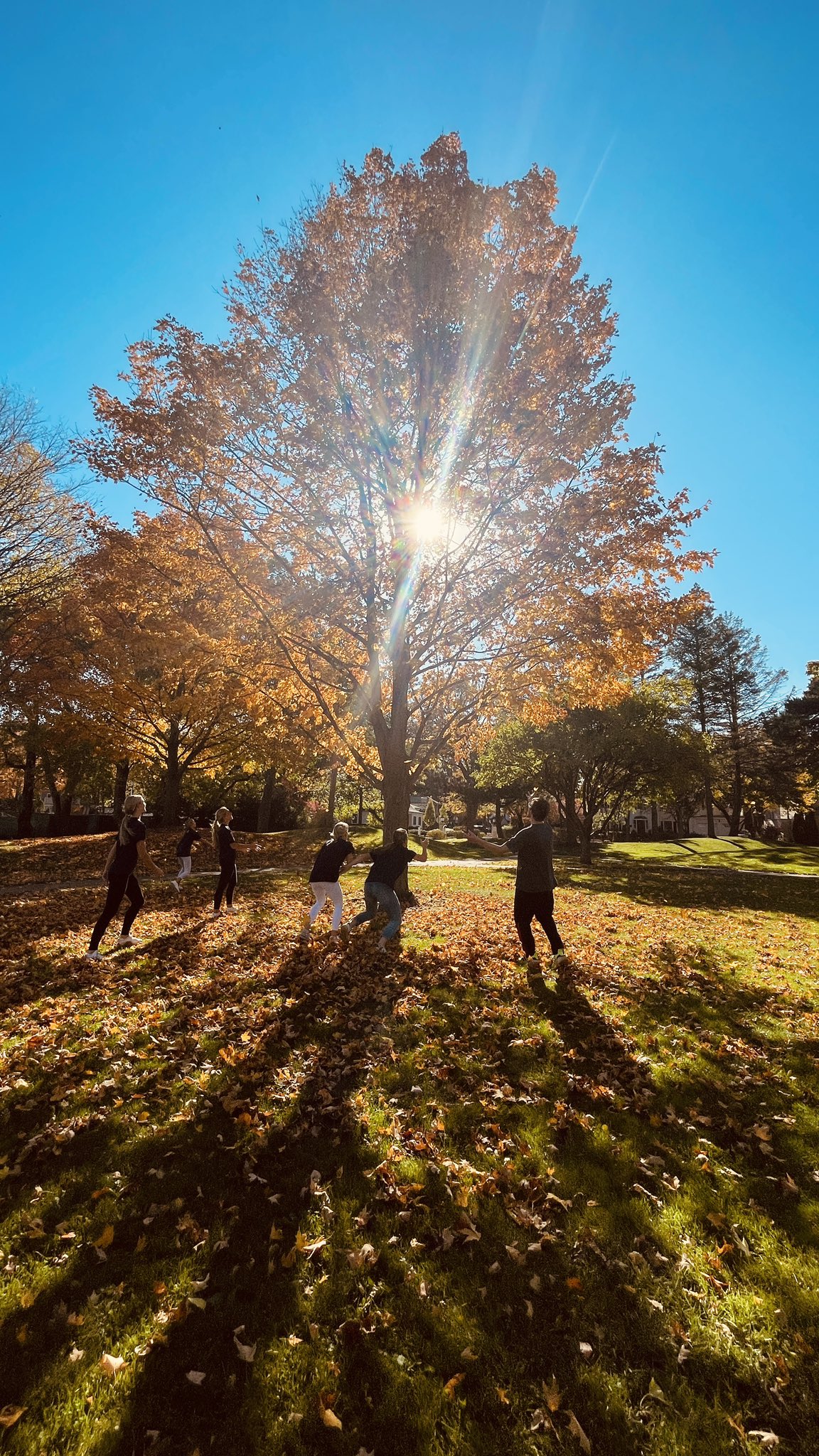
I was initially motivated to try this activity after seeing it shared on Instagram, though the original source escapes me. Inspired by Gillian Judson‘s fantastic book A Walking Curriculum. Evoking Wonder and Developing Sense of Place (K-12) any time I take my students for a walk, I have a focus, an intention, a reason for walking. On this particular October day, the sun was shining, and I had planned to do some walking intentions with my students, however, the falling leaves on a golden-leafed tree caught my eye.
My juniors and seniors speak fondly of their youth, and how movement was fun and free, less competitive and judgmental. Providing them with the opportunity to play games from their elementary school days is ALWAYS a success, hence the reason for me seizing the opportunity to challenge each of them to catch a falling leaf. They weren’t told how to catch a leaf, or how many leaves would make them a winner. What followed was pure, uninhibited engagement. My high school teens ran, jumped, pivoted, and squealed with delight as they chased fluttering leaves. The task had a clear goal and an engaging challenge, and the absence of performance anxiety allowed them to get entirely lost in the moment. I wish I had recorded the joyful sounds!
Delight in Action: Flying Kites
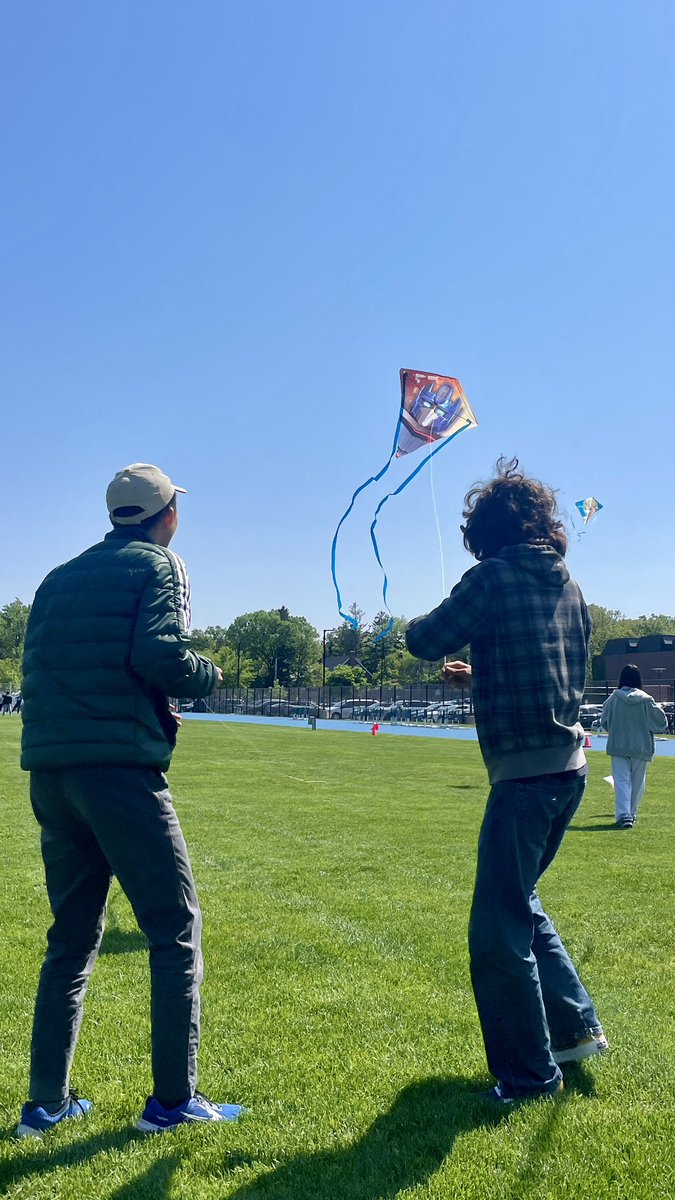
I keep a supply of cheap Dollar Store kites in the trunk of my car in the hope that the perfect opportunity will arise for me to call an audible, toss out my lesson plan, and introduce my students to the joys of kite flying. This annual tradition always seems to occur in May, in the final few weeks of my time with that years cohort of students. The activity is fully student-centered from the start. They open the plastic packets, read the instructions (though not always thoroughly!), and assemble their kites before heading onto the field for an hour of unbridled joy. Surprisingly, very few of my students have ever flown a kite before, which makes this one of my favorite lessons of the year.
@ImSporticus has a nice quote in his Drowning in the Shallows blog post. “To Kretchmar fun is a shallow and fleeting distraction, a way of overcoming boredom. Delight provides a deeper more memorable experience that keeps people coming back to movement.” Long after they leave my class, I hope my students will talk fondly of the time we caught leaves and flew kites, and seek out opportunities to one day repeat those experiences with friends and family.
Making space for delight means letting go of rigid performance metrics and inviting wonder back into our spaces. When we build a rich learning environment for all students – one where every learner, regardless of athletic ability, can experience delight – we provide movement experiences that endure long after the final bell rings.
References and further reading
For more on the framework of delight in physical education, see: The Role of Delight in Meaningful Physical Education – Part 1
(Meaningful Physical Education Blog).
Flow in Sports: The keys to optimal experiences and performances by Susan Jackson and Mihaly Csikszentmihalyi
What is Flow? by Maghan Haggerty
What Do My Students Want From PE? by Andy Milne
Joy is a Risk Worth Taking by Dr. Kelly McGonigal (NEW BOOK)
Making Meaningful Physical Education Elementary Friendly by Will Westphal
The Power of Meaningful and Joyful Experiences by Leticia Cariño
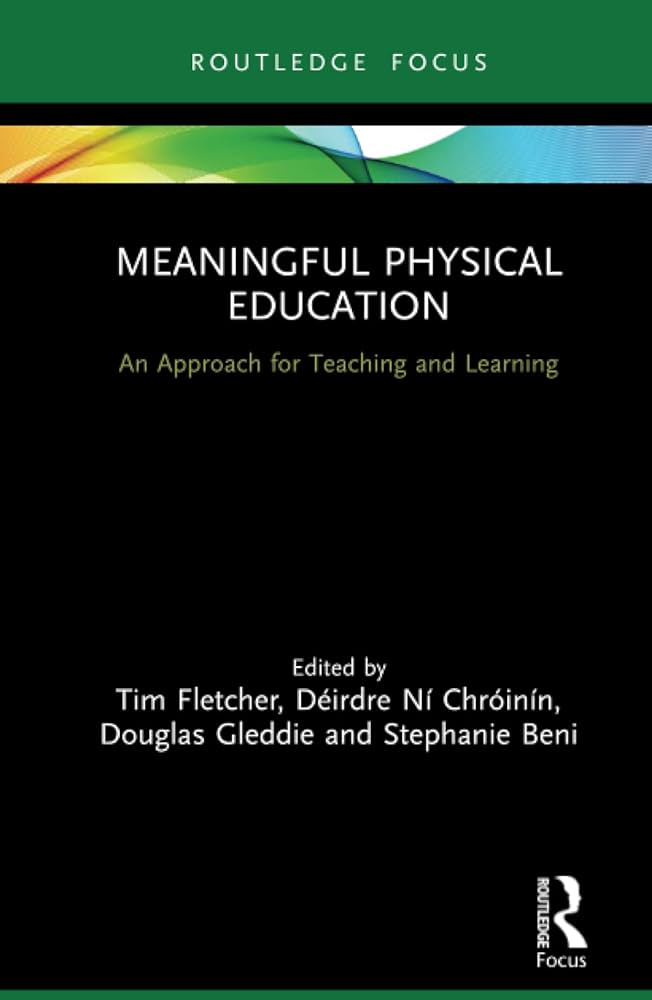
Buy the book! Meaningful Physical Education by Tim Fletcher, Déirdre Ní Chróinín, Doug Gleddie, and Stephanie Benni
Check out this Spotify playlist of podcast episodes discussing Meaningful PE, which includes the awesome podcast project from Doug Gleddie and Ty Riddick.