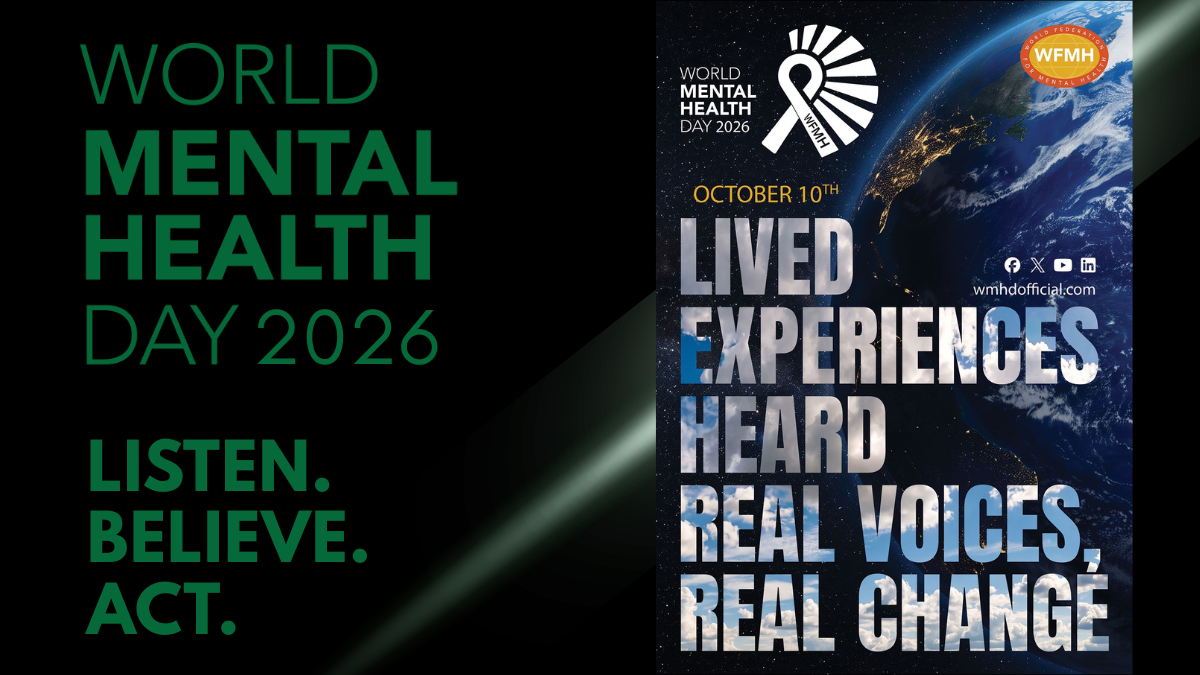
Listen. Believe. Act.
World Mental Health Day 2026 takes place on Saturday, October 10, and this year’s theme is “Lived Experiences Heard: Real Voices, Real Change.” Organized by the World Federation for Mental Health (WFMH) and supported by the World Health Organization (WHO), this annual global movement seeks to promote mental well-being and inspire meaningful change.
Inspired by this year’s theme, this blog post recognizes that real change can begin with something as simple as helping another person feel heard. It connects topics from my health classes with small actions we can all take to make our classrooms, friendship groups, teams, and workplaces safer and more compassionate.
Throughout this post, I will return to three simple actions: listening, believing, and acting. Listening creates space for people to share their experiences, believing communicates that those experiences matter, and acting ensures that what we hear can lead to meaningful change.
The longer I teach, the more convinced I become that students value open and honest conversations. They care deeply about their friends and are often willing to talk about mental health, including sharing vulnerable stories about the support they have received. Honoring lived experience means more than inviting people to speak, however. It means paying attention to what they tell us and allowing their experiences to influence how we teach, respond, and offer support.
Listening
Listening often begins with having the courage to ask a difficult question. That might sound like, “How have you really been feeling lately?”, “I’ve noticed that you haven’t seemed like yourself – is everything OK?”, or simply, “Do you want to talk?”
Most conversations about mental health will not involve an immediate crisis. Sometimes people simply need an opportunity to talk, feel understood, or ask for support. Active listening means giving the person our full attention, allowing silence, and patiently hearing what they actually say, not inserting what we expect or want to hear.
We can ask gentle follow-up questions such as, “What has that been like for you?”, “What do you need right now?”, or “Would you like me to listen, offer advice, or help you find support?” We should resist interrupting with our own experiences or turning the conversation into a story about ourselves.
Not every check-in needs to become a deep conversation, either. One of the smallest but most meaningful actions we can take is to check in with the people around us regularly and remind them that we are there if and when they need us.
When we are seriously concerned about someone, however, we should not avoid asking a direct question, including whether they are thinking about suicide. Asking the question does not put the idea into someone’s head. Instead, it provides an opportunity for them to answer honestly and lets them know that we are willing to hear the answer.
Our freshman health classes use resources from the QPR Institute, and all of our staff receive regular QPR training. QPR stands for Question, Persuade, and Refer. This suicide-prevention training teaches people to recognize possible warning signs, ask direct and nonjudgmental questions, offer hope, and connect someone with appropriate support. It reinforces the message that it is OK to ask openly whether someone is thinking about suicide.
Believing
Believing means taking your friend – and any possible crisis – seriously. If they say they are not considering suicide, do not argue with them or try to catch them out. Listen to their answer while continuing to pay attention if something still does not feel right. If warning signs remain or you are still concerned, speak to a trusted adult.
If they say yes, believe them, remain calm, and focus on getting help. Believing someone does not mean promising to keep the conversation confidential. Safety is more important than secrecy, and you may need to tell a trusted adult, counselor, or other professional about your concerns – even without your friend’s permission. That might feel like betraying their trust, but helping them connect with support is an act of care, not betrayal. Your friend might thank you later.
Our sophomore health classes spend a week receiving teen Mental Health First Aid training from the National Council for Mental Wellbeing. This evidence-based curriculum teaches students how to recognize signs of mental-health challenges and crises, talk to someone who may need help, and involve a trusted adult. Students learn to LOOK for warning signs, ASK direct questions, LISTEN to their friend, and HELP them connect with an adult who can offer support, all while continuing to be a trusted friend.
You can learn more about this approach in this short video.
Acting
Acting is where listening and believing lead to meaningful change. Sometimes action is small: checking in again the next day, sitting beside someone who feels alone, walking with a friend to see a counselor, or helping them identify an adult they trust.
For teachers, action might mean following up privately, connecting a student with school-based or community-based support, or changing a classroom practice in response to something students have shared. Asking students, “What helps you feel heard when you are struggling?” can be powerful—but only if we are prepared to listen to their responses and consider what we might do differently.
When someone’s safety may be at risk, action cannot wait. Stay with the person and involve a trusted adult or trained professional. In our classroom, we learn to ask, “Who do you want me to call?” Whenever possible, this gives the person some voice in what happens next. However, there may be times when safety requires us to contact an adult even if our friend would prefer that we did not.
One useful activity is to ask students to consider the supportive people in their own “circle of support.” Parents, siblings, friends, teachers, advisers, coaches, case managers, social workers, counselors, and therapists are commonly mentioned. Thinking about this circle before a crisis occurs can make it easier to know where to turn when help is needed.
Honoring lived experience does not mean expecting people to share their most personal or painful stories. Nobody owes us their story. We can still listen to what people choose to tell us, respect their boundaries, and use what we learn to make our communities more supportive.
Finding Support
Posters in our classrooms and information on our online class pages identify school, community, and national resources that can offer additional support. In the United States, these include:
- 988 Suicide & Crisis Lifeline: Call or text 988, or chat online at 988lifeline.org.
- The Trevor Project: Free, confidential crisis support for LGBTQ+ young people. Call 866-488-7386, text START to 678678, or chat online.
- love is respect: Support and information for young people experiencing unhealthy or abusive relationships. Call 866-331-9474, text LOVEIS to 22522, or chat online.
- StopBullying.gov: Information and resources for preventing and responding to bullying and cyberbullying.
If someone is in immediate danger or requires emergency medical assistance, call 911.
World Mental Health Day reminds us that meaningful change does not always begin with a new program, policy, or grand gesture. Sometimes it begins with a question, a conversation, or the decision to check in again tomorrow. We do not need to have the perfect words or know how to solve every problem. We can start by listening, believing, and acting – and by helping the people around us know that they do not have to struggle alone.
Pair this blog post with the following:
World Mental Health Day: Moving for a Healthier Mind by Andy Milne
Hot Health Topics for 26/27 by Andy Milne
Recommended read: Where to Start: A Survival Guide to Anxiety, Depression, and Other Mental Health Challenges by Mental Health America.
Be sure to check out the the awesome resources at Erikas Lighthouse.
Calm have a list of free resources to help you take care of your mental health.
October is Health Literacy Month. SHAPE America have a great compilation of resources.