In 2016, I published my first list of Hot Topics in Health. Four years later, I revisited the idea with Hot Health Topics 2020, and featured contributions from health teachers in Hot Health Topics 2023. Looking back at those lists is a reminder of just how quickly health education changes, and how much remains the same.
Consent, mental health, substance use, technology, masculinity and advocacy have all appeared before. However, the context surrounding those topics has changed dramatically. Artificial intelligence can now dispense health advice, imitate friendship and offer emotional support. Social-media algorithms do more than show students content; they can steadily shape their beliefs about relationships, masculinity, appearance and health.
As I wrote previously:
Topics come and go, but the skills that our students require to help them make healthful decisions will remain constant.
That remains true. The revised National Health Education Standards continue to emphasize the skills students need to analyze influences, access valid information, communicate, make decisions, practice health-enhancing behaviors and advocate for change.
With that in mind, and acknowledging that the hot topics in my community may differ from yours, here are my eight hot topics for the 2026–27 school year.
8. AI and Health Misinformation
Artificial intelligence is already in our classrooms, our homes and our students’ pockets. Young people are asking AI questions about nutrition, exercise, sexual health, medication, symptoms and mental health – sometimes before approaching a parent, teacher or healthcare professional.
This creates an important opportunity for us as health educators. We should not limit our AI conversations to cheating and academic integrity. We must also teach students how to recognize the limitations (and potential dangers) of AI-generated health advice.
An AI chatbot can produce an answer that sounds authoritative while relying on incomplete, outdated or inaccurate information. A 2026 physician-led study found that publicly available LLMs could provide unsafe answers to patient health questions.
Students need opportunities to ask:
- What evidence supports this response?
- Can I confirm it with another reliable source?
- Is the AI diagnosing me or recommending treatment (or worse, trying to sell me a product)?
- What personal information am I sharing?
- Is this a situation in which I need a qualified human being?
This topic is an ideal vehicle for teaching students to access valid and reliable health resources. Rather than telling students never to use AI, we can teach them when it might be useful, when it should be questioned and when it should never replace professional care.
7. AI Companions and Emotional Health
AI as a source of information is one thing. AI as a friend, therapist, romantic partner or emotional confidant is something very different. Common Sense Media reported that nearly three in four teens had used an AI companion and that half used one regularly. Meanwhile, 2026 research found that approximately one in five adolescents and young adults had used an AI chatbot for mental-health advice.
An AI companion is always available, never appears distracted and can feel nonjudgmental, so I understand the appeal. For a lonely, anxious or isolated teenager, that can be powerful – but potentially dangerous.
However, a chatbot does not (can not) care, even when it is exceptionally good at simulating care. It may agree when it should challenge, reassure when it should refer, or encourage emotional dependency because continued engagement is good for business.
Our students need to consider what healthy boundaries with AI might look like:
- What should an AI companion never be trusted to do?
- Can an artificial relationship improve human relationships – or displace them?
- What happens to the personal information shared during these conversations?
- How should a chatbot respond when someone is in crisis?
- Who is responsible when it responds badly?
Students value conversations about relationships, loneliness, privacy, and help-seeking. They value honest and authentic human connection with each other and will benefit from opportunities to consider when, and when not, to engage with AI chatbots.
6. Mental Health and Seeking Help
Mental health remains on my list, but our approach continues to evolve. Awareness campaigns have helped students learn the language of mental health, yet recognizing terminology is not the same as knowing what to do when you or someone you care about needs help. Many of my students speak openly about their relationship with mental health and the challenges they, and their peers, face.
The latest national Youth Risk Behavior Survey offers some encouragement. Several indicators improved between 2023 and 2025. However, incidences of persistent sadness and hopelessness remain more problematic than they were a decade ago.
Health class should give students repeated opportunities to practice:
- Recognizing warning signs
- Starting a difficult conversation
- Listening without trying to diagnose or “fix” someone
- Asking directly whether a person is safe
- Identifying trusted adults and professional resources
- Knowing when confidentiality cannot be promised
- Following up after the initial conversation
Students also need to understand the barriers that stop people seeking help: stigma, cost, culture, previous experiences, fear of judgment, lack of confidentiality and simply not knowing where to go. Two resources that my school use are Teen Mental Health First Aid, and also QPR (Question, pursade, refer) from the QPR Institute. We also work closely with the awesome Erikas Lighthouse.
We should present help-seeking as a strength and a skill. We should also remind students that supporting a friend does not mean becoming that friend’s therapist. Care, connection and referral are powerful. Carrying another person’s crisis alone is not.
Recommended read: Where to Start: A Survival Guide to Anxiety, Depression, and Other Mental Health Challenges by Mental Health America.
5. Phones, Social Media and Digital Wellness
In 2016, I called this digital citizenship and technology addiction. In 2020, I wrote about our continuing relationship with technology. In 2026, perhaps the conversation needs to shift toward reclaiming time, attention and agency.
The question is no longer simply, “How much screen time is too much?” What students do online, why they do it, what it displaces and how they feel afterward might matter as much as the total number of minutes.
The CDC now recommends creating opportunities for students to spend time away from screens and participate in face-to-face activities. (I’m thankful for the new Illinois school cell phone regulations starting in 2027.) Emerging research into short periods of smartphone and social-media abstinence suggests that digital detoxes are possible, although they can create real practical and social challenges for teenagers.
This is a popular slowchathealth blog post – 5 Ways That Cell Phone Use Negatively Impacts Athletes
Instead of delivering another lecture about putting phones away, we can invite students to conduct their own digital-wellness experiment:
- Turn off nonessential notifications.
- Remove one attention-hungry app from the home screen.
- Avoid short-form video for a week.
- Keep the phone out of the bedroom.
- Create a phone-free meal, workout or social space.
- Replace thirty minutes online with movement, creativity, conversation or sleep.
- Notice which accounts improve their mood and which leave them feeling worse.
The goal is not to convince students that life online is inherently bad. Online communities can provide connection, creativity, information and belonging. The goal is to help students use technology intentionally—and to feel capable of stepping away from it.
Recommended read: How to Break Up With Your Phone: The 30 Day Digital Detox Plan by Catherine Price
4. Nicotine, Cannabis and an Increasingly Unpredictable Drug Supply
Vaping and cannabis are hardly new topics, but the products, potency and methods of delivery continue to change. Nicotine pouches are discreet, flavored and easily hidden. High-potency cannabis products can bear little resemblance to the marijuana used by previous generations.
The more alarming development is the growing unpredictability of the illicit drug supply.
Fentanyl remains the most important danger for students to understand, particularly because it can appear in counterfeit pills made to resemble prescription medication. (Illinois law requires mandatory fentanyl education in state-required health courses for high school students) However, the DEA warned in 2026 that fentanyl is increasingly being mixed with substances including xylazine, medetomidine, cychlorphine and nitazenes – synthetic opioids that may match or exceed fentanyl’s potency.
The lesson is that no student can identify the contents or potency of an illicit pill by looking at it.
Effective drug education should include functional, potentially lifesaving information:
- Counterfeit pills can look identical to legitimate medication.
- Mixing substances increases risk.
- Naloxone can reverse an opioid overdose and should be readily accessible.
- More than one dose may be required.
- Students should recognize overdose signs and know how to call for help.
- Fear of punishment should never prevent someone from seeking emergency assistance.
The drug of the moment will change. The skills of analyzing risk, resisting pressure, responding to an emergency and seeking help will remain. My school has Song For Charlie presentations given to Juniors and Seniors, in addition to using Birdie Light fentanyl resources in Freshman and Sophomore health class.
3. Advocacy, and the Power of Teen Voices
I included self-efficacy and advocacy in my 2016 list, writing: “Watch out – if you give students a voice, I promise you they will use it!”
Ten years later, I believe this more strongly than ever.
In an election year, students are surrounded by political messages about healthcare, mental health, reproductive rights, drug policy, gun violence, food regulation, climate, technology and public safety. Some of our seniors are eligible to vote. Others cannot vote yet, but that does not mean they are powerless.
Nearly 50 million Americans ages 18–29 are eligible to vote in the 2026 midterms. Research from CIRCLE at Tufts University also suggests young people want better political information and meaningful improvements in their lives.
Progress is “not inevitable” but must be fought for over the long term.
Advocacy education means teaching students how to:
- Identify a health issue that matters to them
- Research it using credible evidence
- Listen to people most affected
- Identify who has the power to create change
- Communicate with an appropriate audience
- Propose a realistic course of action
- Collaborate with others
- Evaluate whether their efforts made a difference
Students might write to a decision-maker, speak at a school-board meeting, create a policy brief, organize a peer-education campaign or advocate for a change within their own school.
Our students are regularly presented with reasons to feel anxious, angry or powerless. Advocacy offers a message of hope.
Students are not powerless. Their experiences matter. Their voice can influence the health of their friends, their school and their community.
Recommended read: Blueprint for Revolution by Srdja Popovic.
2. Body Optimization, Supplements and Algorithmic Masculinity
This might be the topic that has changed most since masculinity appeared on my 2020 list.
Many boys and young men are being sold a very narrow version of health: become bigger, leaner, richer, tougher, more disciplined and less emotional. Their feeds are filled with transformation videos, supplement stacks, bulk-and-cut cycles, “looksmaxxing,” testosterone advice and influencers claiming that discomfort, vulnerability and help-seeking are signs of weakness.
Health, masculinity and consumerism have become bundled together by the algorithm. Over 70% of content delivery and user views on major social media platforms (like YouTube, TikTok, and Instagram) are driven by recommendation algorithms.
Protein powder and creatine are part of the conversation, but so are high-stimulant pre-workouts, fat burners, unregulated supplements, peptides, selective androgen receptor modulators and anabolic steroids. Students may see products marketed with scientific-sounding language while the influencer promoting them has a financial interest that is difficult to spot. Influencer does not mean expert!
Research has associated muscularity-focused social-media content and muscle-building supplement use with symptoms of muscle dysmorphia. A 2026 study also examined how fitness and supplement content on TikTok can affect young men’s satisfaction with their bodies, nutrition and fitness.
We need to expand our body-image teaching. For too long, many lessons have focused primarily on thinness and girls. Boys also experience comparison, shame, disordered eating, compulsive exercise and anxiety about appearance – but may describe that distress through the language of gains, discipline and performance.
Students should learn to ask:
- Who profits from making me feel inadequate?
- Is this person selling health, appearance or status?
- Is the image natural, edited or chemically enhanced?
- What evidence supports the product’s claims?
- Does this routine support my life, or has my life started revolving around it?
- Can strength include rest, emotional honesty and asking for help?
This topic allows us to discuss body image without blaming students for being influenced. The algorithm studies their insecurities and serves them content designed to hold their attention. Our role is to help them recognize that influence and reclaim control. Our health teachers use resources from the Dove Self-Esteem Project and Be Real.
Recommended reading: Talk To Your Boys by Christopher Pepper and Joanna Schroeder.

1. Consent, Intoxication and Collective Responsibility
Consent appeared at number two in my 2016 list and number three in 2020. Sadly, it rises to number one this year.
The current controversy involving Cornell University (and other academic institutions) has again focused national attention on campus sexual violence, fraternity culture, intoxication, institutional accountability and the limitations of the law. I tell students that the health skills I teach will cary them through high school and beyond, and so I always have one eye on their futures.
For health teachers, this cannot become a lesson solely about what the law technically permits. Legal does not always mean healthy, respectful or ethical.
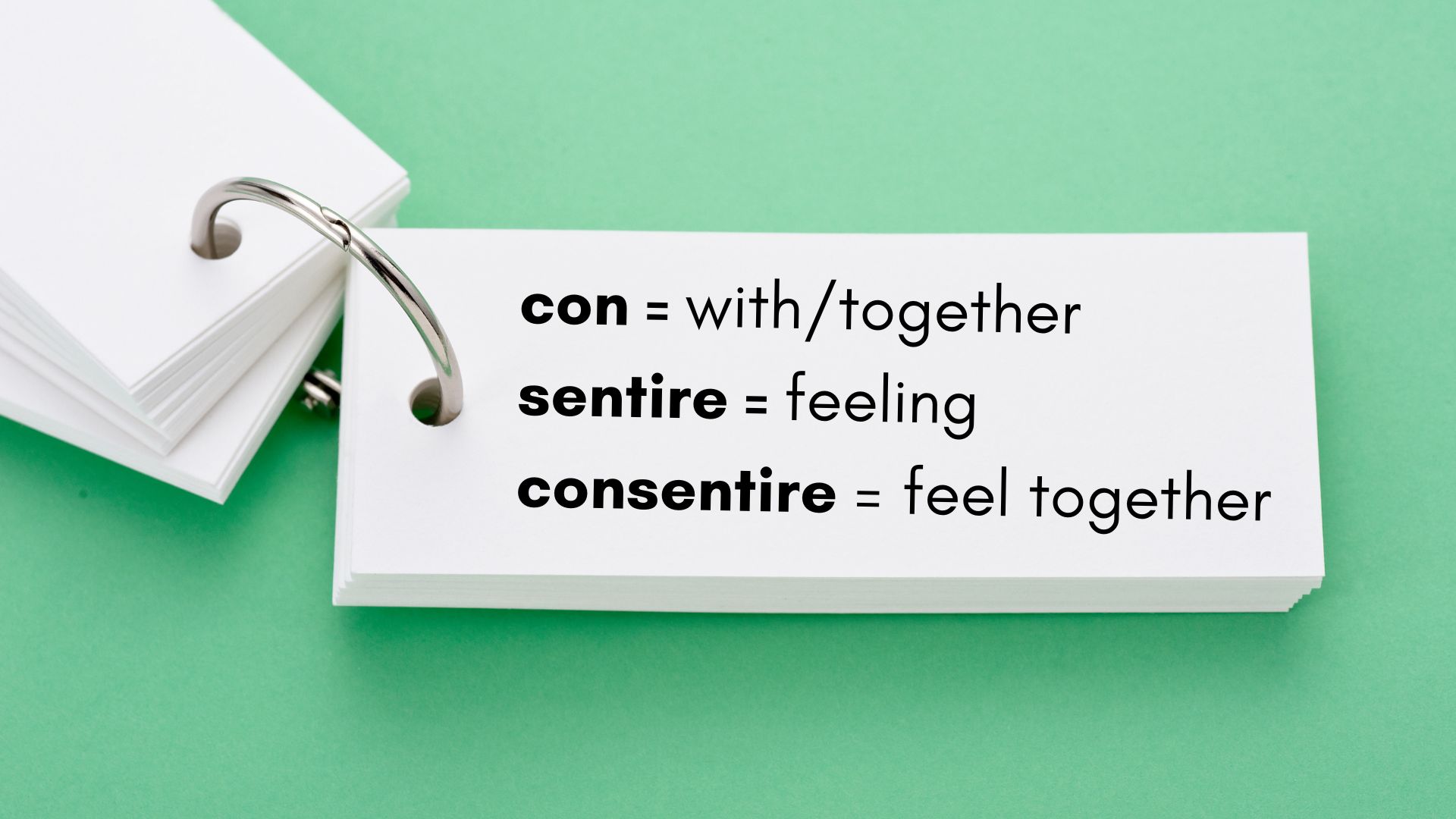
Consent education must help students understand that:
- Consent must be freely given, informed, specific and reversible.
- Previous consent does not guarantee present consent.
- The absence of a no, does not mean yes.
- A person who is incapacitated cannot consent.
- Intoxication should increase our responsibility to care for others, not create an opportunity to exploit them.
- Bystanders have a responsibility to intervene, interrupt, distract or seek help.
- Sharing images, messages or intimate details without permission is also a violation of consent.
- Group culture matters.
The Cornell allegations should also encourage us to talk directly to boys and young men – not because all boys are dangerous, but because they can be powerful agents for change. What does it look like to challenge a friend? To refuse to laugh at a degrading message? To check that someone is safe? To reject a group culture that treats another person as an object or an opportunity?
Consent is an ongoing process of communication, care and mutual respect.
Our students need the language to establish boundaries, ask for consent, recognize uncertainty, stop, intervene and seek help. They also need to know that their choices contribute to the culture around them.
The Topics Change. The Skills Remain.
Artificial intelligence may change. The next drug may change. Apps, supplements, influencers and political priorities will certainly change.
That is why a modern health class cannot be built around memorizing a list of risks. Students need to practice evaluating information, analyzing influences, communicating boundaries, making decisions, accessing help and advocating for themselves and others.
Most importantly, they need to leave our classrooms believing that they have agency.
They can question an algorithm.
They can step away from a screen.
They can ask for help.
They can interrupt harm.
They can challenge unhealthy expectations.
They can speak up when systems fail.
They can make their communities healthier.
Topics come and go. Those skills, and that belief in the power of their own voice, can last a lifetime.
What topics would make your list? What are your students asking about? Let me know, and share your thoughts using #slowchathealth.
Pair this blog post with the following:
Health Education: The Missing Link For Boosting Academic Achievement by Jen Mead
Ignite Deep Learning in Skills-Based Health Education by Maria Schneider
Why Health Class Might Be the Only Longevity Hack You Need by Andy Milne
This Is Not Your Parents’ Health Class by Andy Milne
Health Literacy Month Resources for Health & PE from SHAPE America


Pingback: World Mental Health Day 2026 – #slowchathealth