Last year, I wrote a microblog post about inviting my students into their learning by asking questions. This year, my focus has been on building connections and offering students opportunities to practice ‘real-life’ social skills.
Here are the four best things I did in my classroom this year:
- “Class Connection” Games and Activities
My middle school students are going through a significant time of adolescent social development. Playing games just felt like a great way to encourage face-to-face interactions, play, fun, and laughter.
Students played in partners or small groups, working collaboratively. Games were intended to promote creative thinking, problem solving, and social skill development (including listening skills).
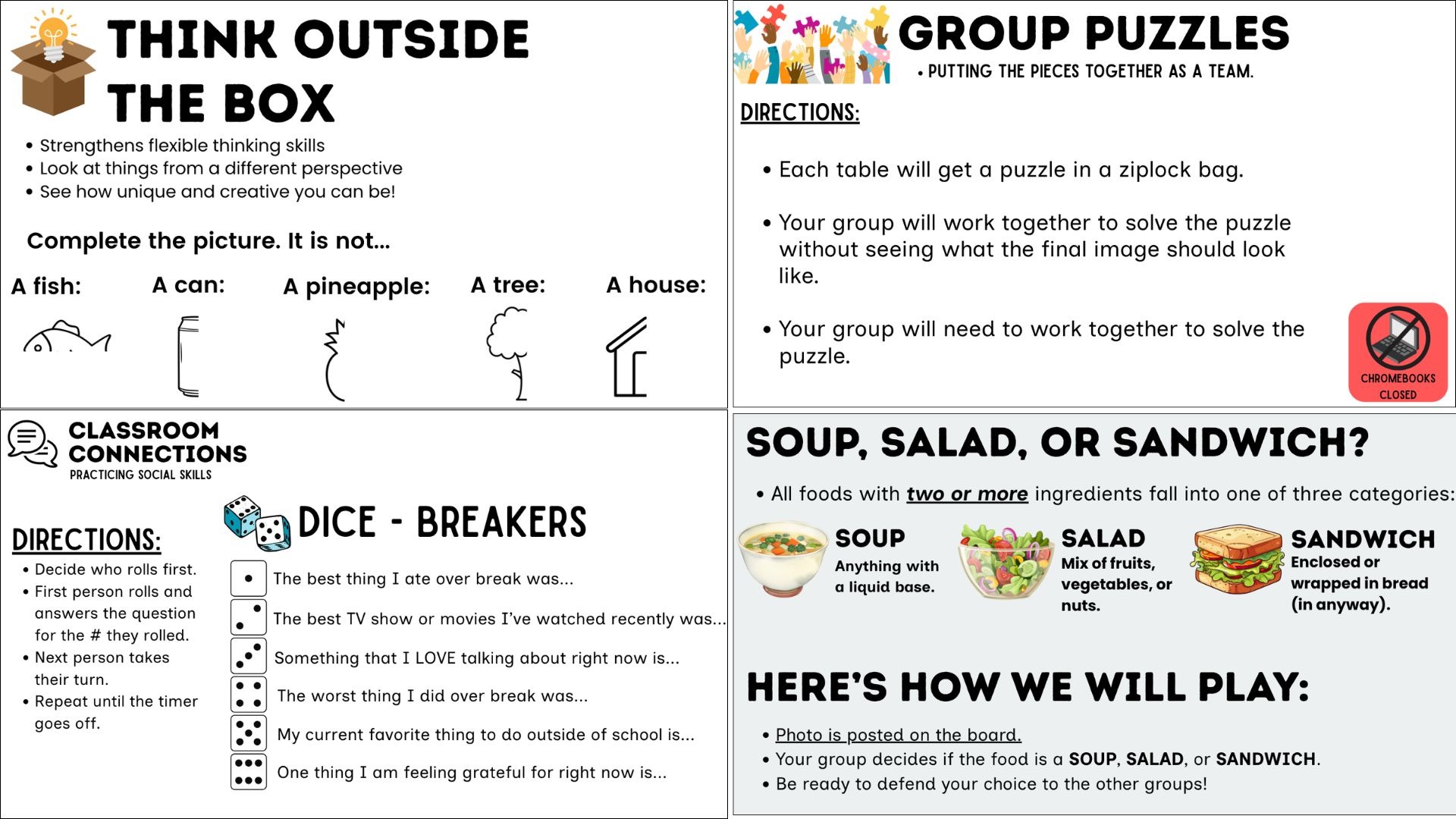
Here are some of the best whole-class games:
These next four were so popular, we played them more than once:
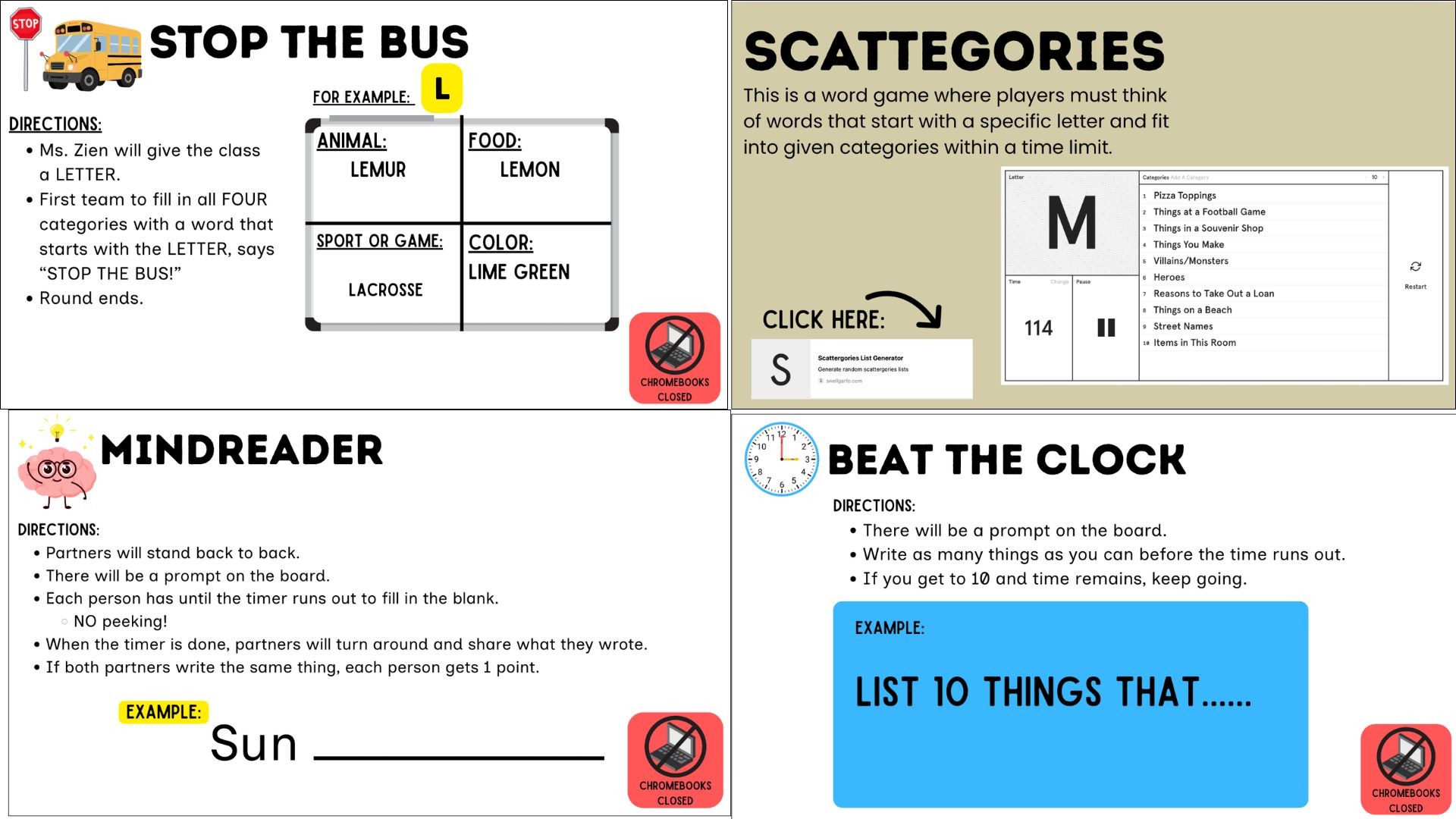
*These games were ideas I picked up for numerous, incredible educators. Gratitude for teachers sharing their work on social media and professional development conferences.
- “Analog Play”
Similar to my thinking with whole-class games, analog board or card games require kids to have conversations and face what I like to call ‘manufactured conflicts”. Games give ‘real-life’ practice handling disagreements, compromising and negotiating, or being resilient when things don’t go their way.
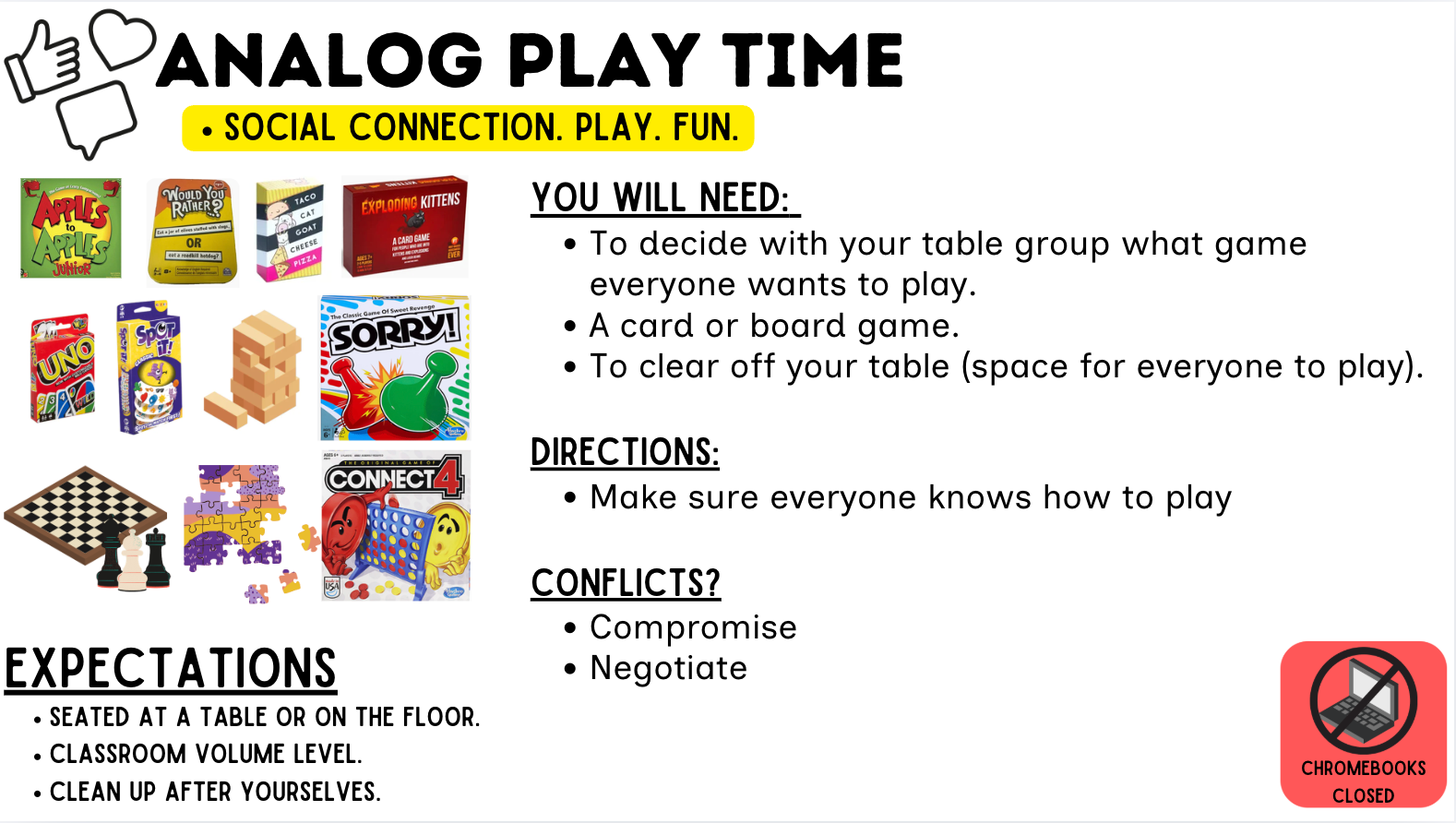
Sometimes we’d have structured ‘analog play time’ like the slide below. Other times I had kids play a game as part of a lesson intro. We started a decision-making unit by playing Jenga or Uno, followed by a written reflection on ‘what is a risk and what makes something ‘risky’?’, and then we talked about the teen brain.
I am grateful to have stocked my classroom with free or thrifted games. On the slide below are my current favorites:
- Friday Email to Ms. Zien
In the past, I put a big focus on learning about my students the first few weeks but did not have a good practice for purposefully connecting with them throughout the school year. This year, with my advisory class (we call it “WIN” class) I did biweekly check in “emails to Ms. Zien”. I sent an email to my class that included sentence starters for students to use in an email back to me.
The sentence starters varied, but typically required students to reflect, share moments of pride or gratitude, and share a glimpse of their lives in that moment. The messages from my students helped me start conversations, ask questions, and make deeper connections with kids throughout the school year.
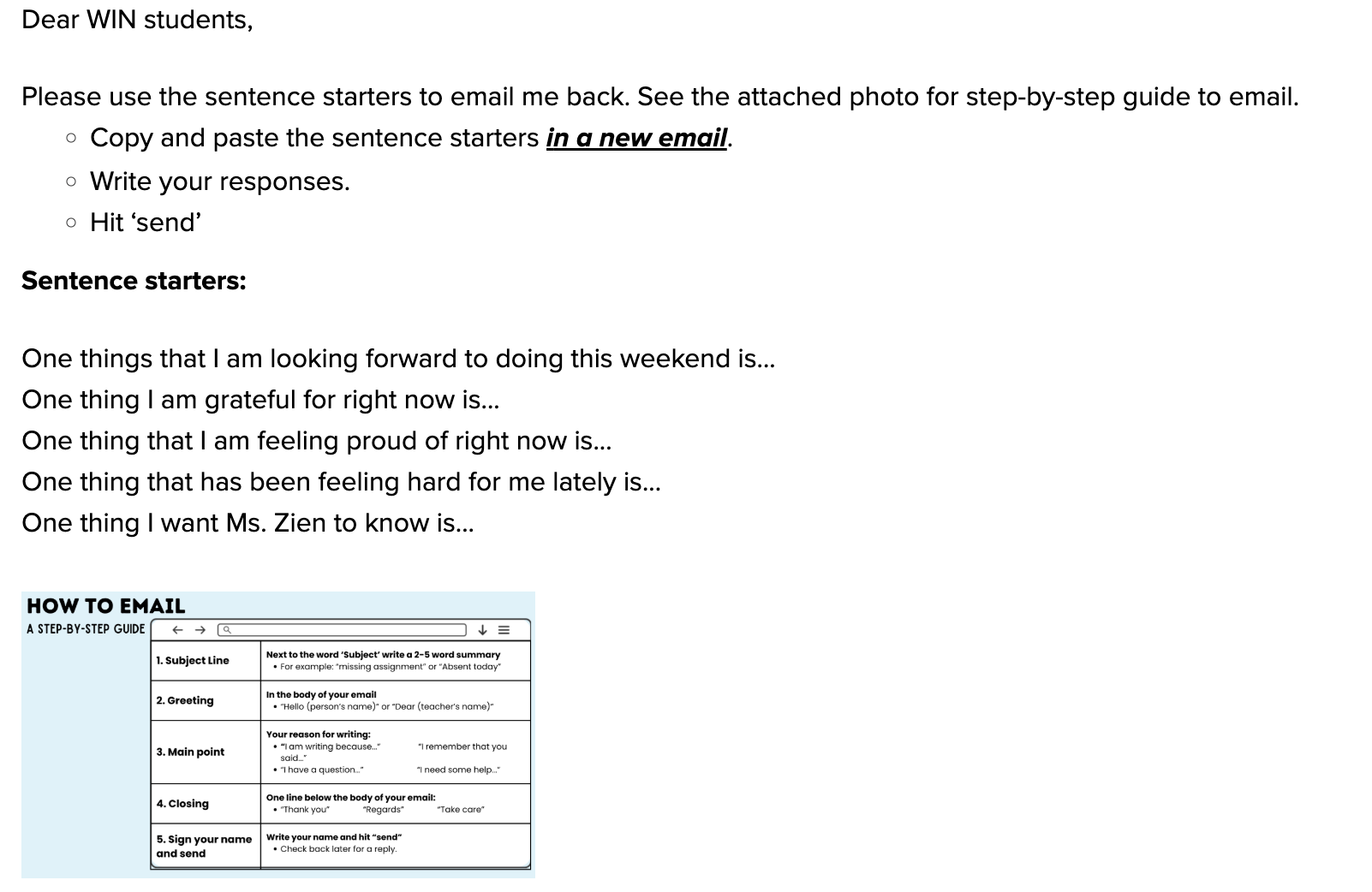
*Shout out to Chanea Bond (@HeyMrsBoyd) for inspiring this idea, including the ‘step-by-step guide’ image.
- Practiced being a ‘Warm Demander’ with Unconditional Positive Regard
We cannot take our students out of the developmental stages they are in. For me, this means recognizing that almost all of the behaviors or attitudes that present as challenges in my classroom are perfectly normal (and developmentally appropriate) for middle school students.
Unconditional positive regard means that I acknowledge when students make mistakes or fall short of meeting expectations. And being a ‘warm demander’ means that I am consistent, yet compassionate while I encourage my students to learn responsibility and accountability along with the skills and knowledge they will need to care for themselves.
These two perspectives and practices support me in greeting my students as they show up and challenging them to grow into who they are meant to become.
This microblog post was a featured post in #slowchathealth’s #microblogmonth event. You can search for all of the featured posts here. Please do follow each of the outstanding contributors on social media (including Emily Zien, the author of this post) and consider writing a microblog post of your own to be shared with the global audience of slowchathealth.com
Pair this blog post with the following:
Five Questions I Asked My Middle School Students This Year by Emily Zien
Five Minutes That Matter: Support the Creators You Love by Andy Milne
That Was So Much Fun: Meaningful Insights From Students by Andy Milne