Teachers, the end of the school year is here. You survived the endless month of May (which felt like it was 9 weeks long), and you’ve patiently endured the typical June shenanigans. And if you were to be honest, I wonder if you’ll agree that this year hit different, particularly if you are a veteran teacher. Students are different. Parents are different. Even community expectations are different. And it’s not just you that’s feeling it. Recent microblog posts shared last month revealed that teacher burnout is an annual theme that just won’t go away. Individual educators shared their reflections, and together, they form a map of what it feels like to teach right now. What struck me about the burnout-related posts wasn’t that they were asking teachers to work less or care less. If anything, they were asking teachers to think more carefully about where they invest their finite energy.
Emily Zien (an HPE must-follow) recently shared this image from the Responsive Classroom that resonated with me and offers a hopeful response to the exact concerns that surfaced repeatedly throughout Microblog Month. The image reframes summer not as an escape from teaching, but as an investment in the person who teaches.
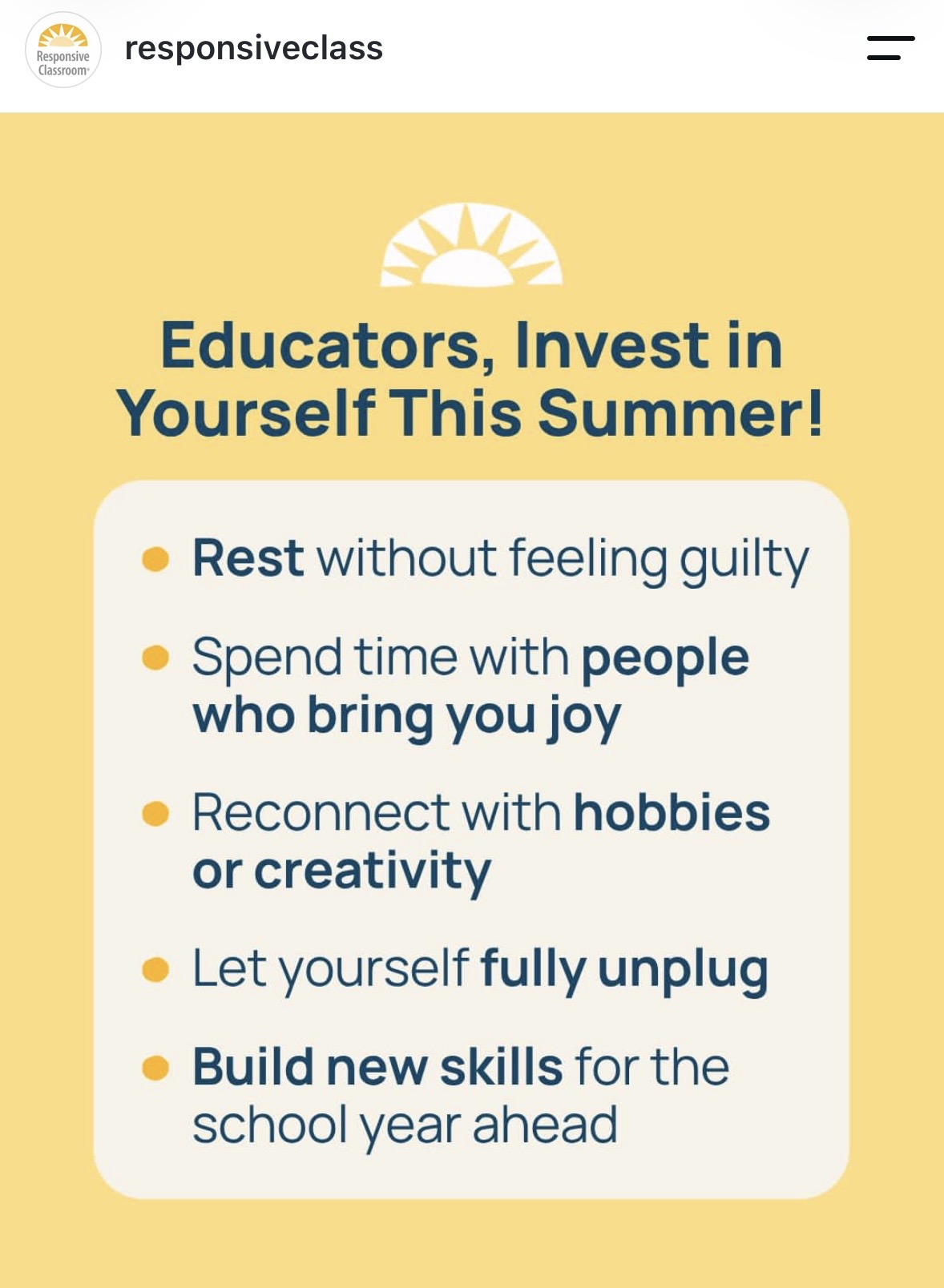
Rest without feeling guilty pushes back against the culture of perpetual productivity that Ryan Fahey explored in Rethinking Productivity for School Practitioners. If our worth isn’t measured by constant output, then rest doesn’t need to be earned. Ryan’s bite-sized post challenges the way we think about productivity in schools, shifting the focus from doing more to doing what matters, in a way that is sustainable.
Spend time with people who bring you joy reminds us that burnout is not just an individual challenge. Many of the microblog reflections hinted at the importance of relationships, connection, and community. Teachers often spend the school year pouring into others; summer offers a chance to replenish those relationships that pour back into us. In Fighting the Current: Reigniting Passion and Purpose, Brenda Carbery-Tang reminds us that our identities should extend beyond our professional roles, making personal relationships an important source of balance.
Reconnect with hobbies or creativity challenges the idea that our identities should be completely consumed by our profession. Jen Heebink‘s Passion Won’t Float Your Boat raised important questions about what happens when teaching becomes too intertwined with who we are. Summer can be a reminder that we are more than our job titles, and this summer, in addition to running a Summer Book Club for teachers, I also plan to learn how to DJ! One of Jen Heebink’s creative projects is her Heartbeats of Adapted PE podcast.
Let yourself fully unplug may be the most difficult suggestion on the list. In a profession that often celebrates self-sacrifice, unplugging can feel uncomfortable. Yet the emotional labour described in Casey Langendorfer‘s brutally honest post I Didn’t Need to Remember My Why, I Needed Therapy suggests that recovery requires more than simply stopping work. Sometimes it requires creating enough distance to hear ourselves think again. Casey’s well-received post (her posts always are!) is a necessary read for educators navigating burnout, boundaries, and the difference between losing purpose and losing capacity. I plan to start the month of August with a two-week hiatus from all social media.
Build new skills for the school year ahead appears last on the list, and perhaps that’s intentional. Professional growth matters, but it doesn’t need to come before restoration. Jim Davis‘ reflections in More, More, More! Or More Better remind us that endless improvement can become exhausting when it is disconnected from sustainability. If you’ve ever confused burnout for discipline, Jim’s microblog post is worth your time. Developing educator skills doesn’t always have to come from a conference or a new book. Sometimes the best inspiration is already in your pocket – literally.
If we want passionate, purposeful educators in August, then June and July may need to become seasons of replenishment rather than productivity. One question I’ll ask myself this summer is
What investments in myself will allow me to return as a healthier, more energized, and more sustainable version of the teacher I already am?
Whatever your answer to that question, I hope this summer provides the space to pursue it. Rest well, reconnect often, and remember that investing in yourself isn’t a distraction from your work as an educator, it’s what makes that work possible.
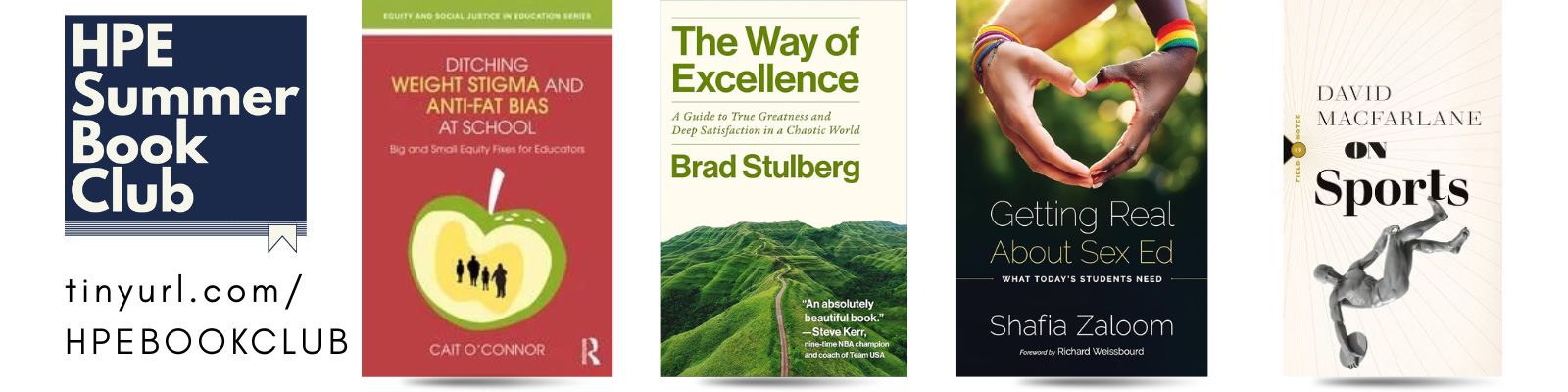
If you have time this summer, why not join our HPE Summer Book Club? Four book titles to read and discuss over the coming months. Details can be found here.