In physical education, we often focus on what students are doing—running, jumping, throwing, cooperating. But some of the most powerful learning happens when students pause to think about how and why they are moving, feeling, and interacting. That’s where reflection comes in.
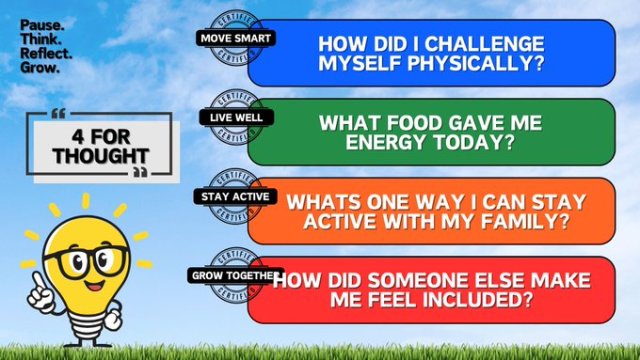
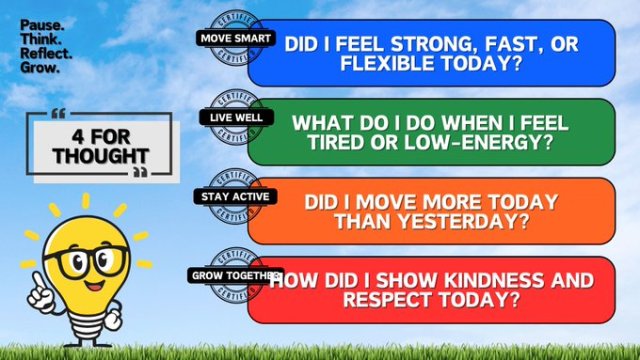
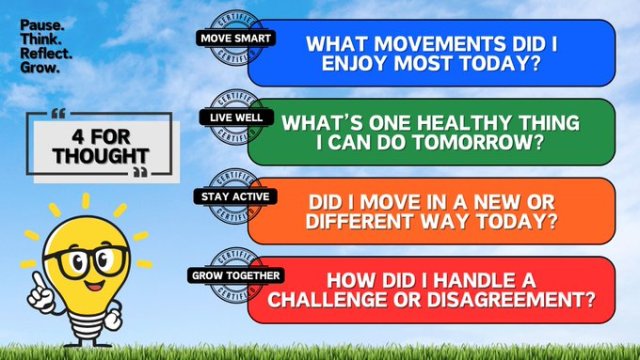
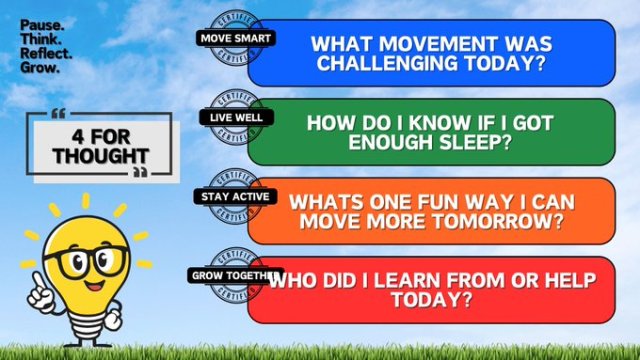
I’ve been using a simple strategy with my students this school year called “4 for Thought.” It’s a set of four reflection questions I use at the beginning and end of class. The questions change each week, but they always align with our four core pillars of PE: Move Smart, Live Well, Stay Active, and Grow Together.
This routine has become one of the most impactful parts of my teaching—not because it takes a lot of time, but because of the depth it adds to student learning.
The Why: Building Thinkers, Not Just Movers
At its core, physical education is about more than activity, it’s about developing lifelong habits, self-awareness, and confidence. Reflection helps bridge that gap.
When students are given intentional time to think about their experiences, they begin to:
- Recognize their own growth
- Understand how their choices affect their performance and well-being
- Make connections between physical activity and everyday life
Without reflection, a lesson can feel like “just another game.” With reflection, it becomes meaningful.
“4 for Thought” gives students a consistent structure to pause, think, and internalize their experiences. Even with younger students, simple, well-worded questions help them build language around their actions and feelings.
The What: A Simple, Flexible Structure
The beauty of “4 for Thought” is its simplicity.
Each lesson includes four questions:
- One tied to Move Smart (skills, effort, movement understanding)
- One tied to Live Well (health, energy, choices)
- One tied to Stay Active (participation, habits, motivation)
- One tied to Grow Together (teamwork, kindness, problem-solving)
For example, a set of questions might look like:
- How did you show effort, even when it was hard?
- What did you do when you felt tired?
- How did you show effort from start to finish?
- How did you handle a challenge or disagreement?
I introduce the questions at the start of class so students know what to focus on. Then, at the end of class, we revisit them. This can be a quick discussion, partner sharing, or whole-group reflection.
Because the questions change weekly, students stay engaged and avoid falling into routine responses. At the same time, the consistent structure builds familiarity and confidence.
The How: Making Reflection Work in Your Class
Implementing “4 for Thought” doesn’t require a big time commitment or complicated system. Here’s what has worked well in my classes:
1. Keep It Short and Consistent
Reflection doesn’t need to be long to be meaningful. Even 2–3 minutes at the beginning and end of class is enough. The key is consistency. Students will come to expect it as part of the routine.
2. Use Kid-Friendly Language
Especially with younger students, the wording matters. Questions should be clear, simple, and relatable. For example:
- “How did I move today?”
- “What did I do when something was hard?”
- “How was I a good friend?”
Simple language leads to more authentic responses.
3. Model Thinking
Students don’t automatically know how to reflect. Modeling is important. I often share my own example:
- “Something that was hard for me today was… and here’s how I handled it.”
This shows students what thoughtful reflection sounds like.
4. Offer Different Ways to Respond
Not every student wants to speak in front of the group. Mixing up response styles helps:
- Turn-and-talk with a partner
- Thumbs up/down or hand signals
- Quick journaling or drawing
- Whole group sharing
This keeps all students engaged and comfortable.
5. Connect It Back to Life
One of the biggest goals is helping students see that these skills go beyond PE. Questions like:
- “What can you practice at home?”
- “How can you be active with your family?”
can help students transfer their learning to outside of the gym.
The Impact: Small Moments, Big Growth
What I’ve noticed most since implementing “4 for Thought” is a shift in how students talk about their experiences.
They start to say things like:
- “I kept trying even when it was hard.”
- “I helped my teammate when they were stuck.”
- “I was tired, but I didn’t give up.”
These are more than just answers. They’re indicators of growth in mindset, confidence, and self-awareness.
Students begin to understand that success isn’t just about winning or being the fastest. It’s about effort, improvement, teamwork, and making healthy choices.
Final Thoughts
“4 for Thought” has become a simple but powerful tool in my teaching. By embedding reflection into each lesson, I’m not just helping students move. I’m helping them think, grow, and connect their learning to the world around them.
In the end, that’s what physical education is all about: fostering EXPLORING, ENCOURAGING, and ENGAGING environments for all students to LEARN to LOVE to MOVE through levels of UNDERSTANDING, ENGAGEMENT, and building healthy RELATIONSHIPS.
This microblog post was a featured post in #slowchathealth’s #microblogmonth event. You can search for all of the featured posts here. Please do follow each of the outstanding contributors on social media (including Mike Chamberlain, the author of this post) and consider writing a microblog post of your own to be shared with the global audience of slowchathealth.com
Pair this post with the following:
SEL: Not Extra, It’s Essential by Anna Marriott
Staying In The Game by Mike Chamberlain
Positive Phone Calls Home by Mike Chamberlain