Parent communication from a health education teacher to their student’s parents and/or guardians offers an opportunity to build a valued partnership in how we educate our young people. It also provides crucial support from parents to teachers and can foster intentional communication at home to validate and connect classroom topics with family values and household expectations.
In my district, creating and sending a parent letter before our unit on “Dating, Relationships, and Sexuality” has become a key part of parental support. This letter gives parents agency to be part of the process, to know what is being taught, to have a space to ask questions, and to support the teachers by continuing conversations at home and connecting home values to classroom instruction.
This brings me to thinking about what components should be included in a quality letter to parents:
#1 – How did we end up picking a specific curriculum?
“We have worked with MDE STD/pregnancy prevention specialists and professors from MSU, assessed our community needs, and adopted a curriculum that emphasizes relationship skills while stressing personal responsibility, abstinence, responsible decision-making, and resistance skills based on positive communication. The curriculum is tied to the National Health Education Standards, which are skills-based.
#2 – Value the Importance of Family – Make sure to validate the importance of the parent/guardian as a teacher and supporter of classroom instruction.
“We value your family, your support, and the influence you have on your child. You may be surprised to know that in a survey taken by St. James students last year, half of the students said that communication with their PARENTS on the issues of relationships, dating, and sexuality is the MOST important influence on their decisions to make responsible choices around sexuality.”
#3 – Create a space for curriculum alteration to connect to community needs or community conservatism. It is ok to alter the curriculum a bit to fit a conservative community. Don’t forget that job preservation should be a part of your priority to continue this great work.
“Although this is a nationally recognized curriculum, through the many pieces of training I have attended, there is room for professional flexibility to fit our community’s needs. There will be some slight modifications to fit the needs of our county and the St. James community.”
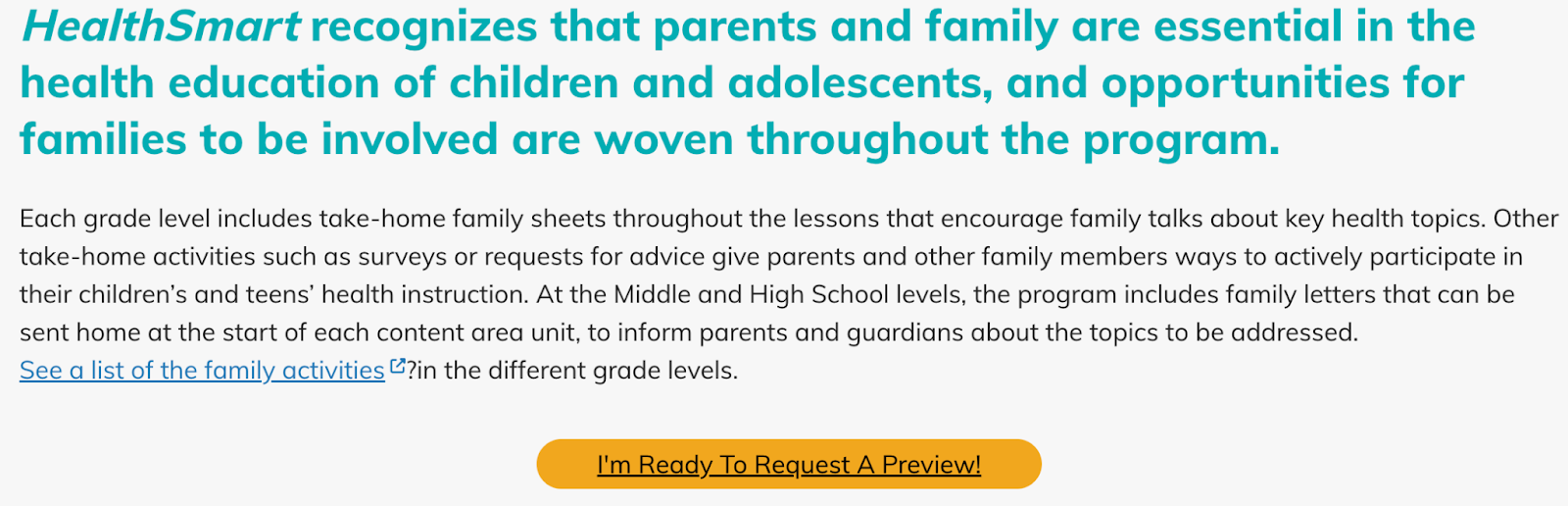
#4 – Share a digital link to your curriculum guide (does not need to be every word, lesson, video – just a topic guide will suffice). Most quality curricula offer a parent link to validate the importance of parents in this education. In our community, we have adopted the Health Smart curriculum, which has a handful of excellent parent resources.
#5 – Give parents a window of time to reach out to you to review the curriculum and ask any questions. I would recommend a 2-3 week time frame and have this review completed before you start your unit.
“I will introduce the unit to the class around Tuesday, February 17, 2026. If you have any questions about the curriculum, please don’t hesitate to let me know, and I’ll be happy to answer them.”
#6 – Give a piece of your own teaching philosophy – what are your guiding principles that you want students and parents to know you value as you begin this unit?
The following 5 points will be the focus throughout the unit. These principles best represent the teaching style that will be present in the room daily.
a. Abstinence is the BEST Option
b. How Sexual decision-making impacts teen mental health
c. Impact of Sexually Transmitted Diseases/Infections
d. Impact of Teen Pregnancy
e. Family Values are key!!!
#7 – Give them a start date and a tentative list of topics (exact time frame is not important). Give yourself the freedom to extend a lesson to more than 1 class period if needed.
Course Tentative Agenda – Tentative Start Date: February 17, 2026
Session #1 – Climate Setting – Intro
Session #2 – Male and Female Reproductive Systems
Session #3 – Puberty
Session #4 – Menstrual Cycle and Pregnancy
Session #5 – Benefits of Abstinence
Session #6 – Understanding Gender Identity and Sexual Orientation
Session #7 – Resisting Sexual Pressure / Saying No and Maintaining a Healthy Relationship
Session #8 – Understanding Affirmative Consent
Session #9 – Building and Maintaining Healthy Relationships
Session #10 – Reproduction and Teen Pregnancy
Session #11 – STI/HIV Facts
Session #12 – Preventing Pregnancy/HIV/STDs
Session #13 – Preventing Pregnancy (continued)
Session #14 – Pressure Role Plays and Skills to Say No in Pressure Situations
#8 – Give parents a ‘heads up’ that they will be a part of the process with a couple of parent/child interview question assignments.
Parental Note… There will be a few parent-based assignments throughout this unit. They are not imposing or personal, but they hope to open communication between you and your child now and in the near future.
Developing this type of parent communication has been key to parental support in my community and has created open communication with all stakeholders. It also empowers parents to be a key part of the education process. If you have questions or would like help in creating a letter like this, please reach out to me at any time.
Stephen Chapin
This microblog post was a featured post in #slowchathealth’s #microblogmonth event. You can search for all of the featured posts here. Please do follow each of the outstanding contributors on social media (including Stephen Chapin, the 2026 SHAPE America Health Teacher of the Year and the author of this post) and consider writing a microblog post of your own to be shared with the global audience of slowchathealth.com
Pair this post with the following:
Why I “Write Home”: Advocating for Health Education by Patty Zemke
Connecting Healthcare Careers to Our Health Education Classroom by Stephen Chapin
Positive Phone Calls Home by Mike Chamberlain