What if I told you that I taught an entire PE lesson without telling my students what to do?
Inspired by a conference session from Lisa Smith and Sarah Gietschier-Hartman entitled Reinventing HPE Teaching, that asked attendees to ‘grow with our students’ and DiSrUPt our teaching practices, I was determined to try something new with my Lifetime Activities class of junior and senior students. Hence, my ‘teaching without telling’ idea was formed.
Last year I fully embraced the Meaningful PE movement, experimenting with my students as I found ways in which to weave the MPE features into my instruction and assessment. You can follow my journey through this series of blog posts. As a result of teaching with intention, I developed a close relationship with my ‘Lifetime Activities’ students, and it was this relationship that encouraged me to attempt teaching a lesson through questions alone.
The Set Up
In advance of the lesson, I prepared a collection of bowling pins and dodgeballs. Students had previously shared fond memories of kindergarten and middle school games so I knew in advance that they would have ideas for using this equipment. As students arrived from the locker room they were greeted with questions along the lines of “How’s it going?”, “Who’s ready for a great lesson?”, “Can you think of a better way to end the day than with PE?”. I thought my experiment would fail within the first few minutes when I was asked “Can I go to the bathroom?” I hesitated before smiling and awkwardly responding with “I don’t know, can you?”
“Can we all come and sit over here please?”, points to the equipment and asks “So, what are we doing today?”. You can see where this was going, and through a series of refined questions it was decided that the class would play ‘Pin Knock-Down’. “What rules can we agree upon?”, “Do we agree to those rules?”, “How will we set up the playing area?”. Having explored many different ways in which to select teams to make them fair and equitable, the students were able to start playing pretty swiftly. This group of students had become close over the year, and I was impressed at how they worked together to come up with rules and get the game started.
My Initial Thoughts
It was quite apparent that this method of conducting a lesson provided students with autonomy. By asking questions, it empowered students to take ownership of their learning. They became the architects of their activities, making decisions about what, how, and why they were leading the lesson. I do not doubt that critical thinking came into play once it became apparent that questions about choices and strategies required deeper thought.
All of my commentary and feedback throughout the first game came in the form of questions. “What would you do next time to be more successful?”, “How come you’re so good at this?”, “How is this team going to defend against such a talented offense?”.
The Refined Game
As the first game ended, I asked students to regroup, and discuss what went well and what could be improved. Suggestions were made to redistribute the teams, change the size of the playing area, and modify one of the rules. Again this was all done through questioning, and again all of the analysis, evaluation, and collaborative decision-making came from the students. It was evident that rule modification played a role in maintaining motivation going into game two.
More Thoughts
I’m a huge proponent of making space for student voice, particularly as I have such a very diverse group of students in my class who range from prospective D1 athletes to students yet to find a favorite way to move. This question-based lesson allowed students to articulate their thoughts, negotiate with peers, and listen to different viewpoints. They worked together to come up with rules, made adjustments, and ensured everyone was included in the modifications made during the lesson. At the end of the second game, we regrouped again and repeated the reflection activity to further discuss what was working, and what could be improved. It’s moments like this that are key to personal and group growth.
Bringing the Lesson to a Close
One final rule modification was made, and the energy in the third game was evident more so than at any other time in the lesson. The student-led refinements had made the sides more equitable, the rules more accommodating, and the level of challenge ‘just right’.
The game ended and I asked “Was anyone aware of what I was doing throughout the entire lesson?” and not one student picked up on my teaching strategy. By constantly reflecting on their choices and thinking critically about how to improve the game, they were more engaged with the process than with my role as the teacher. I asked if anyone had a phone and followed me on Twitter. Could they pull up my last tweet where I had announced my intentions in advance!
Of course, following the big reveal, this allowed the student who had asked to go to the bathroom at the start of the lesson to understand why my response was so awkward. “You always just say yes, I thought your response was a bit weird!”.
I had achieved my goal. This lesson was a success because I asked purposeful and well-structured questions to guide my students through the learning process without directly giving them answers. These questions created space for student-led decision-making, reflection, and collaboration.
Do You Want to Try This With Your Students?
Be Patient and Trust the Process: Silence can be uncomfortable, but giving students time to think is crucial. Resist the urge to jump in with answers.
Ask Open-Ended Questions: Avoid yes/no questions. Aim for those that require thoughtful responses and encourage dialogue.
Facilitate, Don’t Direct: Guide students with follow-up questions rather than providing direct solutions.
Encourage Peer Interaction: Use questions that prompt students to discuss and problem-solve with each other.
Be Responsive and Adaptable: If a question isn’t working or students are stuck, rephrase it or break it down into simpler steps.
Celebrate Small Wins: Acknowledge when students come up with creative solutions or show leadership and teamwork.
Taking such a student-centered approach can be nerve-wracking, and it’s a shame that placing students at the center of the learning environment is still seen as a disruption of traditional teaching methods, but I encourage you to try ‘something different’ with your students. If you hand the lesson over to your students they might surprise you.
If this blog post has inspired you to read more on making PE more meaningful then you’ll like the following:
Meaningful PE Starts Here: Listening to What Students Find Relevant by Andy Milne
Discovering Joy in Movement: Insights From Parents to Teenagers by Andy Milne
Making Meaningful Physical Education Elementary Friendly by Will Westphal
The Power of Meaningful and Joyful Experiences by Leticia Cariño
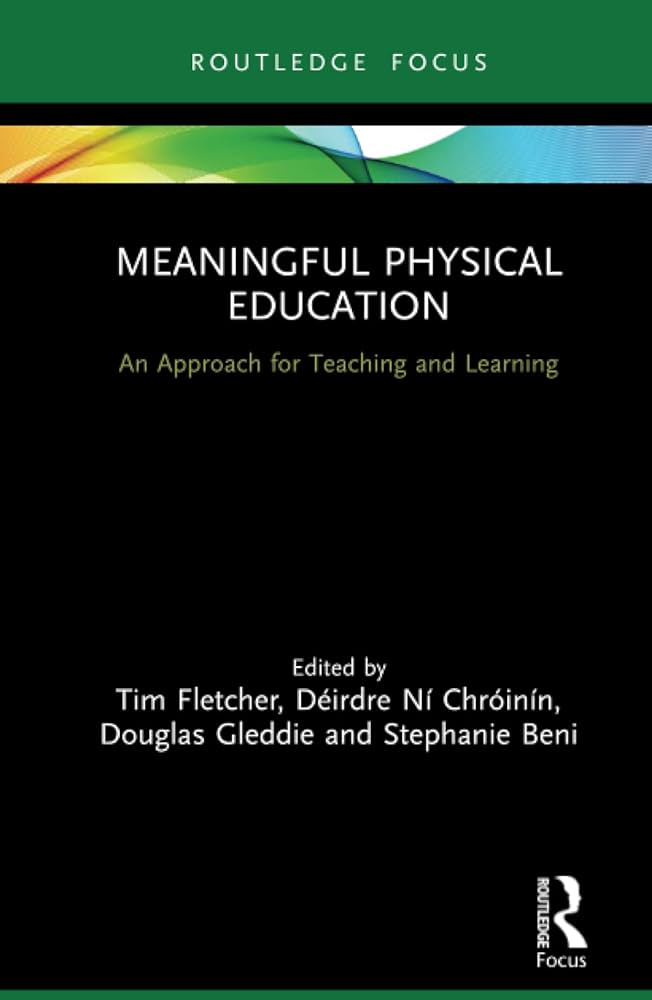
Buy the book! Meaningful Physical Education by Tim Fletcher, Déirdre Ní Chróinín, Doug Gleddie, and Stephanie Benni
 #slowchathealth