
Living in a day in which meaningfulness in Physical Education (PE) is becoming an ever-increasing presence in educational discourse, I want to discuss the importance of providing students with the context behind what they are covering within lessons. Put simply, this is the ‘Why are we doing what we are doing, Sir?’.
Essentially, I believe that good practice in PE involves putting the focus of the lesson into context relating to the wider activity. Imagine for a moment having a painting shown so closely to your face that all you can make out is a few blurry splodges of colour, this is your individual lesson focus. Suddenly, the painting is taken back six feet and you are able to see the masterpiece in all of its glory, that is the context into which the blurry splodges fit. From this distance, you can identify that those same splodges, which but moments ago meant nothing to you, are now part of a much bigger collective of splodges that make up a picturesque image of a forest.
The point that I am trying to make here is that children have got to understand where every lesson fits within the big picture. They may participate in the best batting lesson ever delivered, utilising a range of practice types and teaching styles, but without contextualising the importance of being able to bat effectively (e.g. scoring runs, preventing the opposition getting wickets), there is no larger purpose to what they are learning.
Myself and colleagues within my school are faced with a rapidly increasing population of pupils that do not watch sports on TV. Now, this may be down to lack of accessible content on terrestrial channels, or due to a plethora of other ways in which modern-day children can entertain themselves. Either way, the issue that is posed to us is an enormous lack of understanding of games, particularly. Opting for a traditional method of breaking down games into skills during our lessons would lead the children to operate within parameters of a game that they have never seen before and do not understand.
This issue was exemplified during a recent handball lesson I taught which aimed to develop pupil’s ability to support a teammate in possession. It was my first lesson with a shared class, their third within the unit. Having outlined the constraints-based game they were to play, one child asks ‘Sir, how do we score in handball?’. This was followed by a wave of his peers articulating support for his question. To me ‘throw it in the goal’ seemed like the obvious deduction for them to make however I had overlooked the fact that they had no experience playing or even seeing the full game. Instead, the first time they had been exposed to handball at 11 years old was in two lessons that drilled skills.
Practical implications
When delivering any lesson, ensure that key content is placed into context of the full activity/game. Ensure the children understand the why, when and where they are using what they are learning. If you have the capability, why not have a video of a game playing while the pupils are completing an arrival activity? If you are teaching games, ensure children are playing the game! Modified or otherwise.
This microblog post was a featured post in #slowchathealth’s #microblogmonth event. You can search for all of the featured posts here. Please do follow each of the outstanding contributors on social media (including Flynn Powell, the author of this post) and consider writing a microblog post of your own to be shared with the global audience of slowchathealth.com
Pair this blog post with the following:
How to Facilitate Deeper Connections to Physical Activity by Jordan Manley
Acknowledging the Teacher by LAMPE
Meeting Them (Almost) Where They’re At by Michelle Ireland
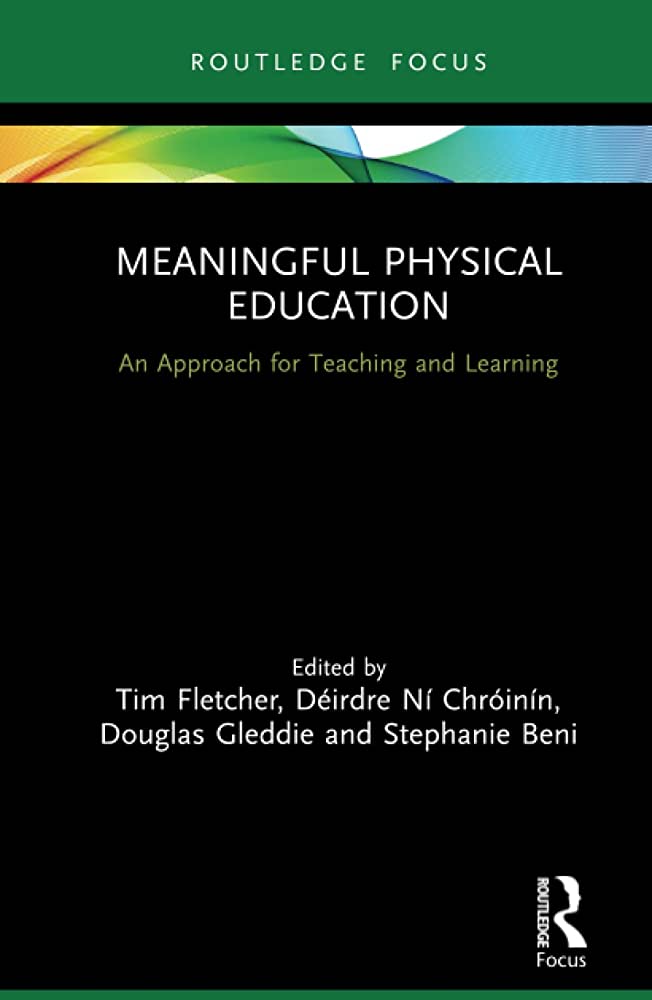
Check out the book: Meaningful Physical Education: An Approach for Teaching and Learning
 #slowchathealth
Pingback: Exit Tickets Develop Student Agency – #slowchathealth
Pingback: Student Agency and Inclusion in Net and Wall Games – #slowchathealth