
There are so many great ideas out there that it’s impossible to action each one of them immediately, and as such, hiding away at the back of my brain is a vast collection of pedagogical curiosities waiting to be rediscovered. Like the clutter on my desk, I know where each item is and know I’ll get to them when the time is right.
One such idea is ‘Hexagonal Thinking,’ something I first saw Jo Bailey showcase in a #PhysEd session at the 2015 WHPE conference.
Hexagonal Thinking is a teaching strategy that encourages critical thinking, collaboration, and the exploration of connections between concepts. Using hexagonal shapes with key terms or concepts written on them, students arrange these hexagons into a web or a pattern, creating connections between the concepts. The goal is to foster deeper understanding, promote critical thinking, and encourage discussions.
This activity’s kinesthetic, open-ended nature appeals to me and is typical of how I like to lead my classroom. The active learning, the physical manipulation of hexagons, and the collaborative analysis and justification of ideas make this ideal for my health class. Still, for the longest time, I couldn’t see where it best fit until recently.
I love my lessons on The Dimensions of Wellness (which remains one of my most popular blog posts), and it occurred to me that if we want students to see how each dimension of wellness is intricately intertwined, influencing one another in complex ways, Hexagonal Thinking might be the ideal teaching tool. Offering a dynamic visual approach for students to explore these connections and recognize that well-being is a holistic journey, I researched ways to bring this to my classroom.
Betsy Potash also wrote this blog post for Cult of Pedagogy that includes further ideas and templates and ultimately nudged me towards creating a digital template for students to use on their iPads. The blog post is also available as a podcast episode.
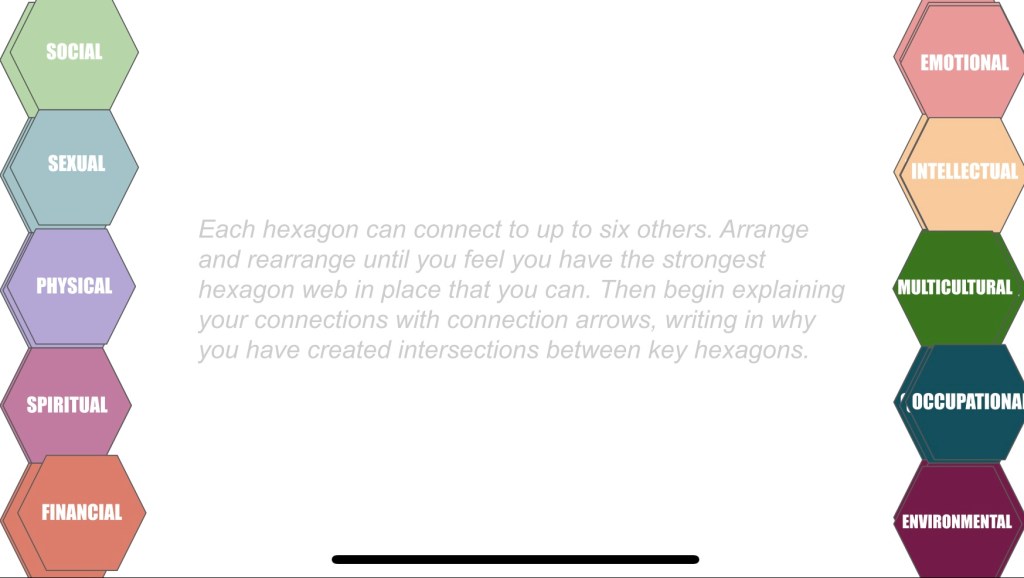
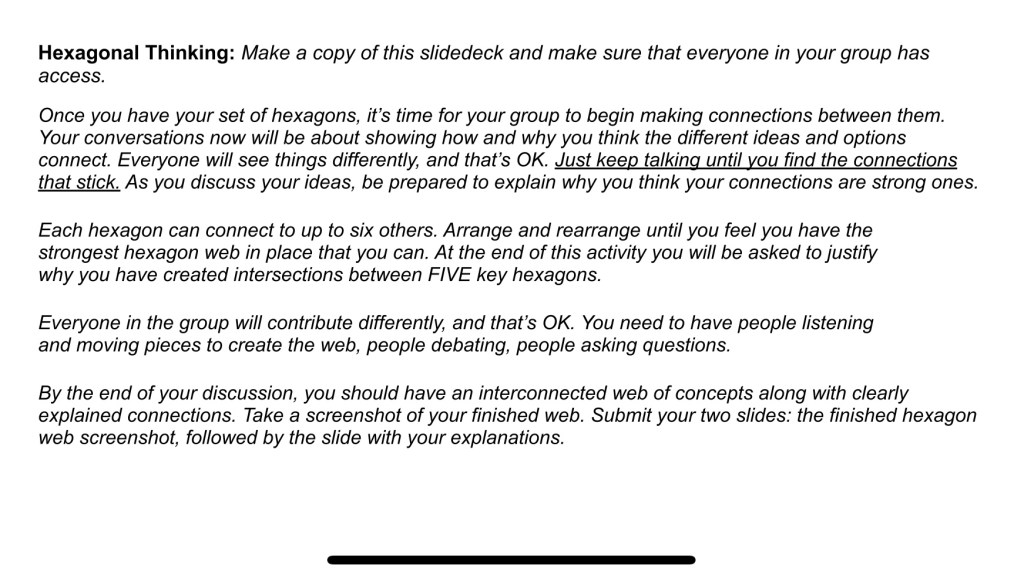
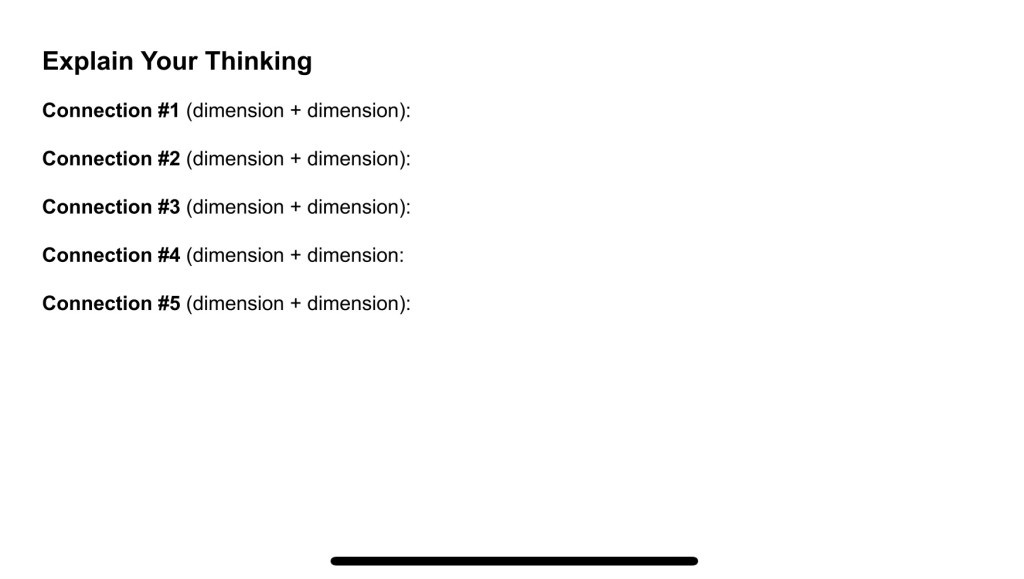
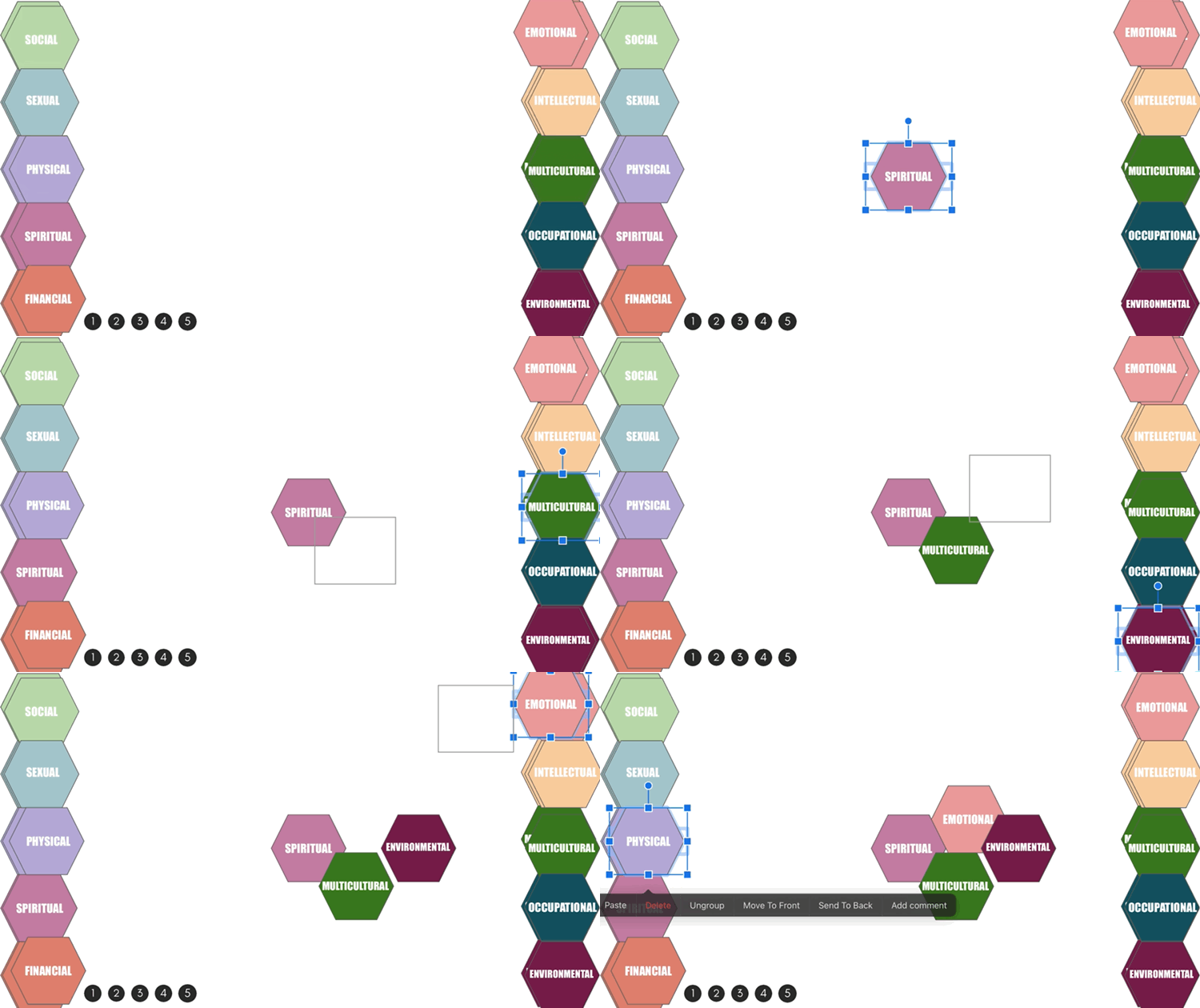
In google docs I created an interactive slide deck for students including instructions which you can download here. The engagement level was high as groups of students moved the hexagonal tiles around the screen while explaining their reasons for the decision. Some hexagons stayed in their original place, while some moved multiple times as students dove deeper, trying to find the ‘best’ connections and placement.
Once this stage of the activity was complete, the groups had to identify five strong connections and write a justification for linking these dimensions of wellness with each other. Some groups completed this second stage collaboratively, while some assigned a connection to each group member.
You could try this activity with these hexagonal post-it notes. One year on from writing this post, I used card hexagons (thank you Ian Lacasse for the template), some with magnetic tape on the back, and found it to be ‘less awkward’ than the digital version (see below).
At the end of the lesson, each group submitted a PDF copy with a very different final response, and the variation in group responses in this activity is a testament to the success of the exercise. It tells me that students actively participated, thought critically, and engaged in collaborative discussions, contributing to their learning experience.
I love how this activity encourages classroom diversity of thought and perspective. It acknowledges that there can be multiple valid ways to connect ideas, which is a valuable life skill. Hexagonal Thinking allows students to engage with content in a way that makes sense to them individually. It respects their unique thought processes and enables them to personalize their understanding.
Similar to my lessons on ‘Goal Setting,’ the value of Hexagonal Thinking lies not just in the final web but in the process of thinking and connecting concepts. Different responses show that students are engaging with this process, which is more important than reaching a single “correct” answer.
Incorporating Hexagonal Thinking into your classroom can be a transformative experience, fostering critical thinking, collaboration, and a deeper understanding of complex concepts. As you consider bringing it into your classroom, remember that the beauty of this method lies in the diversity of student responses and the individualized learning experiences it offers. If you embrace the creativity, discussions, and different viewpoints that emerge, you’ll see the true magic of Hexagonal Thinking unfold. I’m now kicking myself for not experimenting with Hexagonal Thinking earlier and I encourage you to explore this dynamic teaching strategy in your classrooms and witness the remarkable connections your students will create. An engaging and unforgettable lesson awaits.
If you enjoyed this blog post, you might also enjoy:
Hexagonal Thinking in Health Education by Jeff Bartlett
On Being Brave, Kind and Proud by Andy Milne
Increasing Student Voice and Choice in the Health Classroom by Ian Lacasse
Advice to a New Teacher by Renee Reedhardt
Have you read the latest Book of the Month recommendation?
 #slowchathealth
Using the interactive slide is a good idea. I used to get sick of cutting the hexagons out on paper and then seeing them go in the bin…
LikeLike
Pingback: Creating a Scavenger Hunt with Google Forms and QR Codes – #slowchathealth
Pingback: Dimensions of Wellness – #slowchathealth
Pingback: Wellness Dominoes: the Ripple Effects of Wellness – #slowchathealth