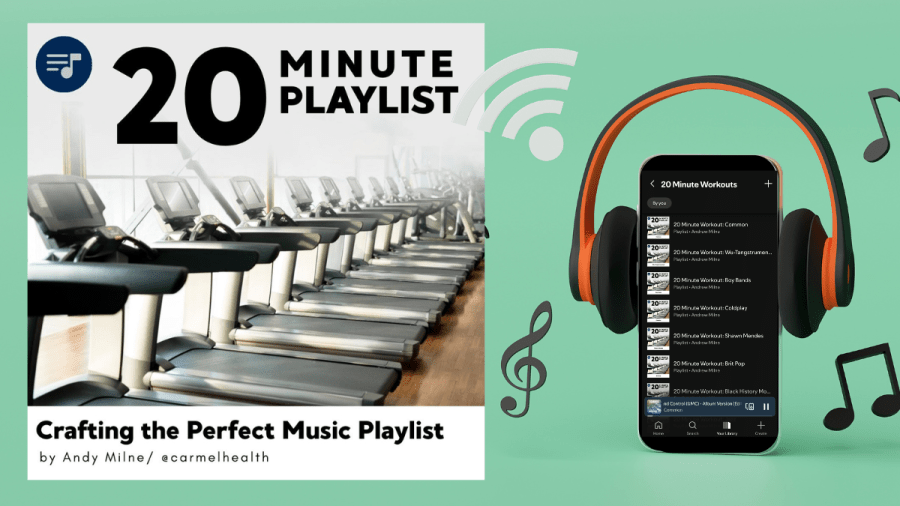
If you’re looking to create personalized music playlists that are perfect for your classroom, gym, or workout needs, then this blog post is for you. Regular readers of the site will know that I love music, have written about my love of music, and featured posts on how teachers are using music in their teaching spaces. This post shares how an intentionally crafted prompt entered into the AI model of your choice (ChatGPT, Gemini, Claude) can help you craft the PERFECT music playlist for your needs.
If you’ve ever been in the middle of a workout and suddenly felt an extra boost of energy when your favorite song came on, you know firsthand: music has power. It can motivate us, set the pace, and even make the hard stuff feel a little easier. Whether you’re sprinting on a treadmill, powering through a circuit, or cooling down after a long ride, the right playlist can transform the experience.
Over the past few weeks, I’ve been diving into playlist-making — not just for myself, but for my PE classes. This year I will be teaching a new PE elective that focuses on individual fitness. One of the (many) things I want my students to know is the role that music can play in motivating us to workout. I’ve had fun going back and forth with ChatGPT, tailoring my prompts, scolding it for not fully following my instructions, and making alternate suggestions to the initial responses provided. Following that experience, I think I ‘might’ have the perfect prompt to help YOU create playlists for your needs and the needs of your students.
When I realized that AI could help me put together thoughtful, science-backed playlists, I started experimenting. I fed ChatGPT specific prompts — workout length, BPM ranges for different phases of the workout, genres, themes — and suddenly I had perfectly timed playlists that featured great music music and followed the science behind the many roles that music plays in helping us work out more efficiently.
As I mentioned in this blog post, there’s more than just “good vibes” behind music’s effect on performance:
BPM Sets the Pace: Kelly McGonigal talks about GROOVE, the term used by musicologists to explain our instinct to move when we hear music. She writes that “For most people the impulse to synchronize our bodies to a beat is so strong, it takes effort to suppress it.” Songs with beats per minute that match your workout intensity help your body fall into rhythm. A warm-up might work best around 100–115 BPM, cardio peaks between 120–140 BPM, and a cooldown closer to 90–100 BPM.
Lyrics Matter: Costas Karageorghis, author of the excellent Applying Music in Exercise and Sport talks about the power of lyrics to motivate us to move. Song titles related to our activity, or that make reference to movement or heroic imagery can all “touch us emotionally or provide a source of affirmation”. Uplifting, empowering, or nostalgic lyrics can change your mental state and distract from fatigue.
Genre & Energy: In The Joy of Movement, Kelly McGonigal shares that “The brain responds to music it enjoys with a powerful adrenaline, dopamine, and endorphin rush, all of which energize effort and alleviate pain. For this reason, musicologists describe music as ergogenic, or work-enhancing.” A great playlist moves like a workout does — it builds, peaks, then tapers off. Shifting genres or eras keeps it interesting and prevents mental fatigue.
Research has shown that music can improve endurance, lower the perception of effort, and even help regulate breathing. In a group setting like a my PE class, I know that my playlists will bring an element of shared experience with students feeling more connected when they’re moving to the same beat. I can’t wait for them to hear my ‘Middle School Throwbacks‘ playlist!
Of course I’ve created playlists before, but using ChatGPT to creating a “perfect” workout playlist saved me hours. Finding songs with the right BPM, making sure the lyrics were appropriate, and balancing variety with flow. Now, it’s as simple as writing the right prompt.
The more specific the prompt, the better the results. I learned quickly that if I wanted playlists that actually fit my workouts, I needed to include:
Lyric appropriateness (especially important in school settings)
Length of workout (I specifically wanted 20 minute playlists)
Phases with correct BPM ranges (warm-up, peak, cooldown)
Genres or themes (There are some genres that I know little about!)
Any must-have tracks (I had some very specific track requests)
The Ultimate Playlist Prompt
Here’s the exact prompt I now use, and it’s yours to try:
Create a [length]-minute music playlist for [type of workout]. The playlist should include a warm-up section, a workout section, and a cooldown section. Include tracks from [genres/artists/themes] and make sure lyrics are school appropriate. Ensure the flow feels natural and motivating. Include song title, artist, and BPM. Warm-up tracks will be 90–110 BPM, steady workout tracks between 120–150 BPM, and cool-down tracks around 90–110 BPM.
Copy and paste that into ChatGPT, fill in your details, and watch it work its magic.
For teachers, the right playlist can change the entire feel of a class. It can make activities more engaging, help students keep pace, and even turn reluctant movers into active participants. For those working out on their own, it can make a solo session feel like an event. I plan on using my 20 minute workout playlists as timers with 20 minutes of effort, followed by a water break and transition to a new workout or activity.
The best part? Once you have a great prompt, you can use it over and over — just swap out the theme, genre, or length. It’s fast, it’s creative, and it can be surprisingly fun to see what combinations ChatGPT comes up with. If students don’t vibe with a specific track, I can go in switch it out. Same goes if a new track blows up and all students want to include it in our playlists.
If you’ve been stuck in a music rut or just want to experiment with how songs can shape movement, give this a try. You might just find your next great workout is only a playlist away.
Pair this blog post with the following:
Multicultural Appreciation Through Music by Dom Servini
Moved by Music by Andy Milne
Creating Classroom Playlists by Andy Milne
Spinning Records, Sparking Minds by Shannon Beatty
Have you read the latest Book of the Month recommendation?
 #slowchathealth