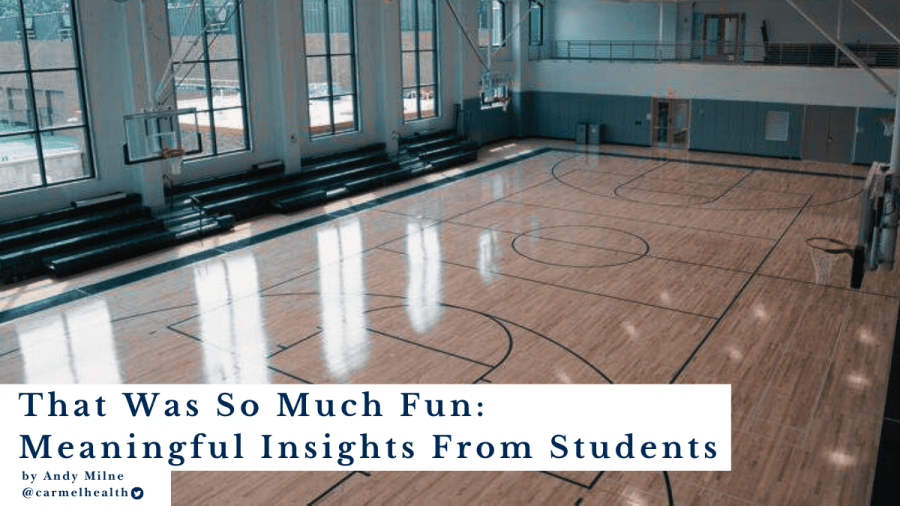
There are moments in a Physical Education class where the sights and sounds tells you everything you need to know. Laughter between rallies. Music playing while students dance and celebrate points. Teammates congratulating each other, opponents offering high-fives and bodies collapsing into giggles after long exchanges. Over the past few weeks, that has been the reality in my gym during a volleyball unit with a small group of students who play hard, compete fiercely, and somehow manage to do it all with huge smiles on their faces. Last week, as they walked off the court, sweaty and smiling, one student summed it up perfectly: “That was so much fun.” Rather than rushing on to the next unit, I wanted to pause and ask a simple question—what exactly made this experience ‘so much fun‘?
To put my class into context, we offer junior and senior students a significant number of PE electives at my school, ranging from dance to outdoor education, yoga to strength and conditioning, team block to lifetime activities. The latter is my elective, a class that focuses on breadth more than depth, cooperation more than competition. I have a range of students from prospective D1 athletes to students yet to find a favorite way to move.
In a previous blog post I wrote about my experience of asking students, at the beginning of the school year, what they thought a PE program needs to include to ensure that every student has a positive experience and begins to appreciate the value of physical activity? Fun was a central theme, with students repeatedly stating that enjoyable activities lead to a positive attitude toward physical activity. They mentioned that fun activities, especially when shared with friends, made PE meaningful and something they looked forward to.
And so back to my desire to find out exactly what students mean when they say that an activity is fun. I crafted a series of questions that sought to dig deeper into the feature of fun, but written in a way to weave in the other features of Meaningful PE: Social Interaction, Challenge, Motor Competence, Personally Relevant Learning and Delight.
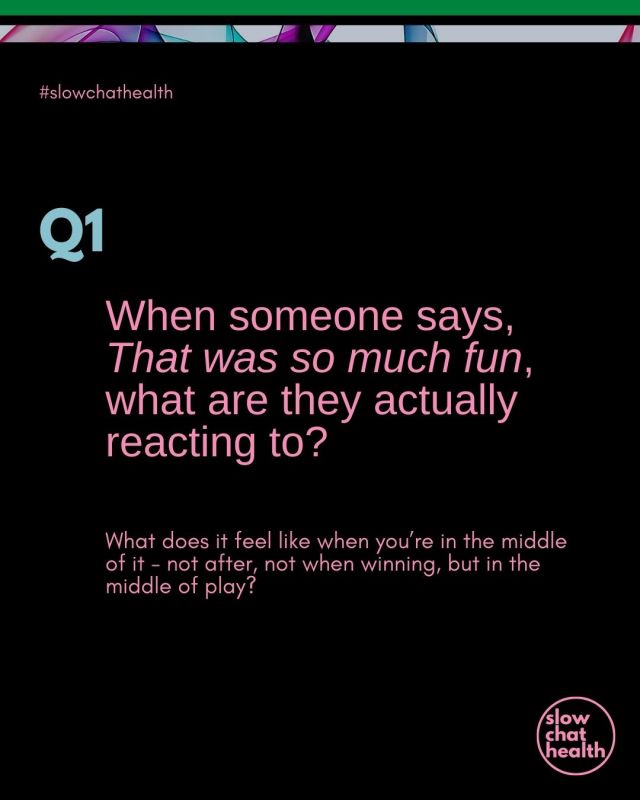
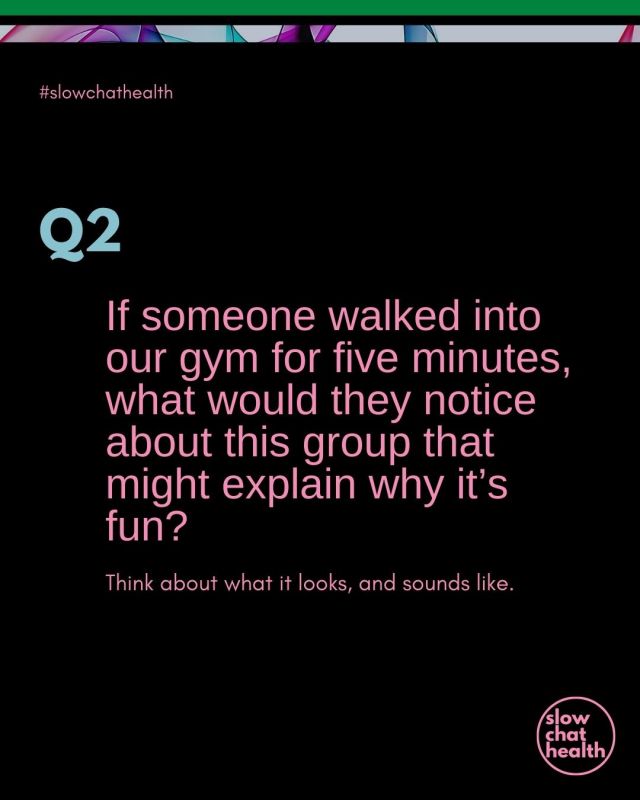
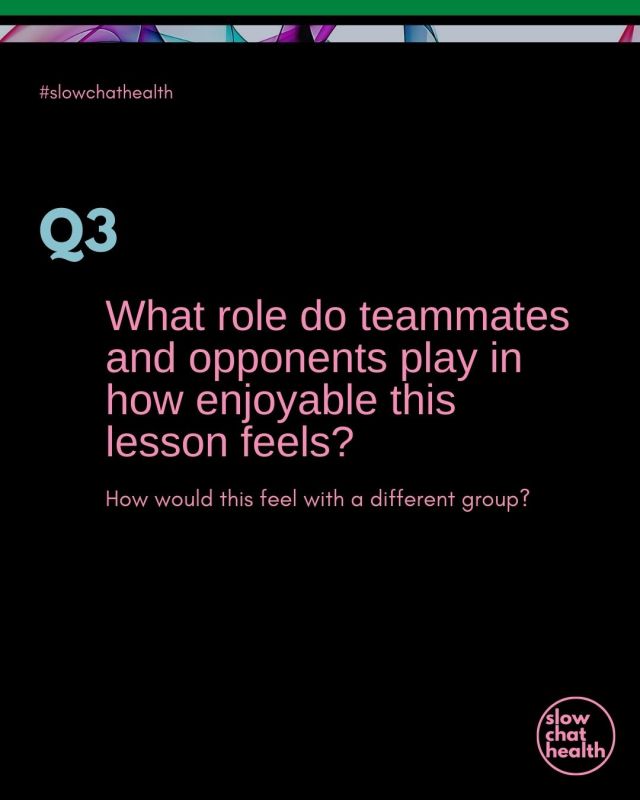
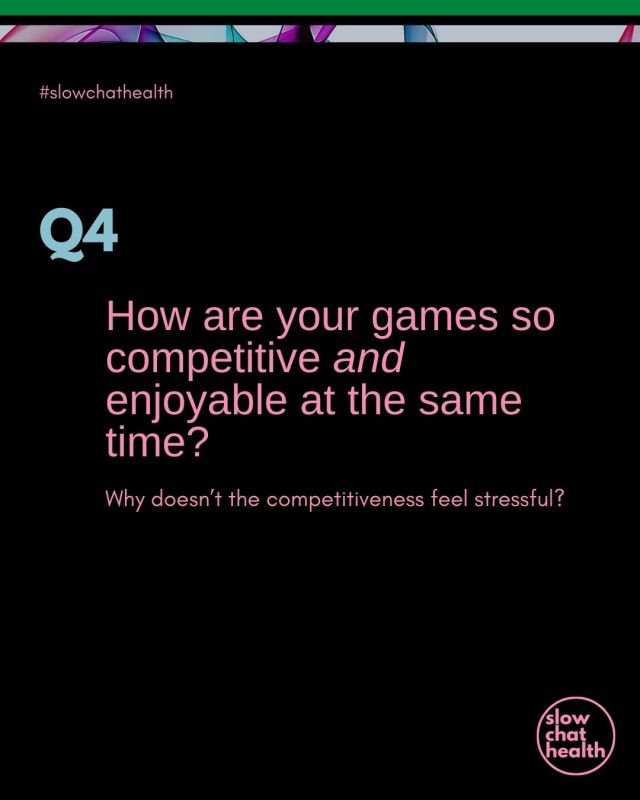
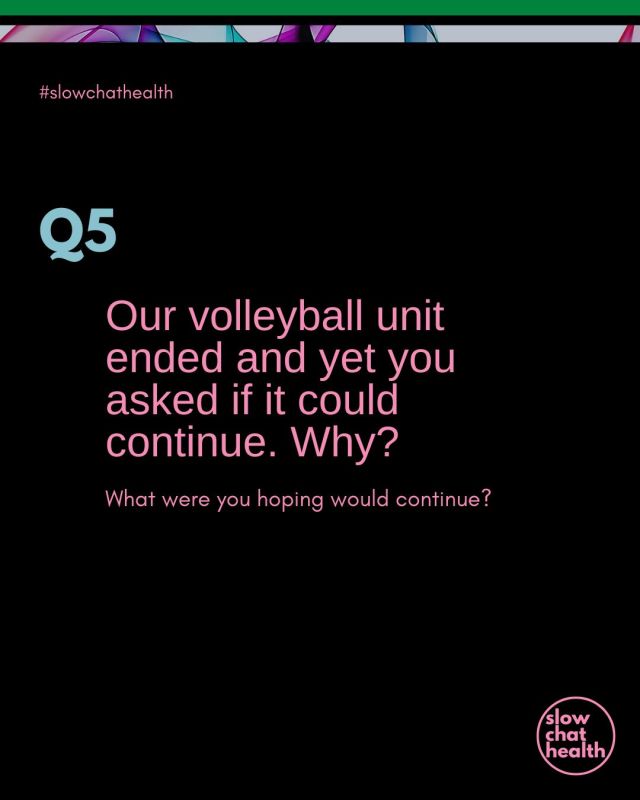
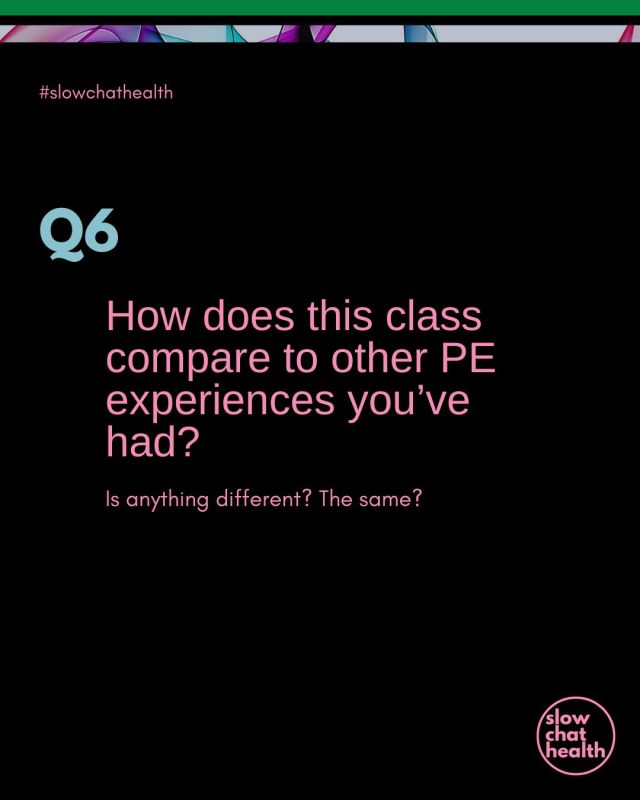
My students stood in a circle, and I recorded their responses using the Voice Memo app on my iPhone. I later realized that this app has a transcribe feature, which made it so much easier for me to analyze the comments.
Question 1: When someone says, “That was so much fun,” what do they actually mean? What are they reacting to?
The environment, the game itself, the competition, the social connections. Everyone gets really excited when they do well, and they want to win. Your heart rate goes up. When there are two teams that are really close in score and one team pulls ahead, it’s just so fun.
Competition, challenge seems to play a big role here. This group of students are strong athletes, with many committed to playing their chosen sport at college next year, and so I would have expected the competition element to come to the fore. The closeness of the scores in each of the volleyball games should remind teachers to ensure that teams are selected with ability level in mind. Although these teams, and this group of students, were self-selected, I do empower all students to rearrange teams if they don’t appear to be equal.
Question 2: If someone walked into our gym for five minutes, what would they notice that might explain why this is fun?
Everyone’s yelling and cheering, which makes you want to have a positive attitude.
There’s a lot of dedication to each other.
Dancing — definitely dancing. There’s good chemistry, we all get along. We’re competitive, but none of us are mean to each other. That’s why we work so well together. It’s friendly competition. We all came from different classes, but we come together at the end of the day.
Students are referring to the culture of this class in their responses. We are now in semester 2 and I have taught this class for 6 months. They know my expectations, and aspirations for this class, and I know how to tailor my teaching to their needs. It is clear that students are encouraged to have, and exhibit fun. There’s no holding back, and the singing, dancing, friendly exchanges, giggles, are evidence of this. Students aren’t afraid to be themselves, and there is no judgement from peers. I would argue that the sense of community, and the centering of student voice and their experience, isn’t something that I would have considered, or made space for, as an inexperienced teacher at the start of my career. (Insert reference to the 1900’s, my age, and the latest meme that suggests that I’m old).
Question 3: What role do teammates and opponents play in how this lesson feels? Would it be different with a different group?
We hype each other up. We celebrate when someone tries something new, like going up for a spike, even if it’s not perfect. No one’s afraid or timid, because we know the people around us won’t judge us. No one here thinks they’re way better than everyone else. There’s no judgment. We’re willing to take risks. We’re not scared to make mistakes.
This group of students is special. Competition never turns into “us versus them”, instead, it feels like one collective us. Teammates and opponents create a safe environment through continual encouragement (did I mention the dancing and giggles?), and there’s permission to take risks. These responses remind me that the creation of a safe space and a sense of community, although directed by the teacher, can only happen with the participation of our students. Reflection by, and feedback from, students can help teachers ensure that we are all working towards shared goals.
Question 4: Why are your games competitive but still enjoyable? Why doesn’t competition make it stressful?
It’s a safe environment.
There’s no actual trophy or high stakes.
Nothing bad happens if you lose.We put ourselves out there knowing we’ll have more opportunities next time. We’re all pretty equally skilled, so it doesn’t feel aggressive. It’s competitive, but not stressful.
I acknowledge, and I mentioned this to the students, that this is a competent group of senior athletes. They are confident in their ability, and appreciate that the competition they experience in class is nothing compared to their journey as Varsity athletes. Some of these students already own at least one State winning medal, with their eyes on more silverware in their final year as a high school student athlete. The competition in my class invites effort, but the result is never the main focus of any class. That’s why I always refer to this elective as more cooperative and collaborative than competitive. We have other electives that highlight competition, and many students who choose my elective save their competitive edge for extra-curricular sporting pursuits.
As a follow up to this question, I asked – typically, what happens when someone makes a mistake? We come together and encourage each other. We joke about it — friendly chirps. It keeps things light. I love that students are able to self-regulate the emotional climate and that mistakes are seen as moments of connection, and not correction.
Question 5: We are supposed to have moved on to another activity but you chose to stay in volleyball. What were you hoping would continue?
We weren’t ready to stop, we were having too much fun.
The wins were even — one team won three times, then the other won three times, and then the last round felt like unfinished business. We were starting to figure out strategies and how our teams worked best together. Once that chemistry is high, you don’t want to drop it.
With students suggesting unfinished business, refining strategy, and growing chemistry, I can see that they value the process and not just the activity. I provided autonomy by allowing them to choose whether to move on to floor hockey, or stay in volleyball and obviously this decision paid off. I used to think of delight as something contained within a lesson, a brief flow state that happened in front of me and then passed. This experience has made me wonder whether delight can extend beyond a single class and live across lessons.
Question 6: How does this class compare to other PE experiences you’ve had?
It feels more meaningful.
There’s a purpose.
You actually look forward to it.
Being around people who are into it makes you more competitive and more engaged. It’s fun at the end of the day before you go home. Last year, it felt like people didn’t really care, they were less engaged or just going through the motions.
Admittedly, my students have a habit of providing me with the answers they think I want to hear, but I’d like to think that this late in the year they appreciate my efforts to get them to think about meaningfulness. They know that I want them to think about their movement journey, and to appreciate the opportunity to move together at the end of the day. This class also knows that they have the ability to make or break my 90 minute commute home on a Friday, and rarely do they let me down. Finishing the week with this group of students can be the best way to kick start my weekend.
Question 7: If PE always felt like this, how might it impact people’s relationship with activity later in life?
If PE is someone’s main form of activity and it’s a negative experience, that affects how they feel about being active outside of school. This kind of environment makes you want to try new things. I wouldn’t normally play volleyball for fun, but now I would. It helps you get comfortable doing uncomfortable things.
It also helps you connect with people you didn’t know before. You’re put into this class together, and when it’s a good environment, it makes everything more fun. No one judges you for trying.
These students make a clear connection between school experiences and lifelong behavior, but the nice thing is, I have similar quotes from students last year, and the year before. Clearly the Meaningful PE approach encourages students to make these connections. The students interviewed for this blog post recognized that for some, PE is their primary exposure to physical activity. One acknowledged that having PE on a schedule means that you have to be there, and that negative PE experiences can close doors, while positive ones open them. I’m proud that this group emphasized trying new things, becoming comfortable with discomfort, and building social confidence and I know these experience will shape them as they continue to move beyond high school.
My students want to be in this class, it has personal relevance. They speak of refining strategies to outwit an opponent, which speaks to challenge and competence. Social interaction is crucial to their experience, leading to greater fun and delight, and this comes from building a positive culture in our gym.
When students tell you they weren’t ready to stop, that they look forward to class, or that they might now choose to play a sport they never would have before, it’s worth pausing. Those moments tell us that something meaningful is happening, and if we listen closely, students will often tell us exactly what that something is.
If this blog post has inspired you to read more on making PE more meaningful then you’ll like the following:
Meaningful PE: Autobiographical Assignment by Andy Milne
Making Meaningful Physical Education Elementary Friendly by Will Westphal
The Power of Meaningful and Joyful Experiences by Leticia Cariño
If I Was Introducing Meaningful PE For The First Time by Ty Riddick
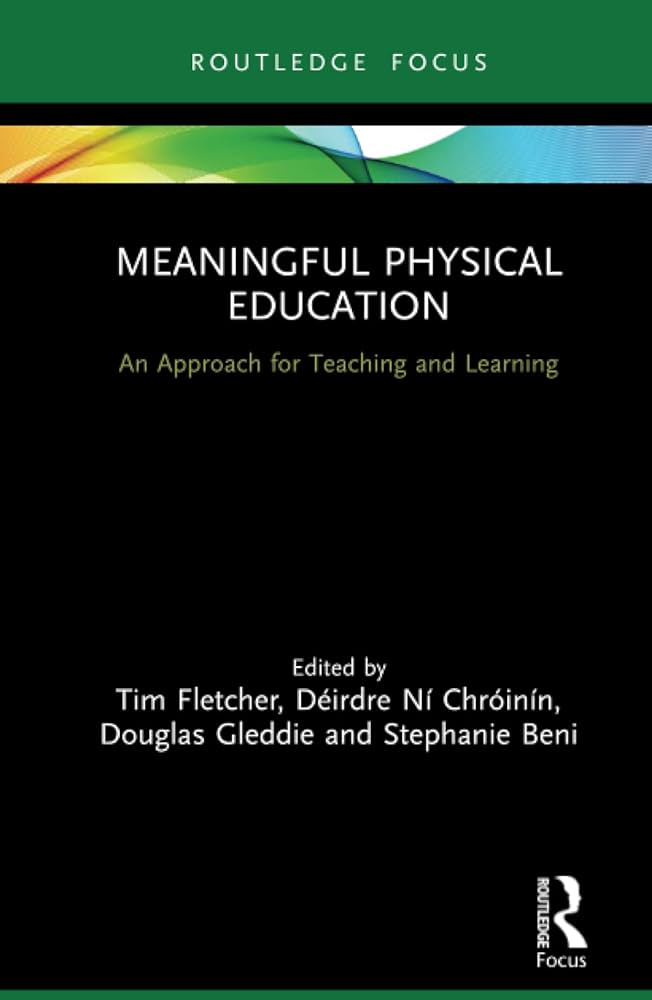
Buy the book! Meaningful Physical Education by Tim Fletcher, Déirdre Ní Chróinín, Doug Gleddie, and Stephanie Benni
Check out this Spotify playlist of podcast episodes discussing Meaningful PE, which includes the awesome podcast project from Doug Gleddie and Ty Riddick.
 #slowchathealth