Whose responsibility is it?
This is a common question that comes up when adults are considering how to disseminate information to kids. Whose responsibility is it to teach kids about their sexual health? Whose responsibility is it to teach kids about drugs and alcohol? People will have a variety of opinions. But let’s focus on one:
Whose responsibility is it to teach kids about infectious diseases?
I would argue it is health educators and believe it falls right into our National Health Education Standard 7.
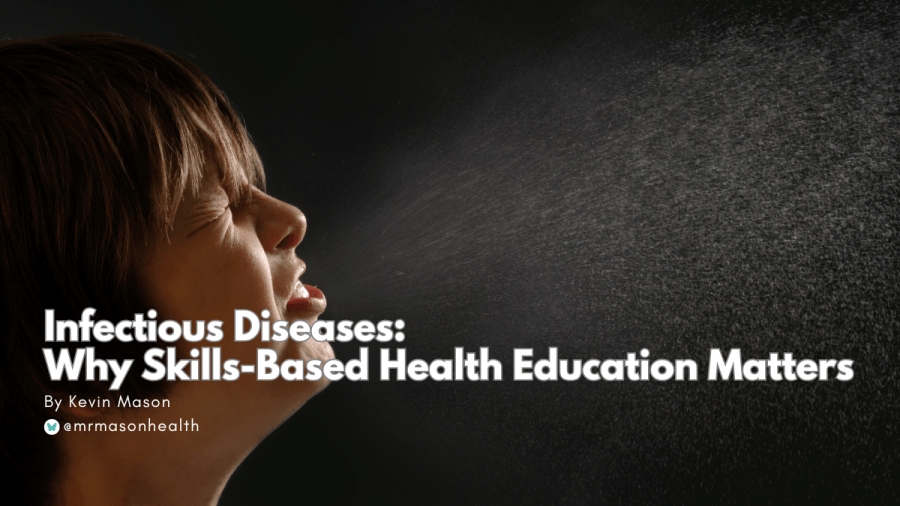
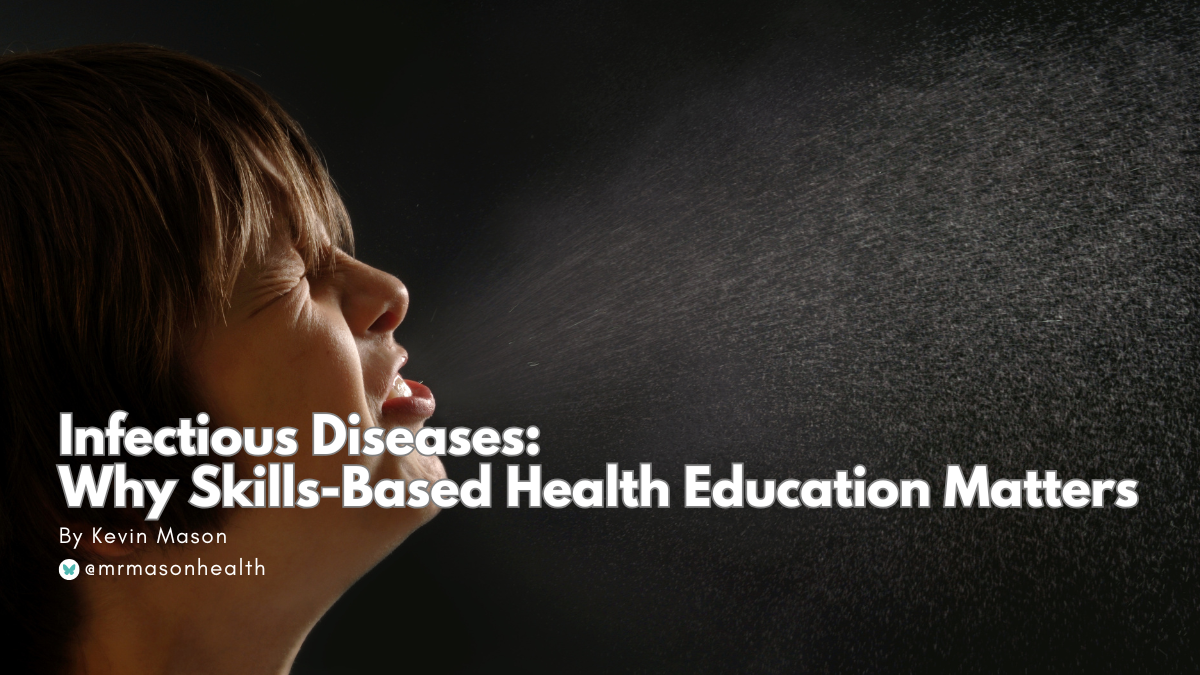
Since the start of the Covid-19 pandemic, our society has been grappling with an unprecedented amount of information on infectious diseases. Terminology like ‘transmission methods’, ‘quarantining’, and ‘incubation periods’ all found their way into our public discourse. Although this influx of information could be overwhelming, it provided valuable insights into the knowledge and skill gaps our society has around disease prevention, especially respiratory viruses. I think we have the responsibility to change that.
Students have repeatedly asked questions about this information over the past six years in our health class. Though we cover communicable and non-communicable diseases in our sexual health unit, this is different. When respiratory or airborne infections come up, I find myself giving the quick “wash your hands and cover your cough” response before moving on. It wasn’t until a conversation with my advisory class this winter that I realized I was not actually helping students with this reply. Flu and Covid seemed to run rampant in our community throughout the holidays and students wanted to understand why. I believe they deserve to have accurate, skills-based information (K-12) to understand how to keep themselves and others safe.
In a skills-based health classroom, here’s what that could look like:
Analyzing Influences (NHES Standard 2)
- Students are presented with an infection control measure (wearing a mask, getting a vaccine, etc.) and tasked with identifying influences that would impact their decision to use it (positive, negative, internal, and external)
- After identifying the influences, students are taught how to analyze the influences to broadly separate them into categories that make sense to them (+/-, safe/unsafe, helpful/not helpful, etc)
- Finally, students are tasked with creating an action plan to manage one of the negative influences that is preventing them from practicing one of the infection control measures
Accessing Valid and Reliable Information (NHES Standard 3)
- Students are presented with a variety of essential questions around disease prevention, then tasked with finding reliable sources to develop an opinion on them. Some ideas:
- Should schools have better air filtering to prevent infections?
- Should everyone be required to get vaccinated to attend school?
- Should people wear masks on public transportation?
Interpersonal Communication (NHES Standard 4)
- Place students in partners where they are tasked with having a conversation about taking preventative measures:
- Students communicate with their partner about their vaccination status
- Students communicate with a parent about their need stay home from school when they are sick
- Students create boundaries with their friends in order to prevent infection
- Students practice refusal skills to attend a large gathering while sick
Decision Making (NHES Standard 5)
- Students are presented with different scenarios where they need to showcase their background knowledge by making the safest decision possible using the DECIDE steps
- Sibling is sick in the same home and you have an important playoff game coming up
- You notice there are several people with a bad cough in your class
- You have a cough and sore throat but otherwise feel okay and have a math test at school that day
Goal Setting (NHES Standard 6)
- Students set a safety goal and reflect on their progress
- Choose one infection control method to try for a month
- Connect their goal to another skill such as creating boundaries or resolving a conflict
Advocacy (NHES Standard 8)
- The entire class is tasked with creating a campaign to increase infection safety at the school
- The entire class organizes to create a community campaign
With a clear emphasis on skills-based practices, we all understand the importance of students having background information (NHES 1) in order to make safe decisions. Some content to consider teaching a mini-lesson on:
- Vaccine safety and effectiveness
- How PPE functions (proper mask fit, safely removing gloves, etc.)
- Chains of Infection
- Modes of Transmission (specifically respiratory and airborne)
I was moved to write this blog after an all-school meeting last week in which this topic was brought up. Our community has seen a significant rise in cases and our students deserve accurate information and intentional practice on how to keep themselves and others healthy in these times.
Helpful Resources:
- Vaccine Makers Project: https://vaccinemakers.org/lessons (these are not skills-based)
- VMP Vaccines and Herd Immunity: https://www.sciencejournalforkids.org/articles/lesson-ideas/herd-immunity-for-middle-school/
- Memorial Sloan Kettering Cancer Center: https://libguides.mskcc.org/infectiousdiseases/home
- National Institute of Allergies and Infectious Diseases: https://www.niaid.nih.gov/research-areas
If you have any skills-based lessons you teach on this topic, please share your ideas/experiences in the comments! Take care!
If you enjoyed this guest blog post from Kevin Mason, you might also enjoy:
Why Leave Health Education to Chance? by Rachael Dixon
Ignite Deep Learning in Skills-Based Health Education by @marstar21
This Is Not Your Parents’ Health Class by Andy Milne
Have you checked out our latest Book of the Month recommendation?
 #slowchathealth