When I first wrote about using Hexagonal Thinking to help students explore the 10 Dimensions of Wellness, I shared how powerful it was to see them physically (or digitally) connecting concepts together. The beauty of the hexagon activity lies in the way students can literally move ideas around, discovering new links and debating which connections feel strongest. It’s hands-on, collaborative, and encourages critical thinking.
Two years on from my first use of hexagonal manipulatives I found myself wanting to improve the lesson. I realized that students needed a warm-up to get into the right mindset. Some were quick to identify that “everything connects to everything,” but their explanations were often a bit flat or superficial. They could see a connection, but struggled to explain how or why those links mattered. That’s when I began experimenting with a lead-up activity I’m currently calling Wellness Dominoes.
What Is Wellness Dominoes?
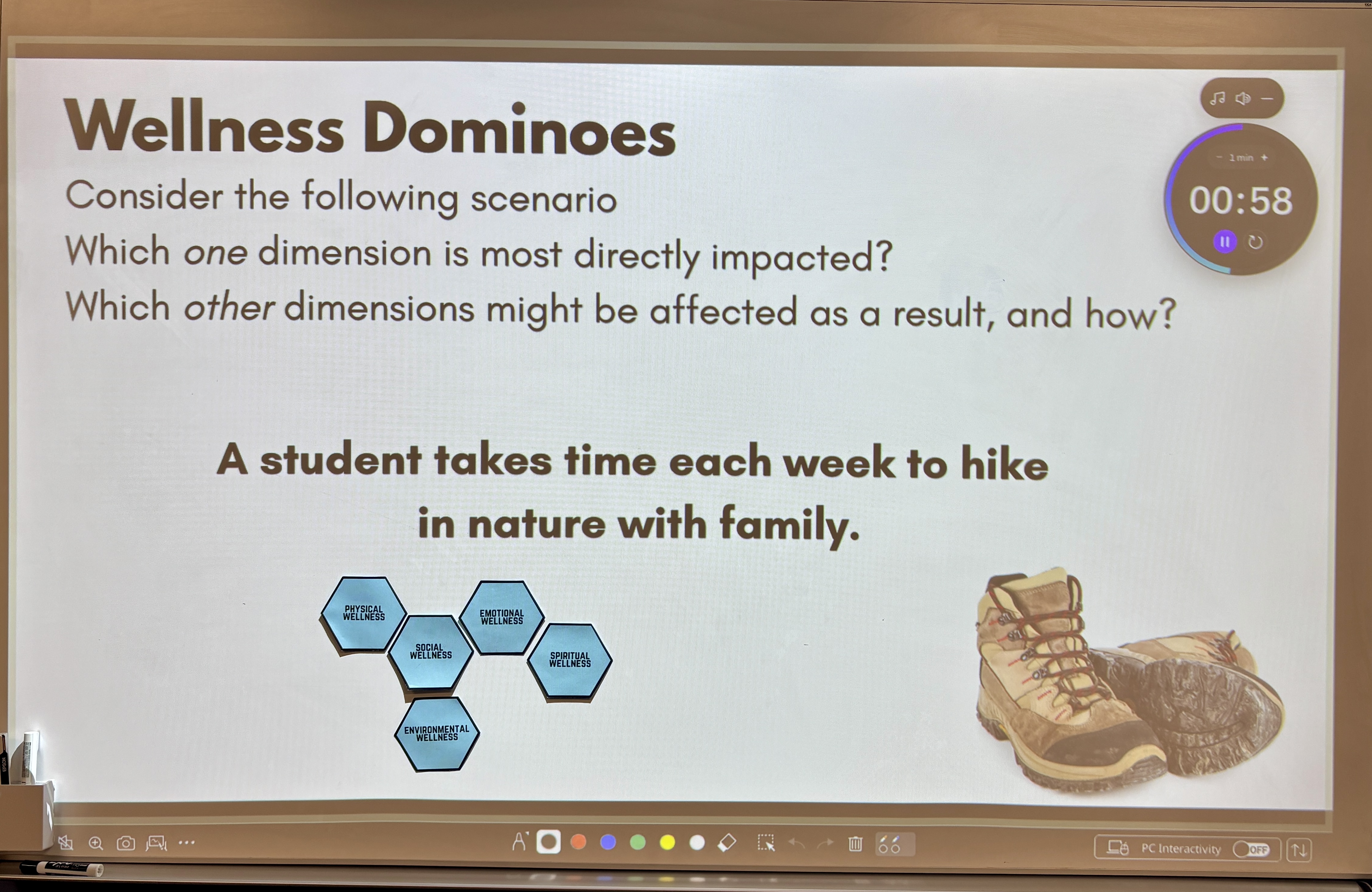
The idea is simple: students are given short scenarios and asked to think through two layers of impact:
- Which one dimension of wellness is directly affected?
- How does this “domino effect” ripple out into other dimensions?
For example, take this scenario:
A student stays up until 3 AM playing video games.
Most students will immediately spot the hit to physical wellness, a lack of sleep, fatigue, and lower energy. But then if I ask “what’s next?”, they quickly recognize that poor sleep impacts emotional wellness (irritability, stress), intellectual wellness (trouble retaining and recalling information), and even social wellness (tension with friends or less energy to socialize). By framing it as a chain reaction, students are nudged to think in layers, rather than stopping at the most obvious answer.
Why It Works as a Lead-Up
Wellness Dominoes is the perfect primer for Hexagonal Thinking because it does three key things:
- It leans into critical thinking. Students get comfortable looking beyond the surface to spot deeper, less obvious connections.
- It normalizes reciprocity. By talking through how Dimension A affects Dimension B (and then back again), students begin to see wellness as cyclical, not one-directional. In the past some students struggled with the two-way connection.
- It makes the abstract concrete. Scenarios rooted in real life . Scenarios regarding skipping lunch, getting injured in a soccer game, or starting a part-time job give students relatable entry points before they tackle the more open-ended hexagonal task.
By the time they reach the hexagons, students are ready to think more flexibly and justify why certain dimensions belong together. This warm-up activity provides the scaffolding; the hexagons let them build the house.
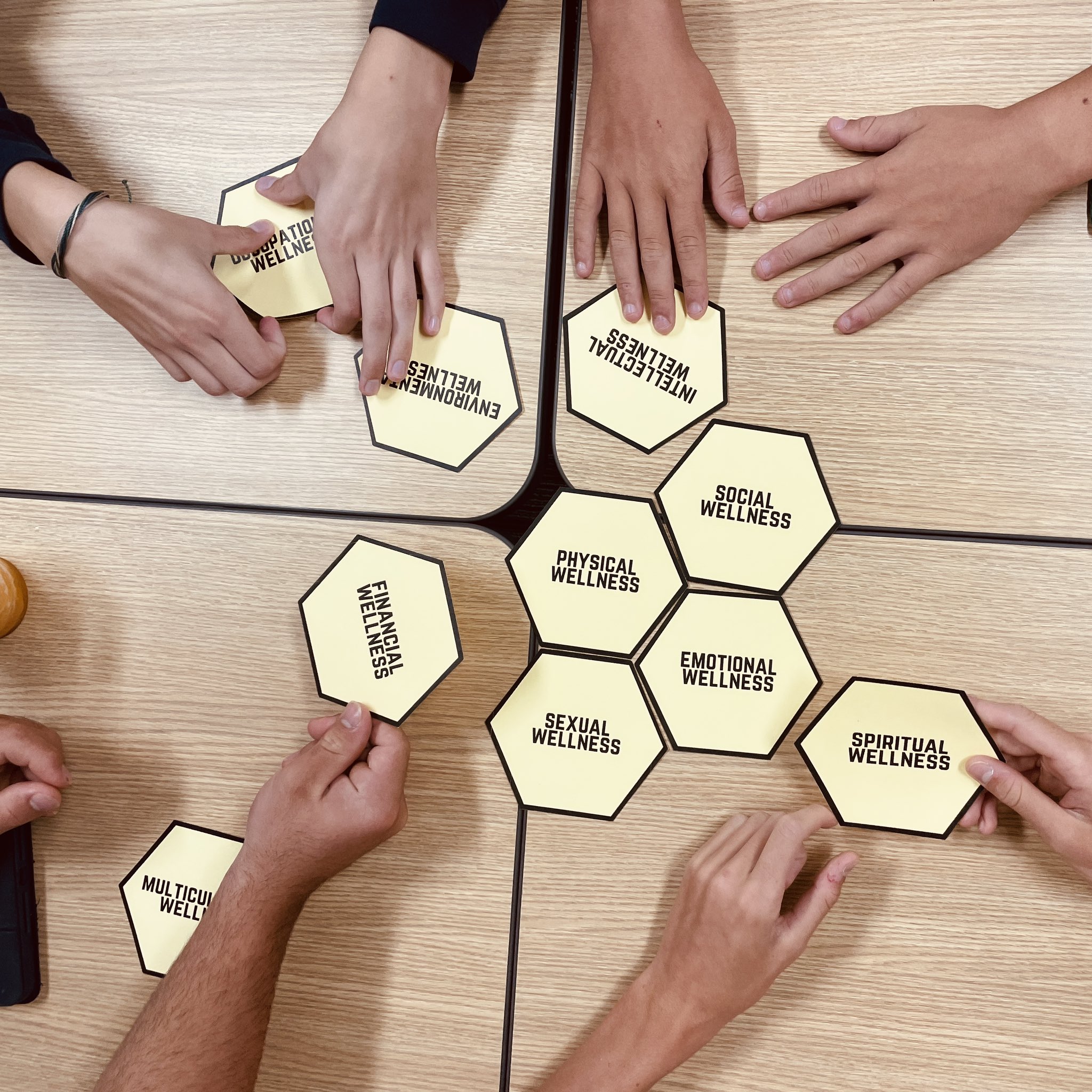
Here is the hexagon template I use (courtesy of Ian Lacasse)
Sample Scenarios
Here are a few of the prompts I’ve used in class to spark discussion:
- Someone skips lunch every day because they feel too busy.
- A student argues with their best friend and avoids them at school.
- Someone gets injured during a soccer game and can’t play for 6 weeks.
- A teen starts their first part-time job at a local café.
- A student takes time each week to hike in nature with family.
- A student feels left out when friends don’t respect their cultural food choices.
- A student feels pressured by peers to be sexually active before they are ready.
Each of these touches on a different dimension first, but when students dig deeper, they quickly see how multiple dimensions get pulled into the ripple effect.
Student Response and Engagement
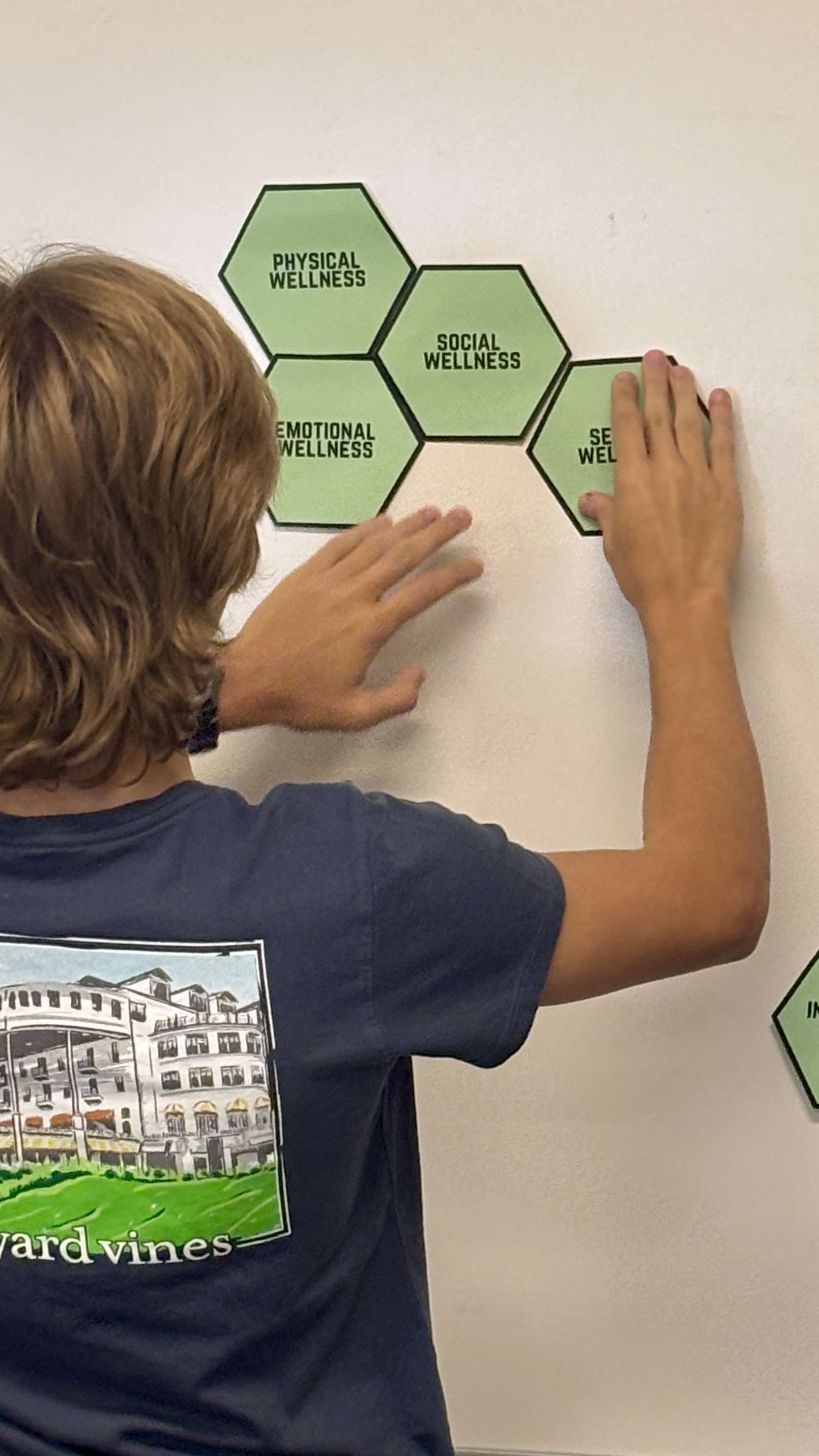
What I love most is the quality of conversations that emerge. Sarah G-H is in my Brains Trust, and I texted her as soon as the scenarios created a buzz of conversations in my classroom. Students debated whether emotional wellness or social wellness is “hit first.” They share personal examples that make the scenarios feel real. And as they talk through the dominoes, they start to use more sophisticated language, moving from “it makes you tired” to “poor sleep impacts focus and mood, which then affects relationships.” The conversation between two students sitting in front of me, regarding the connections between sexual wellness and social wellness, was outstanding!
The transition into hexagonal thinking was almost seamless. Having just traced these ripple effects, students were primed to connect and reconnect hexagons, explaining why emotional wellness might sit between social and physical wellness, or how spiritual wellness and environmental wellness are linked in ways they hadn’t considered before.
Closing the Loop
Wellness Dominoes isn’t just a warm-up, it’s a mindset shifter. It reminds students that wellness is never one-dimensional and that our choices rarely stop at a single outcome. By the time they move into the hexagonal thinking activity, they’re better equipped to explore the web of wellness with curiosity and depth.
I’m glad that reflecting upon an already successful lesson, led to the addition of this activity to my established lesson plan. It gives students a safe, structured entry point. The hexagons open up the space for creativity, complexity, and collaboration. Together, they encourage students to see wellness as a deeply interconnected, holistic journey, and empower them to see new ways in which to build wellness-enhancing behaviors.
If you enjoyed this blog post, you might also enjoy:
How I Embraced Hexagonal Thinking by Andy Milne
Hexagonal Thinking in Health Education by Jeff Bartlett
On Being Brave, Kind and Proud by Andy Milne
National Health Education Standards – Educator Kit via SHAPE America
Have you read the latest Book of the Month recommendation?
 #slowchathealth