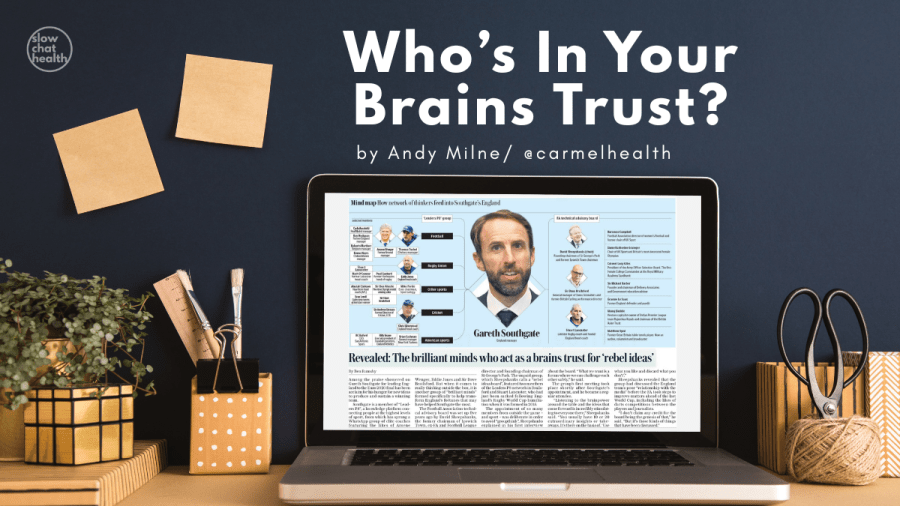
A few years ago, I came across an image that resonated with me. It showed how Gareth Southgate, then the manager of the England men’s soccer team, draws on a network of thinkers to help shape his decisions. Not just football minds, but voices from rugby, cricket, sailing, cycling, even the military. A deliberate mix of perspectives.
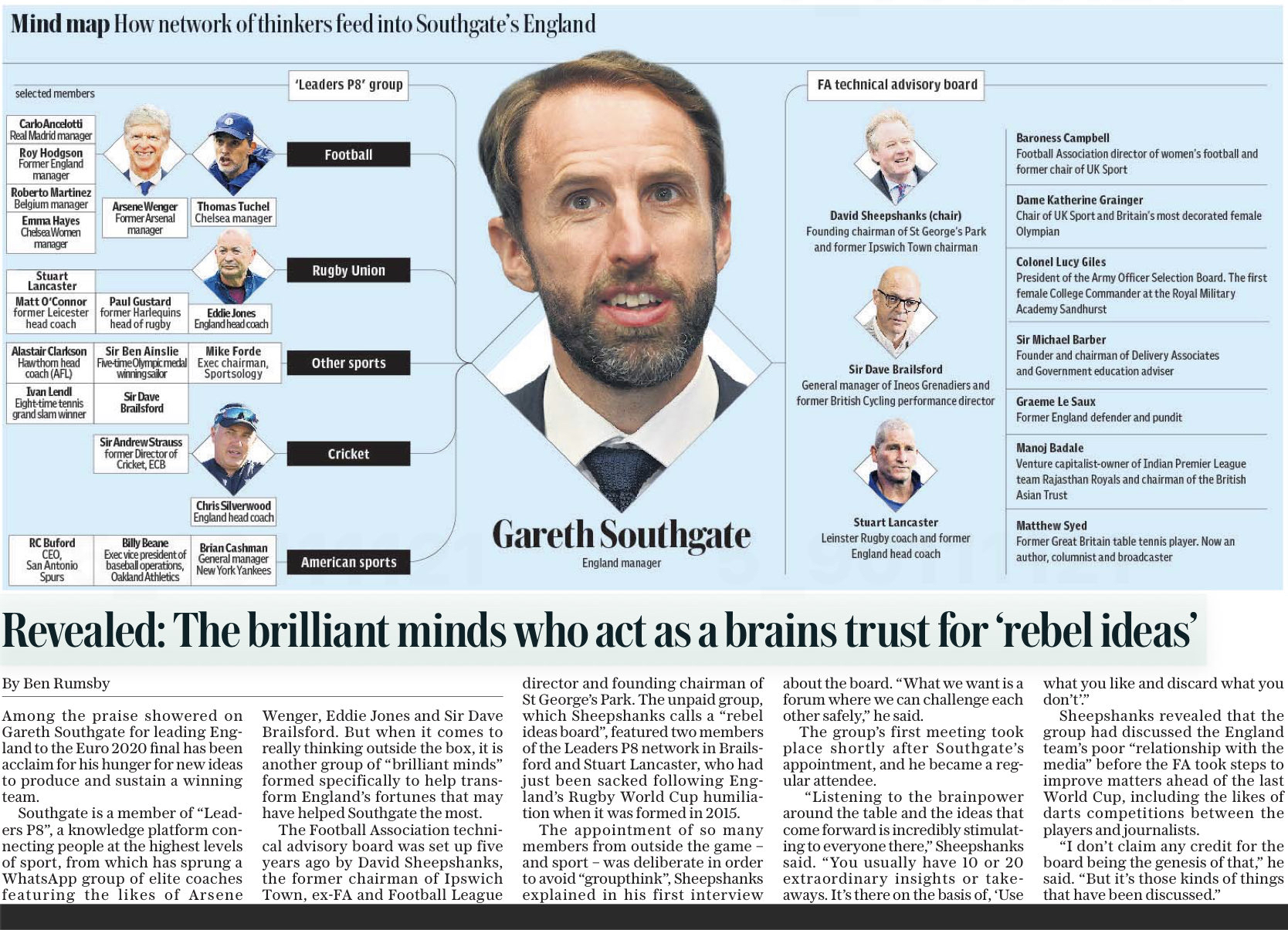
Southgate calls this group his “brains trust.” It’s not a formal committee. It doesn’t even get together to meet as a group. It’s a collection of people he can call on to stretch his thinking, challenge his assumptions, and spark ideas he might not arrive at on his own.
That got me wondering: who’s in my brains trust as a teacher?
What a Brains Trust Does
At its heart, a brains trust is simply this: people you turn to when you need your thinking sharpened. People who see things differently from you. People who ask questions you hadn’t thought to ask.
For Southgate, that means having Arsène Wenger (football), Stuart Lancaster (rugby), and Sir Dave Brailsford (cycling) on speed dial. Each brings a different lens on leadership, team culture, and resilience. None of them could pick his starting line-up, or lead his training sessions, but they could shape how he thought about leading them.
In education, we often do the opposite. We stay inside our subject bubbles, our silos. PE teachers talk to PE teachers. English teachers swap resources with other English teachers. And while that’s valuable, it can also be limiting. Sometimes the perspective that really shifts us forward comes from outside our usual circle.
Why Teachers Need a Brains Trust
A brains trust isn’t about copying someone else’s playbook. It’s about exposing yourself to fresh, even challenging, ideas.
Think about your teaching week. Who do you bounce ideas off when you’re trying a new unit? Who challenges you when you fall into “I’ve always done it this way”? Who encourages you when you’re tempted to play it safe?
If your answers are a bit thin, you’re not alone. Teaching can be isolating, even in a busy school. But here’s the thing: the act of finding your people, inside and outside your building, can completely change your practice.
Building Your Own Brains Trust
Southgate didn’t stumble into his group by accident. He sought out people with different expertise who could add something new. Teachers can do the same. Here are some ideas that have worked for me:
Look sideways in your school: What could you learn from the drama teacher about performance, or the science teacher about inquiry, or the art teacher about creativity? When I wanted to introduce role plays into my health classroom, I knew exactly which teacher to turn to for some ideas. And when I need a fresh perspective on a cerebral idea, there’s a like minded strength and conditioning coach who has got my back.
Look outside your school walls: Professional learning networks on social media, podcasts, or subject associations can connect you with fresh voices. Through 10 years of blogging on this site, I am connected with teachers across the country, and beyond. If I need a creative idea on kindness and connection, I check the time in Australia, and reach out to a couple of educators doing great work.
Look beyond education: A coach, a musician, a parent who leads a team at work. All bring lessons about leadership, feedback, and growth that apply in classrooms too. I have people I can turn to for career advice and guidance who no longer work in schools. They serve as unofficial mentors and motivate me to take on professional challenges that initially seem daunting.
Your brains trust doesn’t need to be a dozen people. Even two or three trusted voices can be enough to nudge your thinking in new directions.
A Question to Sit With
The brilliance of Southgate’s approach isn’t that he built a big advisory board. It’s that he chose to be open, he invited challenge and he listened. That’s leadership. And teaching, at its core, is leadership too.
So here’s the question worth carrying into your week:
Who is in your brains trust? And just as importantly, whose brains trust are you a part of?
Because teaching gets better when it isn’t done alone.
Pair this blog post with the following (throwback posts from the archive):
Moving Beyond the Silos by Eric Conrad
Writing the Perfect Teacher Appreciation Thank You
Have you read the latest Book of the Month recommendation?
 #slowchathealth
Pingback: Wellness Dominoes: the Ripple Effects of Wellness – #slowchathealth