What is UDL?
UDL? This is not just another educational acronym. Universal Design for Learning is a framework that benefits ALL students. When I started teaching and learned about UDL during a professional development, I wasn’t sure how to implement this framework or how it would impact my students. Fast forward 23 years later and I love talking about and sharing ideas to implement UDL strategies in physical education. I feel passionately about its importance in physical education as it benefits ALL students!
As a visual learner, I often need a picture to help me understand new concepts. For UDL, my visual is a ski resort. This might sound funny, but this metaphor helped me grasp how planning lessons with various options, incorporating visuals, and creating a variety of ways for ALL students to demonstrate their understanding can support all learners.

UDL as a Ski Resort
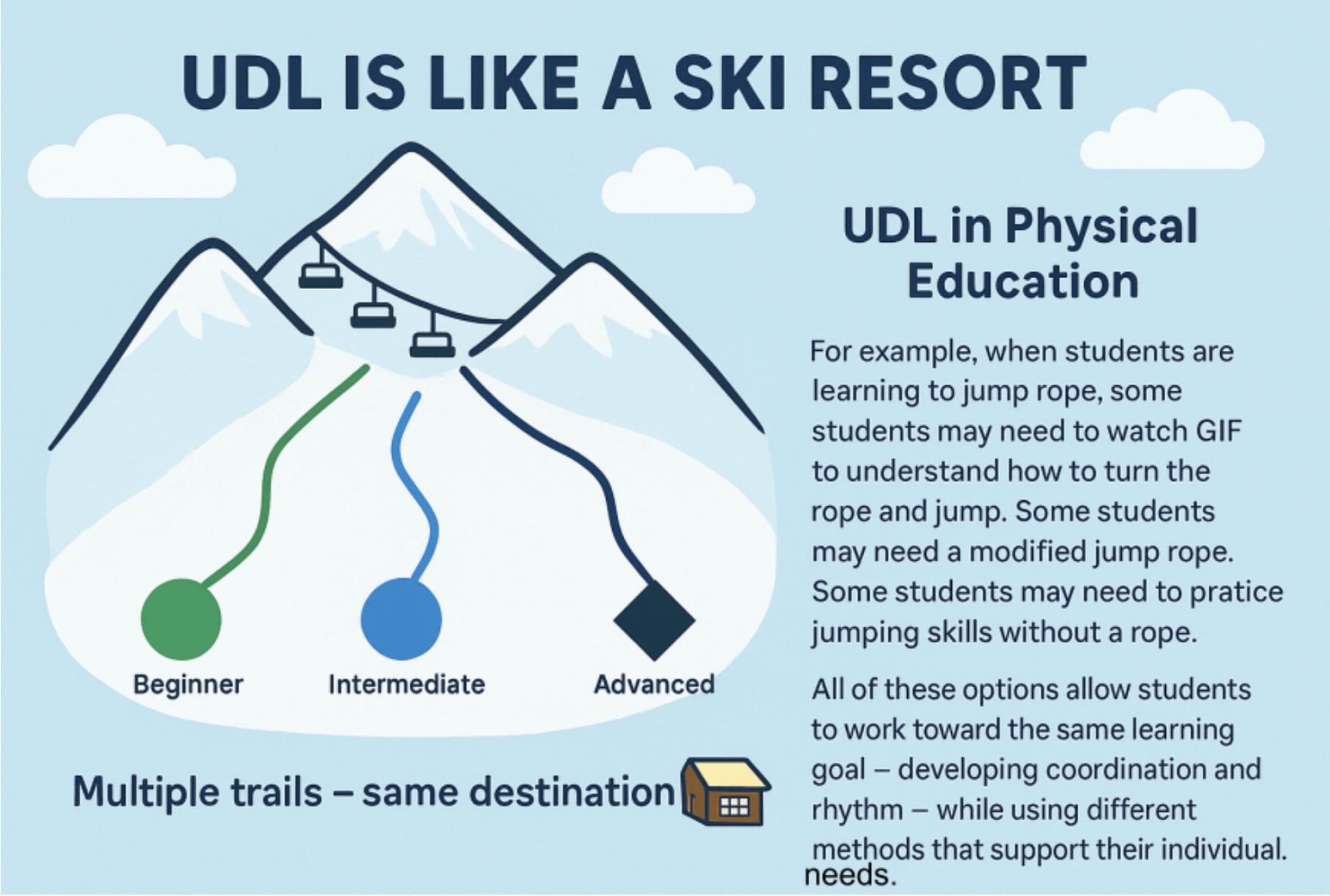
A ski resort offers everyone various trails (green, blue, and black diamond) to travel down the mountain. Each trail is designed for different ability levels. To travel down the mountain, each person can choose if they would like to ski or snowboard. Everyone is headed to the same destination, but depending on their comfort level, skill, and experience, each person can choose their own path.
A ski resort also includes snow tubing or sitting by the fire in the lodge. There is something for everyone at a ski resort. In physical education, UDL is similar, it means offering students various ways to engage in the learning (Engagement), access the content (Representation), and demonstrate their understanding/knowledge (Expression).
UDL in Physical Education
For example, when students are learning to jump rope, some students may need to watch a GIF to understand how to turn the rope and jump, while some students may need a modified jump rope. Some students may need to practice jumping skills without a rope. All of these options allow students to work toward the same learning goal—developing coordination and rhythm—while using different methods that support their individual needs. This is UDL in action: offering multiple means of engagement, representation, and expression so every student can participate and succeed.
Starting Small with UDL
Implementing UDL can feel overwhelming at first, but it doesn’t have to be all at once. Start by incorporating small changes. Offer an alternative way to engage with a lesson, provide a visual support, or let students demonstrate their learning in a variety of ways. These small steps can make a big difference in assisting students to access the content and find the best pathway for each student to understand then demonstrate their knowledge.
The Power of UDL
That’s the power of UDL—it’s not about lowering expectations, it’s about lifting students up by giving them what they need to succeed, so every student can meet those expectations in their own way. Just like at the ski resort, students can find their own “trail.”
So the next time you’re planning a lesson, think about your classroom like a ski resort. Are there multiple trails for your students to follow? Are all students equipped with the tools (equipment, visual supports, etc) they need to safely and confidently make it down the mountain? UDL helps ensure the answer is YES.
Let’s continue to learn from one another and share ways to build inclusive lessons and classrooms.
What’s your favorite UDL “trail” or strategy in PE, Health, APE or Dance?
This microblog post was a featured post in #slowchathealth’s #microblogmonth event. You can search for all of the featured posts here. Please do follow each of the outstanding contributors on social media (including Amy Falls, the author of this post) and consider writing a microblog post of your own to be shared with the global audience of slowchathealth.com
Pair this post with the following:
‘Sticky Learning’ Strategies by Dr. Kim Morton
5 Small Mindset Shifts by Dr. Cara Grant
Ready to Teach? Your Preseason Training Guide by Andy Milne
Have you read the latest Book of the Month recommendation?
 #slowchathealth