Probably the most inclusive unit in our elementary schools PE is our net and wall games unit. Anyone can have a go and it doesn’t take as much running and exertion as compared to other units. The students are exposed to a wide variety of games such as badminton, pickleball, table tennis, volleyball and foot volley. There is always one to which they will enjoy.
As in all units students are encouraged to choose a ‘Just Right Challenge’. In the net and wall games unit this is done by giving the students a wide range of equipment, items to hit ranging from balloons to shuttlecocks and rackets of different shapes and sizes. Students also can choose which game to play. Students are also in charge of the rules and how strictly they follow them. The students can change the equipment or games at any time to suit their needs or to provide greater challenge or meaning.

As you can imagine you get such a wide range of abilities, interests and confidence that giving the students the agency to choose the challenges enables them to generate greater meaning and enjoyment. With their being an entry point for everyone it is difficult to get them off the court at the end of the lesson. Whether it is a student playing keepy uppy with their hand and a balloon or students pretending they are in the Olympic badminton final there really is something for everyone.
The lessons generally run themselves. The teacher’s role in the unit is to provide a focus for the lesson such as serving, forehand or backhand and monitoring and taking notes to establish the success. Teachers can intervene when needed to improve the technique or motor competence. Initially the teacher’s role is to help students establish what is a ‘Just Right Challenge’ for them by observing how many shots they can do in a rally. If they aren’t getting over 5 – 10 then teachers should encourage students to choose something which is more suited to them.
To encourage student agency, students would give their feedback after each lesson. This helps them to reflect on their learning and gives the teacher a better understanding of the students abilities and preferences in PE.

At the end of the unit I wanted to ask the students what was the most meaningful part of the unit. All students in Grades 2,3,4 & 5 gave their views and the top 2 categories were ‘Be with friends’ & ‘Have fun’. This shows the inclusiveness of the unit and how students can still remain engaged in the unit while allowing positive social interaction.


The unit closely aligns with the Meaningful PE Framework. As the students said in their feedback that the unit enabled social interaction as well as fun and hopefully this can lead to delight. The agency and the wide range of resources given enables the personally relevant learning and challenge parts. With teacher guidance or even students teaching students and plenty of repetition they will be able to develop their motor competence.
This microblog post was a featured post in #slowchathealth’s #microblogmonth event. You can search for all of the featured posts here. Please do follow each of the outstanding contributors on social media (including Rhys Meredith, the author of this post) and consider writing a microblog post of your own to be shared with the global audience of slowchathealth.com
Pair this blog post with the following:
Putting Content into Context in PE by Flynn Powell
Exit Tickets Develop Student Agency by Rhys Meredith
Making Meaningful Physical Education Elementary Friendly by Will Westphal
The Power of Meaningful and Joyful Experiences by Leticia Cariño
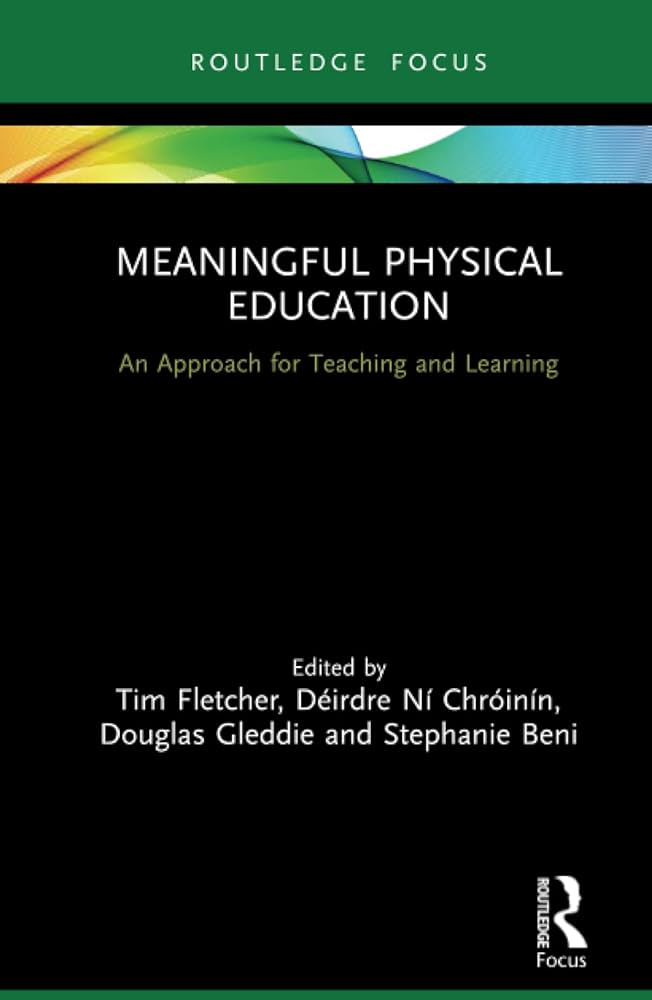
Buy the book! Meaningful Physical Education by Tim Fletcher, Déirdre Ní Chróinín, Doug Gleddie, and Stephanie Benni
 #slowchathealth