
As educators, our journeys are defined by growth, reflection, and transformation, and each stage of our career tells its own story. In my NYSAHPERD keynote speech, I explored six stages of teaching, drawing on my personal experiences and insights from nearly three decades in education. I labeled the first stage, “Aspiration and Entry,” which will resonate deeply with anyone who has stood at the threshold of a new classroom, fueled by pride, ambition, and a desire to make a difference. It’s a stage where enthusiasm meets reality, where the seeds of a lifelong teaching style are planted, and where finding a supportive mentor can make all the difference. Here’s a glimpse into this pivotal chapter of the teaching journey—one that shaped the foundation of my career and continues to inspire my work today.

The first stage that teachers go through is that from preservice to 3 years, and we might label this stage as ‘Aspiration and Entry’. There is a huge sense of pride and enthusiasm associated with this stage of your career. You’ve made the decision to become a teacher and justified your decision to friends and family, and you are motivated by the desire to make a change. In this stage of your career you have to balance your aspirations with reality. It can be hard to have a head full of great ideas, all of the theory, having been taught by great professors, only to arrive in a school that tells you to “slow down”, and “that will never work with our students”, and “we’ve always done it this way”. For that reason, this period is also one of stress, and survival, as the reality of teaching kicks in.
In this stage of your career, you need to find your voice and find your teaching style. You also need to find yourself a good mentor. Not necessarily someone from your department, perhaps not even someone from your school, but definitely someone who can guide you through the realities of teaching. You want to find a marigold, not a walnut tree.
In this early stage of your career your professional development needs should focus on classroom management and practical skills.
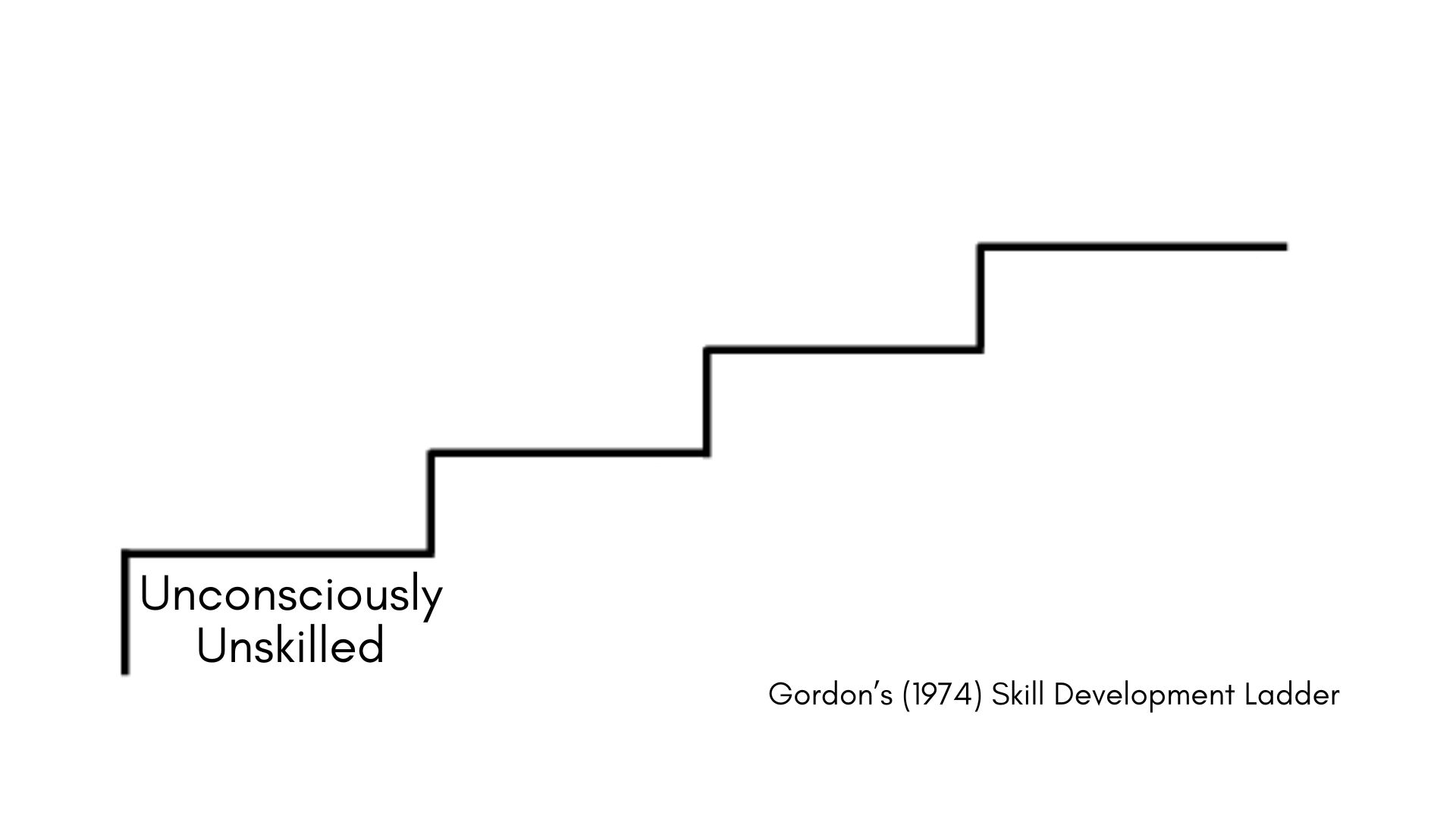
I was convinced that I entered the profession knowing everything. And I didn’t. In the 70’s the concept of a skill development ladder was created, with each rung on the ladder being a different stage of development. Teachers in these early years can be described as UNCONSCIOUSLY UNSKILLED. That sounds really harsh, but essentially, in these early years of teaching you don’t necessarily know what you don’t know. Your confidence can be greater than your abilities, mine certainly was. This is where a mentor can help you figure out what you need to learn.

This is me, at my first school in a working class area of South London. An ‘improving’ school with 850 students from 11-16. There were no students older than that because they all left education and went into the workforce. The year before I arrived they had a student bring his motorbike to school and race through the hallways. A favorite pastime of the students at recess was ‘steaming’, where large groups of students formed a long line and raced across the playground wiping out anyone in their way. We had a smoking area in the playground for students….and a smoking area in the playground for teachers. When I reflect back on my time in this initial stage of my career I am pretty shocked. I taught the way I was taught, gravitating towards the students that played hard like me, and won like me. Teaching was something that I did ‘to’ students, and it took me many years to appreciate that teaching is something that we do ‘with’ students. Shame on me.
Lessons I learned from this stage of my career obviously include an appreciation that this early in your journey you are nowhere near the teacher you will become. As you get your reps in, put those hours in, I promise you that you will grow exponentially as your career progresses.
The second lesson I shared was that your first school might not be your dream school, and that’s OK. It’s a chance to get your foot in the door, hone your craft, and make some mistakes along the way.
Another lesson I learned from this stage of my career is that there is a benefit to saying yes. I had very little responsibility, money in my pocket for the first time, and time to give after school and on weekends. “You need someone to run a netball team? That’s me”. “Coach the basketball team, drive the bus AND referee the game? Certainly”. Saying yes was easier then, and if you CAN say yes, then do so…….that said……there is power in saying no too. I talked about burnout a little later on in my keynote, but if you can learn to say no now, it might stand you in good stead later in your career.
At the end of my 3rd year, having said yes to all of the things, and meeting a teacher at a local school who would become a mentor of mine, I was invited to apply, successfully, for a position at his school, which took me into the next stage of my career.
I finished each teaching stage referenced in my keynote with a ‘call to action’ slide.

As you reflect on the early stages of your teaching journey, remember that each step – from your initial excitement to the reality of the classroom – is part of a larger, transformative process. This glimpse into the first stage of teaching, shared from my keynote, is just the beginning. Whether you’re a new teacher or a seasoned educator, embracing these early lessons with enthusiasm and an open mind will set the foundation for a meaningful and lasting legacy. If this excerpt resonates with you, perhaps we should chat about my full keynote, Crafting a Legacy: Stories From the Heart of Teaching, where I dive deeper into the stages of growth that shape our careers. Stay curious, stay passionate, and most importantly, keep crafting the legacy you want to leave in the classroom.
* I was originally inspired by the idea of framing our career journey in stages by Terry Heick’s The 6 Stages of a Teaching Career.

 #slowchathealth
Pingback: The Birth of The REBEL Health Educators – #slowchathealth