A positive school culture creates an environment where students feel safe, respected, and encouraged to take risks in their learning.
Establishing a shared school mission, values and behaviors focused on academic and social-emotional success for every student. Building and maintaining meaningful relationships among teachers and staff and creating an environment where all members feel safe, valued, and seen.
Our school has messages related to positive behavior in the hallway, lunchroom, bathrooms, and recess. With “Modeling”, our teachers engage students by showing them how to perform a skill while describing each step with a rationale. This provides students with both a visual and verbal example of what they will be expected to do. Teachers model the behavior they want to see in the way students treat each other. We use respectful language and demand a high standard of students relating to one another in the classroom.
Our goal is to create a school that places high value on respect, diversity, academic integrity, and honesty.
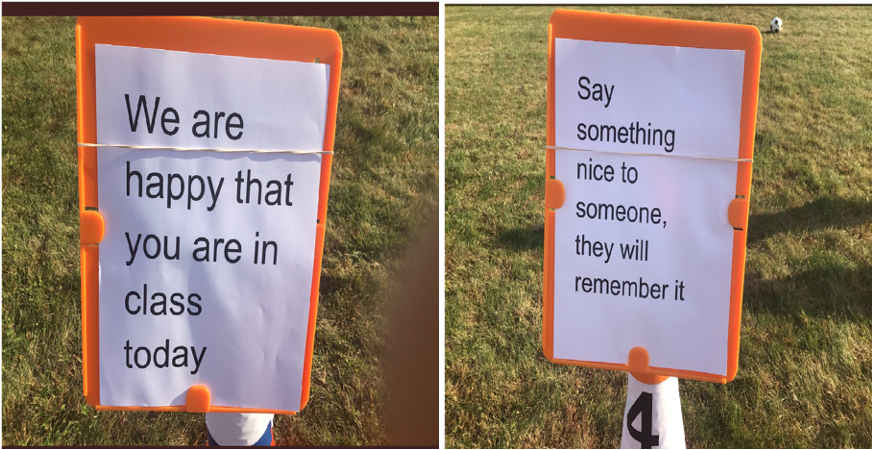
I have noticed this year that our school culture is becoming more positive. “Buy-in” is crucial for positive school culture change because it ensures that all members of the school community, including teachers, staff, students, and parents, actively support and participate in the desired changes, leading to a more sustainable and effective transformation in the school environment; without widespread support, initiatives to improve culture may face resistance and struggle to take root. For example in the hallway, teachers will notice other classes walking quietly in the hallway. I have heard students in my class encourage other students to listen because they know they will learn more when students are listening. Every month, students are recognized at the Student of the Month ceremony. These students are chosen by teachers making positive choices during the school day.
My favorite item to share so far this fall, is that older students are giving up their recess time to help younger students outside during PE class. I ask the older students why are you helping the younger students? Their response is that it makes me feel better.I ask the younger students, what do you think when the older students help you?
Their response is that “it’s really cool when the big kids help me learn. It has made a positive impact in my PE classes”.
I have not had any obstacles or opposition to this initiative and look forward to more success in the coming months.
Within every class, students use their voice to create values and behaviors. This has been a powerful transformation in our school. Students are more likely to be engaged in their learning when they feel their opinions are valued and heard. When students feel respected and supported, they are more likely to have better relationships with staff and other students.
The goal is to create a school culture that can help students feel more motivated and engaged. I encourage all educators to think about their school culture.
Thank you to Joe McCarthy, the author of this post, for sharing his awesomeness. Be sure to follow him on social media to find out what’s happening in his classes.
Pair this blog post with the following:
Empower Student Leaders by Erin Hiltbrand Hall
How to Sustain a Culture of Health and Wellness at Your School by Adam Mullis
Have you read the latest Book of the Month recommendation?

 #slowchathealth