For the past two school years, my high school health students have spent an entire class period tie-dyeing pillowcases. It’s fun and memorable and it totally connects to our curriculum.
During the Sleep Unit, we learn how daily exposure to natural light helps regulate our sleep/wake cycles. Giving my students the opportunity to get outside in the sun improves their ability to sleep at night. We also discuss the importance of creating a distraction-free sleep environment. Allowing my students to tie-dye pillowcases, rather than t-shirts, gives them the chance to customize their sleep spaces.
Several times throughout the semester, we discuss how artistic activities lower our stress levels and boost our mental wellness. When my students tie-dye, they intentionally slow down the pace of their day and relax.
This year, my school opened a Wellness Center, a space that gives students access to teen health and wellness services and support. Jen, our Wellness Coordinator, and Grace, our Wellness Outreach Specialist, visit my classes several times throughout the semester. During one of their visits, they emphasize the importance of practicing self-care so we are better prepared to use our coping skills during times of stress. To put this into action, we spend an entire 80-minute class period forest bathing at the park adjacent to my school. (Check out this tweet and this one.) Spending almost an entire class period outside to tie-dye helps us connect with others, disconnect from technology, and boost our moods.
During our Basic First Aid Unit, students learn how to safely remove contaminated gloves. I teach them the skill, they practice, and during a different class period, they show me what they can do after I “contaminate” their gloves with shaving cream. After tie-dyeing their pillowcases, my students carefully remove their nitrile gloves to avoid getting dye on their clothes.
So, how did I make this happen?
Last year, I applied for (and received) extra funding from my school’s PTO to purchase gloves, pillowcases, and tie-dye supplies. This year, I was able to allocate funds within my health budget to purchase everything. This is my favorite tie-dye kit. You just add water to the bottles to activate the dyes and one kit has enough dye for about 36 pillowcases or shirts.
How do I organize the day?
Prior to the day, I wash, dry, and fold the pillowcases. (Do not use fabric softener or dryer sheets.)
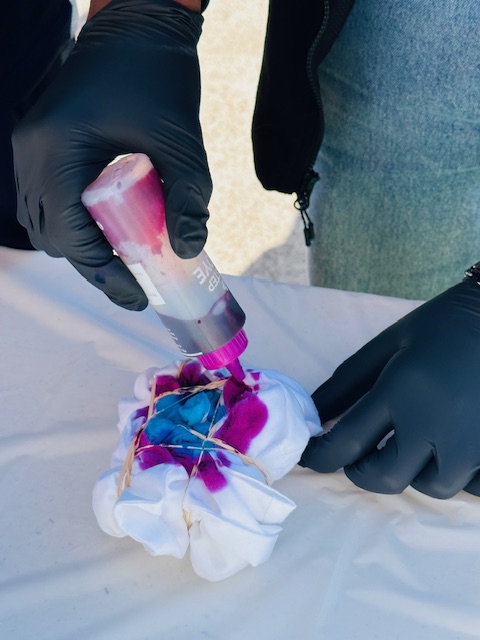
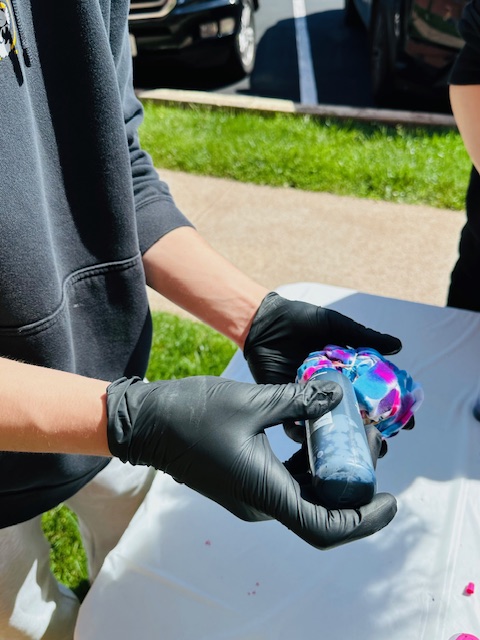
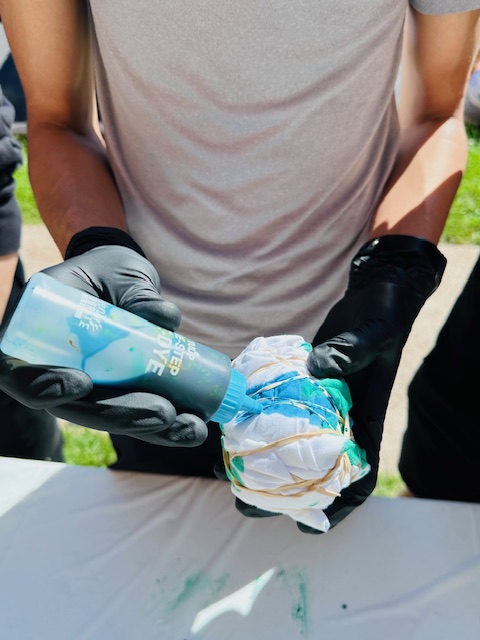
On tie-dye day, I set-up a folding table with a plastic tablecloth, the dyes, gallon Ziploc bags, nitrile gloves, and a roll of paper towels. In our classroom, my students write their names on the tags of their pillowcases with a Sharpie Rub-A-Dub marker, and create their designs with rubberbands. We head outside, tie-dye our pillowcases, and put them in individual Ziplocs. I throw all the bags in a laundry basket.

I rinse, wash, and dry all of the pillowcases at home. Could I send the incomplete pillowcases home with my students? Sure. But I think the activity is more meaningful when I complete this portion of the project for them (and I’m always worried a student will forget about their bag and find it in the bottom of their backpack months later).
Integrating tie-dyeing into our curriculum has not only been a colorful addition but also a purposeful one. The tie-dye sessions have become more than just an activity; they’ve become opportunities for students to slow down, improve their well-being, and express themselves.
This microblog post was a featured post in #slowchathealth’s #microblogmonth event. You can search for all of the featured posts here. Please do follow each of the outstanding contributors on social media (including Sarah Gietschier-Hartman the author of this post) and consider writing a microblog post of your own to be shared with the global audience of slowchathealth.com
Pair this post with the following:
Using Sketchnotes in the Health Classroom by Ian Lacasse
How to Draw Health by Danielle E. Grant
EIEIO – Graphic Medicine in Old McDonald’s Classroom by P.F.Anderson
Have you read the latest Book of the Month recommendation?
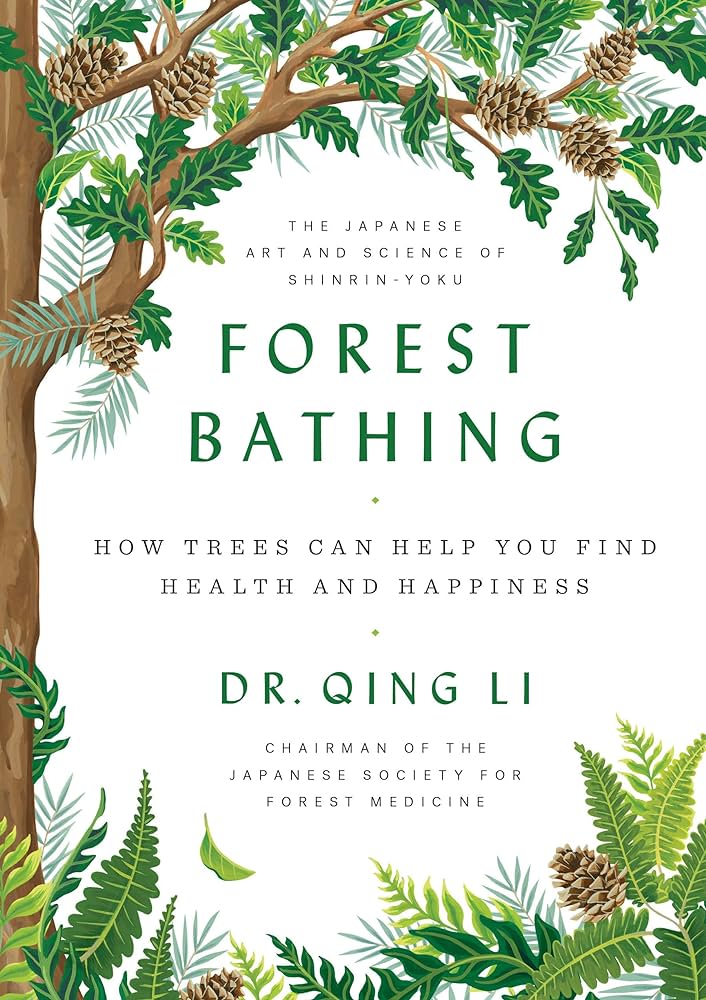
Forest Bathing: How Trees Can Help You Find Health and Happiness
 #slowchathealth
Pingback: Rest, Recharge, Repeat: 31 Daily Actions for Better Sleep – #slowchathealth